Trane vs Carrier Heat Pump: Brand Comparison for 2026
Compare Trane and Carrier heat pumps across efficiency, warranties, and installer support. Heatpump Smart analyzes models, climate fit, and long-term value to help homeowners choose the right brand.


TL;DR: Both Trane and Carrier heat pumps offer reliable performance, but the best pick depends on your climate and installation. Trane tends to emphasize efficiency, quiet operation, and a broad service network, while Carrier offers a very broad product range and strong warranty terms. Your decision should hinge on climate, home size, and local installer support.
Overview: Trane vs Carrier heat pumps
When homeowners begin the search for a new outdoor unit, two brands frequently top the list: Trane and Carrier. The Heatpump Smart team recognizes that both brands have earned strong reputations for reliability, dealer support, and long-term performance. In practice, the choice often comes down to local execution—what your installer can deliver, how warranties are honored in your area, and how the system fits your climate. The term 'trane vs carrier heat pump' surfaces often in homeowner forums and contractor discussions, underscoring the need to compare models based on real-world requirements rather than marketing claims. In this section, we separate brand identity from model-specific features, so you can approach the decision with a clear framework. You’ll see how each brand tends to approach efficiency, humidity control, and noise, and how installation context—ductwork, electrical capacity, and indoor air quality goals—shapes the final pick.
Key differentiators between Trane and Carrier
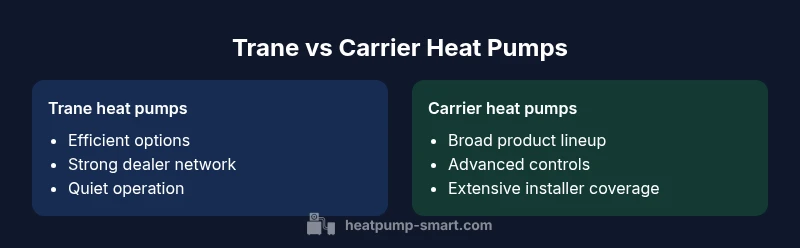
Trane and Carrier each have distinct product philosophies. Trane often emphasizes durability, quiet operation, and a strong dealer network; Carrier emphasizes a broad product lineup, advanced control features, and widespread contractor coverage. In practice, this means Trane can excel in quiet comfort and consistent cooling performance, while Carrier offers more options for IAQ integrations and scale. Price positioning tends to reflect these differences, with some customers paying for breadth of choice and service coverage. The key differentiators to watch include: product lines and tiering, warranty terms, control ecosystems, and regional service performance. The bottom line: both brands offer competitive efficiency and reliability, but your local installation team and climate zone determine which brand ultimately delivers lower operating costs, better comfort, and fewer service calls. For the keyword 'trane vs carrier heat pump', these differentiators matter most when translating specs into day-to-day comfort.
Efficiency, cost, and climate suitability
Efficiency is a core consideration with any heat pump decision. Trane and Carrier both offer high-efficiency options, but the way they approach efficiency can differ by model tier and family. Look for the SEER, HSPF, and COP ratings in model literature, and remember that higher labeled products generally translate to lower operating costs over time in suitable climates. Climate suitability matters: in milder regions, efficiency gains may be less dramatic, while extreme cold or hot climates amplify the value of advanced defrost strategies and compressor design. The 'trane vs carrier heat pump' comparison should weigh operating cost projections against installed cost and expected maintenance needs. Heatpump Smart analysis shows that the long-term value hinges on local utility rates and how often service is required, not just the peak efficiency figure.
Installation, service networks, and warranty expectations
A robust installation and an accessible service network are as important as the unit’s efficiency. Both brands maintain extensive dealer footprints, but the quality of local support varies by region. When evaluating contractors, verify their experience with the chosen brand, the availability of genuine replacement parts, and how they handle compressor or module warranty claims. Warranty terms—including compressor coverage and required maintenance—will influence total cost of ownership. The anecdotal evidence across regions suggests that a strong local contractor network can outperform a marginally higher-spec unit bought in an area with limited service options. Always confirm the installer’s readiness to manage advanced controls, smart thermostats, and any required ductwork upgrades in conjunction with the chosen brand.
Real-world scenarios: when to favor Trane or Carrier
Consider two homeowner profiles: a large, multi-zone home in a cold climate and a compact, energy-conscious urban dwelling. In the cold-climate scenario, a model with strong defrost performance and reliable backup heat tends to shine, often aligning with Trane’s strengths in quiet operation and dependable performance across varied conditions. For the urban home, Carrier’s broader product line and smarter control ecosystems can offer better IAQ integration and flexibility for multi-room setups. Real-world installations show that the best outcome arises when a qualified installer aligns the unit with home insulation levels, duct design, and thermostat strategy. In both cases, the decision should prioritize the installer’s capability and the warranty framework as much as the brand badge itself. The term 'trane vs carrier heat pump' should be interpreted through the lens of local performance and long-term service.
Common myths and misperceptions
Myth: Higher price always means better value. Reality: Value depends on installed performance, efficiency in your climate, and service support, not just sticker price. Myth: All heat pumps perform equally well in cold weather. Reality: Cold-climate performance varies by model and system sizing; some configurations maintain comfort with auxiliary heat, others rely more on defrost strategies. Myth: Brand loyalty guarantees better maintenance. Reality: Maintenance quality comes from the technician and the system’s use, not the brand alone. By separating marketing claims from field results, homeowners can make a more informed choice about 'trane vs carrier heat pump'.
How to evaluate models and find a pro
Start with a professional load calculation and a site inspection to determine air-handler compatibility, duct sizing, and electrical capacity. Request quotes for specific models from authorized dealers and compare the included warranty terms, service commitments, and scheduled maintenance plans. Ask for a climate-specific efficiency projection and a detailed cost-of-ownership estimate, including expected energy savings and maintenance costs over 10–15 years. Finally, confirm installation timing and post-install support, because even the best unit will underperform without proper setup and routine service.
Comparison
| Feature | Trane heat pumps | Carrier heat pumps |
|---|---|---|
| Energy efficiency emphasis | Strong focus on efficiency and reliability | Broad range with varied efficiency options |
| Warranty & service network | Extensive dealer network and robust warranty options | Large installer footprint with competitive warranty terms |
| Model variety & integration | Wide lineup including high-efficiency and comfort variants | Extensive product family including IAQ and system integration options |
| Smart controls compatibility | Good compatibility with common smart thermostats and automation | Excellent integration with Carrier's and third-party ecosystems |
| Initial price positioning | Premium-priced | Premium-to-mid-range |
| Best for | Efficiency-focused homes | Product breadth and warranty emphasis |
Advantages
- Helps homeowners compare two leading brands with similar performance expectations
- Clarifies which brand offers better dealer support in your area
- Highlights warranty scope and install considerations
- Aids decision-making for energy savings and future maintenance
Disadvantages
- Does not capture every model nuance; some regional differences
- May overwhelm readers with marketing language if not contextualized
- Prices vary by model and installation costs; no fixed price guidance
Neither brand is universally superior; choose based on climate, local dealer support, and long-term maintenance expectations.
Prioritize the installer network and warranty terms, then compare efficiency options within your climate. A local pro can help confirm compatibility with existing ductwork and smart controls.
Your Questions Answered
Which heat pump is more energy efficient, Trane or Carrier?
Both brands offer high-efficiency models, but actual efficiency depends on the specific model and installation. Compare AHRI ratings and labeled efficiency metrics for the models you’re considering. A qualified installer can help translate these numbers into real-world energy costs for your home.
Both brands have efficient options; compare the model ratings and talk to a pro to understand real-world energy costs.
Do Trane and Carrier warranties differ?
Warranty terms vary by model and region, with compressor coverage and required maintenance affecting total value. Always verify what is included, the duration, and the conditions for claiming a warranty with your local dealer.
Warranty terms vary; check compressor coverage and maintenance requirements with your dealer.
Is Trane cheaper than Carrier?
Prices depend on model, climate, and installation specifics. In many markets, both brands sit in the premium segment, but total cost of ownership can differ based on efficiency, maintenance, and service availability.
Prices vary by model and region; consider total cost of ownership, not just upfront price.
Which brand has better dealer support?
Both brands maintain large dealer networks; the quality of support is highly regional. Check local installer experience, service response times, and access to genuine parts.
Support quality is regional—check local installers and service options.
Are Trane and Carrier compatible with smart thermostats?
Yes, both brands generally work with common smart thermostats and home automation systems. Verify compatibility with your chosen thermostat and ensure the installer configures advanced controls correctly.
Most smart thermostats work with both brands; confirm compatibility with your setup.
What should I consider for cold climates?
Look for models with strong defrost capabilities and reliable auxiliary heat options. Performance in cold weather varies by model, so size and site conditions matter as much as the brand.
For cold climates, pick models with good defrost and reliable backup heat; size and site matter too.
Top Takeaways
- Assess climate and dealer coverage before choosing
- Compare efficiency and warranty terms across models
- Factor installation quality and maintenance requirements
- Work with a local pro to confirm duct and thermostat compatibility