York vs Bosch Heat Pump: Brand Comparison
This objective York vs Bosch heat pump comparison weighs efficiency, installation costs, warranties, and service networks to help homeowners decide between retrofit and new-build scenarios.


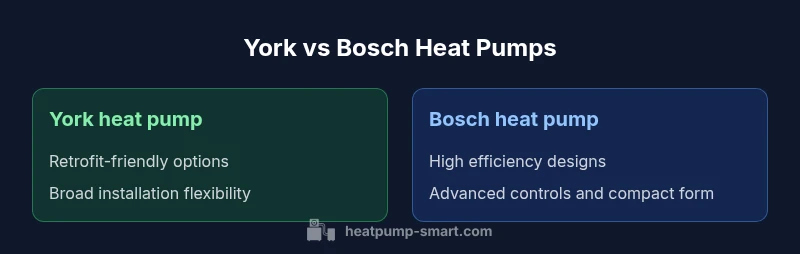
In the York vs Bosch heat pump comparison, Bosch generally emphasizes high efficiency and compact design, while York often prioritizes retrofit-friendly options and broad distribution. For homeowners prioritizing energy savings, Bosch tends to be the stronger long-term choice, while York can offer cost-effective installation and solid service availability in many regions. The best fit depends on climate, home layout, and your budget for upfront costs versus running expenses.
York vs Bosch heat pump: context and decision framework
When evaluating a york vs bosch heat pump, start with climate, home size, and existing ductwork. Heatpump Smart analysis shows that both brands offer reputable air-source heat pumps with comparable capabilities at a high level, but the fit will hinge on installation context and long-term ownership costs. This section outlines the key questions homeowners should answer before narrowing choices:
- Is the home retrofit-ready or a new-build with ductwork already in place?
- What are the local service options and warranty terms offered by installers for each brand?
- Which model line aligns with your climate zone and seasonal energy needs?
By focusing on these factors, homeowners can align a York vs Bosch heat pump choice with practical realities rather than marketing claims.
Technology and design differences that matter
At a high level, York and Bosch differentiate themselves through design philosophy and feature sets rather than fundamental capability. Bosch tends to emphasize inverter-driven compressors, compact footprints, and advanced controls that suit modern, energy-conscious homes. York often highlights broad compatibility with existing systems and flexible installation options, especially in retrofit projects. While both brands offer variable-speed compressors and smart thermostats, the degree of integration with home automation platforms and the availability of high-efficiency options can vary by model line. The takeaway is to compare the specific model families rather than the brand as a whole, ensuring the chosen unit matches your ductwork, climate, and control preferences.
- Look for units with variable-speed or inverter technology for smoother operation and better dehumidification.
- Check that the control platform is compatible with your existing thermostat or smart home system.
- Assess the physical size and compatibility with your indoor space and outdoor clearance.
Efficiency and performance considerations
Efficiency in heat pumps is shaped by both the equipment and the installation. Bosch models are frequently cited for strong efficiency in newer designs, owing to advanced compressors and optimized refrigerant circuits. York models offer solid efficiency as well, with several lines designed to balance performance with retrofit feasibility. When sizing a unit, avoid under- or over-sized selections, as both can reduce efficiency and comfort. Homeowners should work with a qualified contractor to perform a load calculation that accounts for insulation, windows, and air leakage. In practical terms, expect Bosch to perform well under demanding winter conditions in compatible climates, while York offers steady, reliable performance across a broad range of retrofit scenarios.
- Favor models with high seasonal efficiency in your climate.
- Consider auxiliary heat strategies for very cold environments.
- Factor in the impact of insulation and air sealing on overall performance.
Warranties, service networks, and reliability
A common source of post-purchase uncertainty is warranty coverage and service responsiveness. Bosch typically provides robust manufacturer warranties and a wide service network in many regions. York often relies on regional networks and installer-specific terms, which can affect responsiveness and coverage depth. When evaluating warranties, clarify what is covered (compressor, coil, outdoor unit, controls), what the exclusions are, and how service requests are handled. For property managers and builders, confirming the installer’s track record with each brand can be as important as the official warranty terms. Heatpumps are long-term investments; verify transferability and inclusive maintenance options where available.
- Ask about parts availability and service response times in your area.
- Check whether warranty transferability is required for future tenants or buyers.
- Consider extended maintenance plans if offered in your region.
Installation considerations and climate adaptability
Installation quality often drives the realized performance of any heat pump. Bosch units commonly appeal to new installations where space planning and compact footprints matter, while York systems frequently suit retrofits where ductwork and existing controls exist. Climate adaptability hinges on correct refrigerant charge, proper airflow, and outdoor unit placement to optimize heat transfer. Pros should verify driveway or yard access, electrical requirements, and compatibility with any existing zoning or thermostat controls. In colder climates, evaluate models with enhanced defrost strategies and frost protection. In warmer climates, verify dehumidification performance and humidity control as part of the comfort package.
- Ensure adequate outdoor space and clearance for heat exchange coils.
- Plan electrical service upgrades if required by the equipment.
- Verify compatibility with existing thermostat ecosystems and wireless connectivity.
Operating costs and long-term savings without guessing numbers
Running cost is driven by efficiency, usage patterns, and climate. Bosch models are often associated with strong efficiency in their modern lineups, which can translate to lower running costs over time when used in demanding heating seasons. York offers efficient options as well, with some lines geared toward retrofit efficiency and cost-conscious installation. Total cost of ownership includes purchase price, installation labor, ductwork adjustments, and ongoing electrical usage. Rebates and tax incentives can influence the economics, so consult local programs. Heatpump Smart analysis suggests that the price-to-performance balance should factor maintenance needs and potential energy savings across a multi-year horizon.
- Compare estimated annual electricity usage based on your climate data and occupancy.
- Factor in potential rebates and incentives available locally.
- Consider maintenance costs when calculating long-term savings.
Brand alignment with home types: retrofit vs new builds
Choosing between York and Bosch often comes down to the project type. Retrofit projects typically benefit from York’s flexibility with existing ductwork and simpler integration with older controls. New builds can leverage Bosch’s advanced controls and compact designs to maximize efficiency in tighter spaces. Builders should assess not only the unit specs but also local labor availability and warranty terms that contractors can offer. Homeowners should request model-specific performance data and verify installation timeframes to minimize disruption.
- For retrofits, prioritize models with straightforward ductwork compatibility and retrofit-friendly wiring.
- For new builds, explore Bosch options with cutting-edge efficiency and integrated smart controls.
- In multi-unit properties, coordinate with property managers to ensure uniform control schemes and maintenance plans.
Maintenance and long-term care: practical tips
Proper maintenance sustains efficiency and extends equipment life. Create a routine that includes regular filter checks, coil cleanliness, and seasonal inspections by a certified technician. While both York and Bosch units require professional servicing, the exact maintenance schedule depends on usage and local conditions. Keep a log of service visits, refrigerant checks, and outdoor coil cleaning results. If alarm codes or performance changes appear, address them promptly to avoid pinch points in heating or cooling performance. Stock up on recommended parts and follow the manufacturer’s guidance for permissible power cycling and thermostat programming.
- Schedule annual professional checkups to catch issues early.
- Clean outdoor coils and ensure unobstructed airflow around the unit.
- Update firmware or software through official channels to maintain control reliability.
Buying checklist and next steps
Use this practical checklist to compare York vs Bosch heat pumps effectively:
- Obtain at least three quotes from qualified installers for the same model specs.
- Verify ductwork compatibility or plan for necessary modifications.
- Confirm warranty terms, transferability, and maintenance options.
- Compare estimated running costs using climate data and energy usage history.
- Check for available rebates, tax credits, and financing options in your area.
- Review user reviews and local service availability for both brands.
With these steps, you can select a model that meets your climate, budget, and long-term comfort goals.
mainTopicQuery":"heat pump brands"
Comparison
| Feature | York heat pump | Bosch heat pump |
|---|---|---|
| Efficiency and performance | Balanced efficiency suitable for retrofit contexts | High efficiency in modern configurations with strong defrost and climate adaptability |
| Noise levels | Moderate to low in typical outdoor units | Low noise in advanced inverter designs |
| Warranty and service | Warranty terms vary by region and installer | Robust manufacturer coverage with wide service network in many regions |
| Installation compatibility | Flexible with existing ducts and controls | Optimized for compact spaces and newer installations |
| Price range (installation and unit) | Lower upfront costs in some markets | Higher upfront costs but potential long-term savings |
| Smart features | Standard controls with basic app connectivity | Advanced connectivity and integrated smart home options |
| Best for | Retrofit projects, cost-conscious buyers | Energy savings and new-build projects |
Advantages
- Clear brand choices with strong service networks
- Potential for flexible installation depending on region
- Solid mid-to-high efficiency options across lines
- Good balance of upfront cost and long-term value
- Renowned after-sales support in many markets
Disadvantages
- Warranties and performance can vary by installer and region
- Model-to-model differences may require careful comparison
- Long-term savings depend on climate, usage, and home efficiency
Bosch generally edges York on long-term efficiency, while York remains compelling for retrofit-friendly installations
Choose Bosch if you prioritize peak efficiency and modern controls in new builds. Choose York if you need retrofit flexibility and potentially lower initial costs, especially when ductwork is already in place.
Your Questions Answered
What are the main differences between York and Bosch heat pumps?
The main differences lie in design emphasis and installation context. Bosch often prioritizes high efficiency and compact design, while York focuses on retrofit flexibility and broad compatibility with existing systems. Model-by-model comparisons are essential to identify the best match for your home.
The two brands differ mainly in efficiency emphasis and retrofit fit; check individual models to confirm which best suits your home.
Which brand tends to be more energy-efficient?
Both brands offer efficient options, with Bosch frequently highlighting newer inverter-driven models. Actual performance depends on the specific model, climate, and proper installation. Always compare the SEER and HSPF equivalents for apples-to-apples comparisons.
Both can be highly efficient; pick the model with better efficiency ratings for your climate.
Are York heat pumps easier to install with existing ductwork?
York is often favored in retrofit scenarios for ductwork compatibility and easier integration. Bosch models can also integrate well, especially in new builds where space planning supports advanced layouts.
York tends to work well with existing ducts; Bosch can fit too, especially in new installations.
What warranties should I expect and how do they vary?
Warranty terms vary by region and installer. Look for coverage on compressors, coils, and controls, and clarify transferability and maintenance requirements before purchase.
Warranties differ by region and installer; ask for specifics on what’s covered and for how long.
Which brand is better for new homes vs retrofits?
Bosch is often favored for new builds due to advanced controls and space efficiency, while York is commonly chosen for retrofits because of ductwork flexibility and installer familiarity.
For new homes, Bosch; for retrofits, York is often a solid choice.
Where can I find reliable service and installation support?
Seek installers with proven experience with the chosen brand and good local reputation. Verify parts availability and response times, and confirm access to certified technicians in your area.
Choose a well-reviewed installer with brand-specific experience and good local support.
Top Takeaways
- Assess climate and insulation before deciding
- Choose Bosch for energy savings and modern controls
- Choose York for retrofit compatibility and potentially lower upfront costs
- Look for uniform warranties and credible local installer support
- Plan around local rebates and maintenance needs