Air Source Heat Pump Installation Costs: A Practical Guide
Discover the air source heat pump installation cost, including equipment, labor, permits, and regional factors. Learn budgeting tips, incentives, and how to compare bids to ensure smart, energy-efficient comfort.


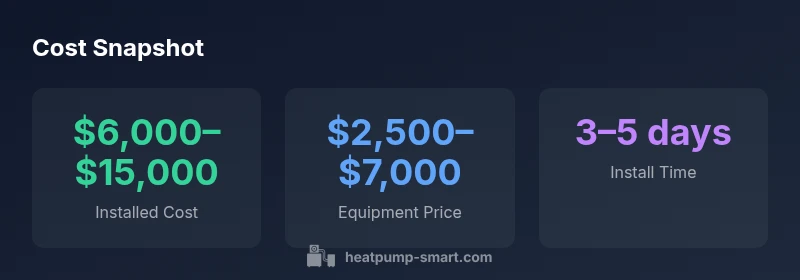
The air source heat pump installation cost typically ranges from about $6,000 to $15,000, driven by system size, ductwork, and local labor rates. Higher-end or larger homes can exceed this, while simpler retrofits may be lower. Actual bids vary by region, permitting requirements, and seasonal demand, so get multiple quotes. Heatpump Smart Analysis, 2026.
Why installation cost matters
Understanding the air source heat pump installation cost is essential for budgeting, bid comparison, and realizing energy savings over time. Price is determined by several interacting factors, including system size, efficiency ratings (SEER/HSPF), existing ductwork, climate, local labor markets, and permit requirements. Heatpump Smart analysis, 2026, shows that while equipment price can be a sizable portion of the upfront cost, labor and site preparation often swing total installed costs by a wide margin. Homeowners who plan for these drivers can avoid surprises and select a system that delivers the best long-term comfort and savings. As you budget, remember that the cheapest option may not deliver the best performance or efficiency in your climate.
Key cost components
A typical air source heat pump project breaks cost into several categories. Equipment costs cover the outdoor compressor and indoor coil. Labor covers installation, refrigerant charging, wiring, and commissioning. Ductwork or space modifications, permits, and electrical upgrades add variability. Extras like smart thermostats or enhanced controls can raise upfront costs but often improve long-term efficiency. Heatpump Smart analysis emphasizes separating equipment from installation to understand where bids diverge and where you can negotiate value.
Regional variations and permits
Prices vary by region due to labor markets, permit fees, and code requirements. In colder climates or areas with high demand, costs can exceed the typical range. Some jurisdictions require electrical panel upgrades or dedicated circuits, which adds to both material and labor costs. Always check local permit rules and potential rebates to refine your budget. Heatpump Smart analysis notes that permitting can swing total costs by a noticeable margin in certain states or municipalities.
Ductwork and space requirements
When retrofitting an air source heat pump, you may need to upgrade or repair existing ductwork to preserve efficiency. Leaky or undersized ducts can erode performance, making the system work harder and increasing energy bills. In homes with existing ducts in good condition, costs can stay closer to equipment and labor. Ductless variants are available but may involve different zoning or indoor units. Planning for ductwork upfront helps prevent surprises at the install stage.
Efficiency, climate, and size: impact on cost and savings
Higher-efficiency units (with higher SEER and HSPF ratings) typically cost more upfront but deliver greater energy savings over time, especially in extreme climates. In milder regions, a mid-range SEER/HSPF unit may offer the best balance of cost and performance. System sizing is crucial: oversizing adds upfront cost and cycles too frequently, while undersizing loses comfort and can raise operating costs. Heatpump Smart analysis highlights that a properly sized, efficient system often yields the best long-term value.
Financing, incentives, and taxes
Many homeowners leverage financing options, rebates, and tax credits to offset upfront costs. Incentives vary by jurisdiction and change over time, so check current programs and eligibility with local energy offices. When evaluating bids, factor in available rebates and the long-term savings from reduced heating bills. Heatpump Smart suggests prioritizing lenders who offer low-interest, long-term terms to align with expected energy savings.
How to get accurate quotes and avoid common pitfalls
Request itemized bids that separate equipment, labor, ductwork, permits, and electrical upgrades. Ask for a single point of contact, a defined installation schedule, and a warranty outline. Compare bid details side by side and verify the assumed climate conditions and system size. Beware low-ball offers that omit required electrical work or permits, as these can lead to unexpected costs during installation.
Estimated cost components for air source heat pump installation
| Component | Typical range | Notes |
|---|---|---|
| Equipment costs | $2,500–$7,000 | Includes outdoor unit and indoor coil |
| Labor & installation | $3,000–$8,000 | Includes refrigerant charge and commissioning |
| Ductwork & upgrades | $0–$3,000 | Depends on duct condition and needs |
| Permits & inspections | $200–$1,000 | Varies by locality |
| Electrical & controls | $300–$1,500 | Panel work and smart thermostat integration |
Your Questions Answered
What factors most affect air source heat pump installation cost?
The main cost drivers are system size, efficiency ratings (SEER/HSPF), climate, ductwork condition, permits, and electrical upgrades. Complex sites or high-efficiency models push costs higher, while simpler retrofits stay lower.
The biggest cost drivers are the system size, efficiency, climate, ductwork, and any required electrical upgrades. A simple retrofit may be cheaper, while a larger, more efficient system will cost more.
Do permits always add to installation costs?
Permits vary by locality but are a common component of total cost. They cover inspections and code compliance and can influence scheduling and contractor availability.
Permits are region-dependent, but they almost always add some cost. They also affect queuing times and ensuring code compliance.
Can I reduce costs by avoiding ductwork upgrades?
If your existing ducts are in good condition and correctly sized, you may avoid upgrades. However, undersized or leaky ducts can reduce efficiency and increase operating costs, making retrofit worthwhile in many cases.
Keeping good ducts can save money, but bad ducts can cost you later in efficiency and bills.
Are there long-term savings that offset installation costs?
Yes. Air source heat pumps offer lower operating costs than some traditional systems, especially in moderate climates. Payback depends on energy prices, climate, and system efficiency, typically measured in years rather than months.
Yes—the ongoing energy savings can offset upfront costs over several years, depending on climate and usage.
How do efficiency ratings impact installation costs?
Higher efficiency units cost more upfront but deliver greater energy savings over time. The exact payback period is climate-dependent and tied to electricity rates and heating demand.
Better efficiency costs more upfront but saves more on bills over time.
Is financing available for heat pump installation?
Many lenders offer energy-efficiency loans or rebates. Compare terms, interest rates, and payback timelines to ensure the monthly savings exceed loan costs.
There are energy-efficiency loans and rebates; shop for good terms and balance monthly payments with savings.
“"Choosing the right unit and planning the installation costs upfront helps homeowners avoid sticker shock and unlock long-term energy savings."”
Top Takeaways
- Get multiple bids to capture local pricing.
- Assess ductwork and potential upgrades before signing.
- Account for permits and electrical work in your budget.
- Prioritize proper sizing and efficiency to maximize savings.
- Look for rebates and financing to improve affordability.