Air-to-Air Heat Pump Cost in 2026: A Practical Guide
Explore realistic air-to-air heat pump cost ranges, what drives price, incentives, and how to estimate total ownership. Heatpump Smart analyzes typical installed costs and long-term value for homeowners, builders, and managers.


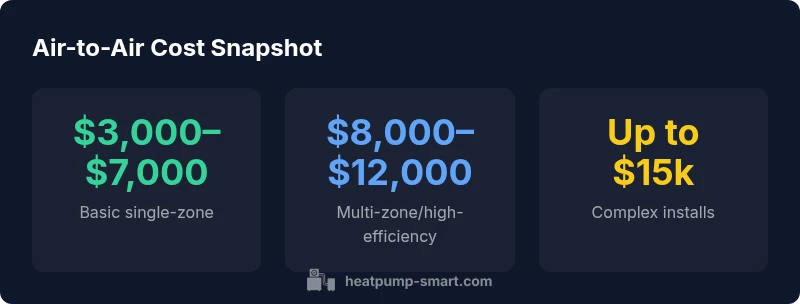
Air-to-air heat pump cost typically ranges from about $3,000 to $12,000 for installed systems, depending on capacity, efficiency, climate, and single vs multiple-zone setups. According to Heatpump Smart Analysis, 2026, homeowners often see mid-range units around $5,000 to $8,000 installed. Higher-efficiency models and complex installs can push costs upward, while basic, single-zone installs stay toward the lower end.
What drives the air-to-air heat pump cost landscape in 2026
Understanding the air-to-air heat pump cost involves more than the sticker price. The total installed cost is a function of system size, climate, efficiency, zoning, and the complexity of the installation. In milder climates, you may see lower equipment costs and simpler retrofits, while in very cold regions, manufacturers often emphasize cold-weather performance, which can push up both equipment and installation expenses. Heatpump Smart Analysis, 2026 shows that the largest cost flexibility comes from capacity sizing and the number of zones that need heating and cooling. This is especially true in homes with irregular layouts or older electrical panels that require upgrades. When evaluating quotes, separate the equipment price from installation labor, electrical work, and any required modifications to ductwork or refrigerant lines.
Cost drivers in detail: capacity, climate, and efficiency
Key cost drivers include:
- Capacity and sizing: Oversized or undersized units affect both upfront cost and long-term comfort. A properly sized system reduces energy waste and maintenance, delivering better value over time.
- Efficiency (SEER/SCOP): Higher efficiency models cost more initially but save more on energy bills. Look for ENERGY STAR-rated units and check seasonal energy efficiency ratios and heat pump performance in your climate.
- Climate and cold-weather performance: Cold climates may need auxiliary heat or more robust components, increasing upfront and ongoing costs.
- Zoning and ductwork: Single-zone installations are cheaper than multi-zone designs, which require more equipment and potentially more complex duct routing.
- Installation complexity: Without existing ductwork, retrofits can significantly increase labor and material costs.
- Electrical upgrades: Some installations require panel upgrades or new breakers, which adds to both parts and labor.
How climate and design affect choice and value
Climate dictates not only cost but the value proposition of heat pumps. In moderate climates, air-to-air systems deliver strong comfort with relatively modest energy savings, whereas in cold climates, you may need supplementary heating strategies. Efficient, properly matched equipment, along with smart controls and zoning, yields better comfort and energy savings, translating into a stronger return on investment over time. The Heatpump Smart team emphasizes evaluating total cost of ownership, including maintenance, utility savings, and potential incentives, rather than focusing solely on upfront price.
Regional variations and incentives can shift the math
Costs vary by region due to labor rates, permitting requirements, and electricity prices. Some jurisdictions offer rebates or tax incentives for heat pump installations, which can meaningfully lower effective first costs. Given the 2026 landscape, it’s important to check local programs and federal or utility rebates that may apply to air-to-air systems, especially if upgrading older heating setups or replacing inefficient units.
Financing options and how they impact affordability
Many homeowners finance air-to-air heat pump projects through energy-efficient loan programs, which allows spreading costs over several years. While interest rates and terms vary, financing can improve monthly affordability and speed up the upgrade timeline. When comparing options, consider total payments, potential incentives, and projected energy savings to determine the true cost of ownership over the system’s life.
How to estimate costs for your home: a practical workflow
Start with a qualified load calculation to determine proper capacity. Gather multiple quotes that itemize equipment, labor, electrical work, permits, and any ductwork or refrigerant line modifications. Validate quotes against each other: compare equipment efficiency ratings, warranty terms, and estimated energy savings. Ask installers to provide a maintenance plan and a clear outline of what is included in the warranty. Use the quotes to build a simple total-cost-of-ownership model that includes energy savings, maintenance, and potential incentives.
Cost comparison by configuration
| Option | Typical Cost Range | Notes |
|---|---|---|
| Air-to-Air (basic, single-zone) | $3,000–$7,000 | Lower upfront cost, fewer zones |
| Air-to-Air (multi-zone/high-efficiency) | $8,000–$12,000 | Higher upfront, more comfort |
Your Questions Answered
What affects the cost of an air-to-air heat pump?
The primary cost drivers are system size, climate, efficiency rating, number of zones, ductwork or installation requirements, and any electrical upgrades. Labor costs and local permitting can also shift the final price. A detailed design and a set of multiple quotes help you compare apples to apples.
Cost depends on size, climate, efficiency, zones, and installation requirements. Get multiple quotes to compare clearly.
Is there a price difference between single-zone and multi-zone setups?
Yes. Single-zone systems are generally cheaper to purchase and install, while multi-zone designs involve more equipment, ducting, and controls, increasing both upfront costs and installation time. The long-term benefits usually include better comfort and targeted heating/cooling.
Single-zone is cheaper; multi-zone adds cost but improves comfort and efficiency.
Are incentives or rebates available for air-to-air heat pumps?
Incentives vary by region and program. Look for federal, state or utility rebates and any local incentives for upgrading to high-efficiency equipment. A qualified installer can often help identify applicable programs and guide you through the application process.
Incentives vary by location. Check federal, state, and utility programs with your installer.
How long does installation typically take?
Installation can range from a day for a simple single-zone setup to several days for multi-zone or complex retrofits, especially if electrical upgrades or duct modifications are required. A detailed schedule should be provided in the quote.
Most installs are a few days for simple setups, longer for complex ones.
What maintenance costs should I budget for?
Annual maintenance typically includes system inspection, refrigerant checks, and filter replacements. Expect a modest yearly cost, which helps preserve efficiency and performance. Your service plan may bundle some of these tasks.
Maintenance is usually a modest yearly cost to keep efficiency.
How should I compare quotes from installers?
Compare equipment efficiency ratings, warranty terms, included labor, electrical work, permits, and post-install support. Ask for a side-by-side breakdown and verify estimated energy savings. Ensure quotes come from licensed HVAC professionals.
Use side-by-side quotes focusing on efficiency, warranty, and total costs.
“A well-planned air-to-air system can deliver reliable comfort at a lower upfront cost, but the long-term value hinges on proper sizing and climate-appropriate efficiency.”
Top Takeaways
- Define your goals before buying to choose zone design
- Expect wide cost ranges based on climate and efficiency
- Consider total cost of ownership, not just upfront price
- Ask for multiple quotes and verify incentives
- Plan for maintenance costs as part of ownership