Central Heat Pump Price: Costs, Factors & Financing
Learn central heat pump price dynamics, with installed cost ranges for air-source and geothermal systems, key cost drivers, and practical tips to save with incentives in 2026.


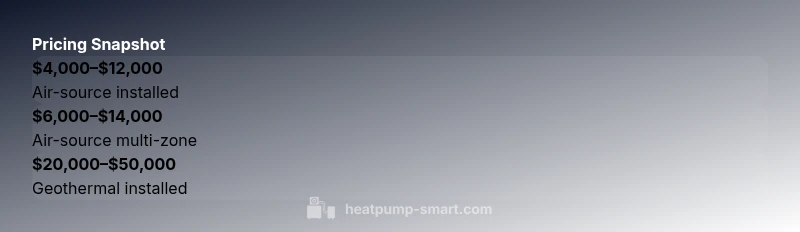
Installed central heat pump prices vary widely by system type and installation complexity. Air-source central heat pumps typically cost about $4,000–$12,000 installed, while geothermal systems can run $20,000–$50,000 or more, depending on site conditions and configuration.
Understanding central heat pump price drivers
Investing in a central heat pump involves more than the sticker price. According to Heatpump Smart Analysis, 2026, the total installed cost is determined by equipment type, system capacity, efficiency metrics, and installation complexity. In this section we break down each factor and show how they influence the final price. Key drivers include:
- System type: air-source vs geothermal, and whether the system is single-zone or multi-zone; geothermal typically requires more site work and costs more upfront.
- Capacity and climate: Larger homes or areas with extreme climates need higher heating output, which raises equipment and installation costs.
- Efficiency ratings: Higher SEER and HSPF ratings and advanced inverter tech improve long-term savings but add upfront cost.
- Installation scope: Ductwork, electrical upgrades, trenching for geothermal loops, and local permitting all affect price.
- Warranties and service contracts: Longer warranties can increase upfront cost but reduce risk and maintenance expenses.
Practical guidance is to collect multiple quotes and verify what is included in each quote (equipment, permits, ductwork, and after-sale support).
Air-source vs geothermal: price dynamics and value
The price gap between air-source central heat pumps and geothermal systems is one of the biggest considerations homeowners face. Air-source units generally offer lower upfront costs and faster installation, making them attractive for budget-conscious projects. Geothermal systems require ground loops or boreholes, which adds site-specific costs but can deliver higher efficiency and lower operating costs in favorable climates. In many markets, Heatpump Smart analyses show that the upfront premium for geothermal can be substantial, but the long-term energy savings and reliability can justify the investment over a longer horizon. Decision-makers should weigh the climate, insulation quality, and local utility incentives when choosing between these paths. For homeowners seeking a balance of cost and performance, a well-designed air-source system with good insulation and a smart thermostat can deliver meaningful savings without the higher site-impact of geothermal.
From a value perspective, higher efficiency and proper system sizing are critical. A system that is oversized or undersized will not deliver its expected energy savings, even if the price tag looks attractive. The Heatpump Smart team notes that properly matched systems, combined with the right zoning strategy, often yields the best balance of upfront cost and long-term savings.
How to estimate your budget: a practical guide
Estimating central heat pump expenses starts with a clear picture of your home’s heating needs and your goals for comfort and efficiency. Here’s a practical, step-by-step approach:
- Size and load: A professional load calculation ensures the system matches your home’s heat loss and climate. Incorrect sizing inflates costs and reduces comfort.
- System type and zoning: Decide between air-source and geothermal, and whether you need single-zone or multi-zone zoning. Each choice changes equipment and ductwork requirements.
- Baseline quote: Obtain at least three written quotes that itemize equipment, installation milestones, permits, electrical work, duct modifications, and any refrigerant recharge.
- Incentives: Review current rebates, tax credits, and utility programs available for high-efficiency heat pumps. Incentives can significantly affect the net price.
- Contingencies: Add a contingency allowance for unexpected site work or duct alterations, especially in older homes.
- Long-term costs: Consider maintenance contracts, filter replacements, and potential refrigerant service costs over the system’s life.
A methodical budgeting process helps ensure you’re comparing apples to apples and not just chasing the lowest upfront price. Heatpump Smart recommends measuring your home’s insulation quality and air sealing as these factors influence the efficiency and true operating cost of any central heat pump.
Hidden costs and financing options
Beyond the base price, several hidden costs can surprise homeowners if not planned for. Electrical panel upgrades, new breaker circuits, and thermostat upgrades may be necessary for modern heat pump systems. Duct cleaning or reconfiguration can add to labor costs, especially in older homes with leaky ducts. Ground loops for geothermal installations require site work such as trenching or boreholes, which can become a significant line item. Permits and inspections are typically required and can vary by municipality. Financing options include manufacturer financing, utility rebates, and energy-efficiency loan programs offered through local banks or municipal programs. In some regions, low-interest loans or 0% financing for efficiency upgrades are available. Always factor in maintenance contracts, extended warranties, and potential refrigerant replacement costs when budgeting. The Heatpump Smart team advises homeowners to view financing as part of the total cost of ownership, not just the upfront price.
Value proposition: energy savings and incentives
While central heat pump price is a major consideration, the ongoing energy savings and comfort benefits can substantially offset initial costs. Modern heat pumps deliver high efficiency and reliable heating even in cold climates, reducing annual energy bills when paired with proper insulation. Incentives such as rebates and tax credits can apply to equipment efficiency levels and installation quality, improving the return on investment. In regions with higher electricity rates, the long-term savings are particularly compelling. The Heatpump Smart analysis emphasizes choosing a unit with a favorable balance between high efficiency and reasonable upfront cost, and leveraging incentives to shorten the payback period. A well-maintained system can operate for many years with minimal downtime, contributing to predictable operating costs and increased home value.
Quick decision checklist for price-conscious buyers
- Gather at least three quotes with itemized line items for equipment, installation, and permits.
- Confirm included components (ductwork, thermostats, electrical work).
- Check for available rebates and tax credits; calculate net price after incentives.
- Favor properly sized, high-efficiency units with good warranty terms.
- Plan for potential site work and contingencies in older homes.
- Ensure installers perform a thorough load calculation and leak testing.
Financing, warranties, and service contracts
Upfront price is only part of the story. Warranties and service contracts provide protection against unexpected failures and can lower long-term maintenance costs. Look for at least a 5–10 year compressor warranty and 2–5 year parts coverage. Some contractors offer maintenance packages that include annual inspections, refrigerant checks, and filter replacements, which help maintain efficiency and extend system life. If budgeting is a concern, explore financing options that align with energy savings, such as utility loan programs or manufacturer financing. In all cases, read the fine print regarding what is covered, how service calls are billed, and whether there are annual increases in maintenance costs. The Heatpump Smart team sees these factors as essential to the total cost of ownership and long-term value of your central heat pump system.
Price ranges by system type (rough guidance)
| System Type | Typical Installation Considerations | Typical Price Range* |
|---|---|---|
| Air-source central (single-zone) | Moderate ductwork; standard retrofit or replacement | $4,000–$12,000 |
| Air-source central (multi-zone) | Additional zoning controls; more complex ductwork | $6,000–$14,000 |
| Geothermal central | Ground loops; site work | $20,000–$50,000 |
Your Questions Answered
What factors most influence central heat pump price?
System type, size/capacity, efficiency ratings (SEER/HSPF), ductwork, site work, and local permitting are the primary price drivers.
System type, size, and efficiency mainly drive the price, along with any required ductwork or site work.
Are there incentives to offset upfront costs?
Yes—rebates and tax credits for high-efficiency heat pumps vary by region. Check local utilities and government programs.
Look for rebates and tax credits to reduce upfront costs.
Is geothermal more expensive upfront than air-source?
Geothermal generally has higher upfront costs due to ground work, though it can offer strong operating savings in suitable climates.
Geothermal costs more upfront, but may pay off with lower energy bills in the right climate.
How long does installation take?
Air-source installs typically take 1–3 days; geothermal projects can take longer due to site work.
Most installs are a few days; geothermal can take longer depending on the site.
What maintenance is required?
Annual inspections and filter changes help maintain efficiency; refrigerant checks and component wear may require service.
Keep up with annual checks and filters to stay efficient.
“Our analysis shows upfront costs vary by configuration, but the long-term efficiency and comfort benefits make heat pumps a strong value when properly sized.”
Top Takeaways
- Understand price drivers before choosing a heat pump
- Get multiple quotes and compare what's included
- Factor incentives into the net cost
- Plan for installation work and potential site constraints
- Focus on long-term savings, not just upfront price