Cost of Air Source Heat Pump Installation: A Practical Guide
Explore the true cost of air source heat pump installation with a data-driven breakdown, covering price ranges, cost drivers, incentives, and how to evaluate quotes for smarter decisions.


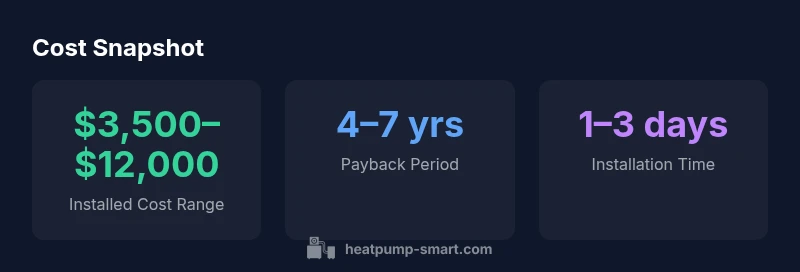
Estimated installed costs for an air source heat pump typically range from $3,500 to $12,000, depending on system size, climate, and job complexity. In most homes, installed price falls around $6,000–$9,000, covering the outdoor condenser, indoor air handler, refrigerant lines, and basic installation. Factors like existing ductwork and permits can push prices higher or lower.
Understanding the cost of air source heat pump installation
The price you pay for an air source heat pump installation is shaped by multiple moving parts, from the unit size to the complexity of retrofit work. According to Heatpump Smart, the most impactful drivers are system sizing, the presence or absence of existing ductwork, electrical upgrades, and local permitting requirements. In climates with harsher winters, you may need a larger outdoor unit and higher-efficiency components, which can raise the installed cost. Conversely, homes with well-insulated envelopes and existing ductwork often see more modest increases. While the headline price covers the outdoor condenser and indoor air handler, the final bill also reflects site preparation and commissioning work that ensures the system operates at peak efficiency.
Core cost components explained
A typical air source heat pump installation breaks down into several core components:
- Equipment: outdoor condenser and indoor air handler, plus refrigerant lines and insulation.
- Ductwork: new ducts or modifications to existing ducts, which can significantly affect the price if your home layout is complex.
- Controls: thermostat, smart controls, and any zoning equipment.
- Electrical upgrades: dedicated circuits, breakers, and potentially electrical panel upgrades.
- Labor and commissioning: site preparation, refrigerant charging, system balancing, and testing.
- Permits and inspections: local code compliance, which varies by jurisdiction.
Understanding these elements helps you compare quotes on an apples-to-apples basis and recognize where price differences originate.
Permits, codes, and site readiness
Permitting requirements add a predictable layer of cost and time. Some jurisdictions require permits for HVAC equipment replacements, refrigerant line work, and electrical upgrades. Site readiness—such as removing obstructions, ensuring outdoor clearances, and upgrading outdoor pad stability—can also influence labor time and price. Heatpump Smart recommends asking your contractor to itemize permit fees, inspection costs, and any required electrical work separately. If your home has limited outdoor space or tight duct runs, preparation costs may rise due to specialty mounting, refrigerant routing, or additional insulation.
By anticipating these factors, homeowners can reduce unexpected add-ons and align expectations with the installer.
Climate impact, sizing, and efficiency choices
Sizing a heat pump correctly is critical. Oversized or undersized units perform poorly, wasting energy and increasing wear. Efficiency ratings such as SEER and HSPF influence both upfront cost and long-term operating costs. In colder climates, you may opt for high-efficiency cold-climate models that better handle low outdoor temperatures; these units typically carry a higher upfront price but provide greater comfort and savings over time. Heatpump Smart emphasizes working with a qualified installer to perform a Manual J load calculation, ensuring the chosen unit matches the home’s heating and cooling needs without overpaying for capacity you won’t use.
Hidden costs and optional add-ons to watch for
Beyond the base installation, several optional (but sometimes prudent) upgrades can affect price:
- Enhanced duct sealing or insulation to improve efficiency and comfort.
- Zoning systems that separate living spaces for better temperature control.
- Electrical service upgrades or a new breaker panel to accommodate higher headroom.
- Integration with a heat pump water heater or solar-ready configurations.
- Extended warranties or service plans.
If an offer seems unusually low, scrutinize whether any of these items are omitted or deferred, potentially affecting long-term performance.
How to estimate costs: a step-by-step process
To move from rough quotes to a reliable estimate, follow these steps:
- Gather basic house data: square footage, insulation quality, and existing HVAC layout.
- Request at least three bids from licensed contractors who perform Manual J sizing.
- Ask for a line-item breakdown covering equipment, ductwork, electrical work, permits, and labor.
- Check whether the quote assumes existing ductwork; if not, get an explicit retrofit cost.
- Review warranty terms and service plans alongside price.
- Compare quotes not only on price but on expected energy savings and comfort outcomes.
A data-driven quote will include unit model specifics, expected COP, and a realistic payback estimate based on your local energy prices.
Typical price scenarios by home type
Two representative scenarios illustrate how context changes the price:
- Small to mid-size home with existing ductwork: A compact, standard-efficiency air source heat pump may land in the mid-to-upper range of the installed cost, often around $6,000–$9,000, including basic controls and commissioning.
- Larger home or retrofit with no ductwork: The project could push toward the higher end, potentially $9,000–$12,000 or more, driven by ducting, electrical upgrades, and zoning needs. These ranges reflect typical market conditions and may vary by region.
Heatpump Smart notes that incentives and rebates can materially affect your net cost and should be considered when evaluating quotes.
Financing options, incentives, and value proposition
Financing options—such as low-interest loans or manufacturer financing—can make upfront costs more manageable. In many regions, rebates or tax credits apply to energy-efficient heat pump systems, reducing the net price. The financial upside includes lower operating costs, improved home comfort, and reduced greenhouse gas emissions. Heatpump Smart analysis shows that when incentives cover a portion of the upfront cost, the payback period often shortens substantially, making the investment more attractive for homeowners and property managers alike.
What to ask your installer to ensure you get a fair price
To avoid surprises and to enable accurate price comparisons, ask your contractor:
- Can you provide a detailed, itemized quote with equipment model numbers and labor hours?
- Do you perform a Manual J load calculation and a Manual D duct design for my home?
- Are there any optional upgrades you recommend, and what is their cost vs. benefit?
- What permits and inspections are required, and who handles them?
- What is the expected timeline from contract to operation, and what could extend it?
Estimated cost components for air source heat pump installation
| Category | Low estimate | High estimate | Notes |
|---|---|---|---|
| Equipment (outdoor + indoor) | $1,500 | $6,000 | Excludes specialty models |
| Ductwork & Retrofit | $800 | $4,000 | Depends on layout and retrofit needs |
| Refrigerant Lines & Insulation | $400 | $2,000 | Line length affects cost |
| Electrical Upgrades & Permits | $400 | $2,000 | Code requirements vary by jurisdiction |
| Labor & Commissioning | $800 | $2,000 | Includes balancing and testing |
Your Questions Answered
What factors most influence the installed cost of an air source heat pump?
The largest drivers are system size, climate, existing ductwork, electrical upgrades, and local permitting. Higher-efficiency models and additional features like zoning can raise the price, but they may reduce operating costs over time.
It mainly comes down to size, climate, ductwork, and any electrical or permit needs.
Is ductwork retrofit common when upgrading to an air source heat pump?
Yes, many homes require at least some ductwork work to ensure proper airflow and efficiency. The extent depends on current duct design and space constraints.
Most homes will need some ductwork work, especially if existing ducts are leaky or poorly sized.
Do rebates or tax credits apply to installation costs?
Yes, many regions offer rebates or tax credits for energy-efficient heat pump installations. Availability varies by location and eligibility, so check local programs and update quotes accordingly.
There are often rebates or tax credits, but eligibility varies by where you live.
How long does installation typically take?
Most installations take 1–3 days, depending on ductwork requirements, electrical upgrades, and site readiness.
Usually about one to three days, longer if ductwork needs major work.
What should I compare across quotes to avoid surprises?
Look for a clear itemization, equipment specs, installation scope, permit fees, warranty terms, and projected payback. Ask for a third-party performance estimate.
Make sure quotes break down each cost and include warranty details.
“Air source heat pump installation costs vary with climate, ductwork, and efficiency choices, but the long-term savings often justify the upfront investment.”
Top Takeaways
- Get a detailed, line-item quote for transparency
- Expect price ranges due to ductwork and climate
- Consider incentives to reduce net cost
- Proper sizing prevents wasted energy and extra costs
- Plan for possible electrical and permitting requirements