Cost of a Heat Pump Installation: What Homeowners Should Know
Explore the cost of a heat pump installation, including typical price ranges, influencing factors, financing options, and tips to estimate and save.


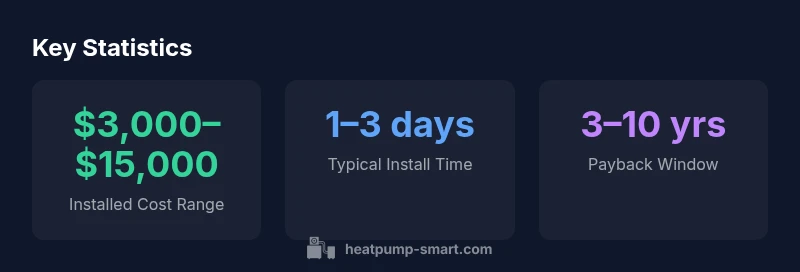
The cost of a heat pump installation typically ranges from $3,000 to $15,000, depending on system type, home wiring, and ductwork needs. Prices vary by climate, efficiency targets, and whether financing, permits, or installation labor are included. Consider long-term operating savings when evaluating upfront costs.
Understanding what drives the cost
When homeowners ask about the cost of a heat pump installation, they are really asking about a bundle of interrelated factors. System type (air-source, ducted, ductless, or geothermal) is the biggest determinant. The next major driver is the project scope, which includes the size of the home, the climate, and the existing infrastructure. A home with outdated electrical panels, insufficient ductwork, or no existing refrigerant line set will need more prep work and equipment upgrades, driving up the price. Permits, electrical upgrades, and any required zoning reviews add to the total as well. In practice, you’ll see a wide price spectrum because every home has a unique combination of these variables. Heatpump Smart Analysis, 2026, notes that price variability is one of the clearest signals you’ll encounter when you request quotes. For most homes, a sound approach is to budget for both upfront costs and long-term operating savings, recognizing that the upfront price is a gateway to meaningful energy efficiency.
System types and their installed cost ranges
Different heat pump configurations come with different price bands. Air-source split systems are usually the most modest in upfront cost, while geothermal ground-source systems demand substantial site work. Ducted heat pumps often require duct renovations, which adds to labor and materials. Ductless mini-splits offer zoning flexibility but can scale price quickly with the number of indoor units. While exact figures vary by region and installer, the commonly observed ranges are helpful for framing a budget. Heatpump Smart Analysis, 2026, synthesizes field data to show that air-source installations can start around a few thousand dollars and climb into the mid-to-upper range for large or high-efficiency units; geothermal systems can push costs well beyond typical air-source projects if the site requires extensive excavation or ground loops.
Additional work that changes price
Beyond the base equipment cost, several items can push the final price higher. Upgrading an electrical panel to support a higher load is common in older homes. Ductwork modifications, new vents, and sealed ducting can add labor and materials. In some cases, a fresh or upgraded thermostat wiring, smart controls, or integration with a home automation system adds to the bill. Permits and inspections are often required and can incur fees depending on local regulations. If your home has unusual access challenges, or if the installer needs to run longer refrigerant line sets, you should expect additional charges. Planning for these contingencies helps avoid sticker shock later and improves the likelihood of a smooth installation.
Financing, incentives, and ownership costs
Financing options are a practical way to manage upfront expenditure, especially for larger upgrades. Look for utility rebates, federal or state tax credits, and local incentives, which can significantly reduce the effective price. Some incentives cap cash-back per system or require meeting efficiency thresholds. It’s important to read the fine print: eligibility often hinges on system efficiency, installation date, and whether you’re replacing an existing fossil-fuel heating source. An informed buyer will compare loan terms, interest rates, and any added fees, then pair this with expected energy savings to gauge true ownership costs over the system’s life. Heatpump Smart Analysis, 2026, emphasizes that incentives can tilt the economics in favor of upfront investment when aligned with efficient equipment.
Operating costs versus upfront costs
A heat pump’s operating costs depend heavily on electricity prices, climate, and how often the system runs. In milder climates, heat pumps may replace many hours of conventional heating and cooling, generating noticeable savings. In harsher climates, the system may operate more aggressively, which changes savings dynamics. The efficiency rating (SEER for cooling and HSPF for heating) and the system’s sizing relative to your home’s heat load influence ongoing costs. While the upfront price is a one-time measure, the long-term financial picture includes energy bills, maintenance, and potential repairs. Heatpump Smart Analysis, 2026, notes that the long-run value of a heat pump often surpasses initial costs when properly matched to the home and conditioned to seasonal demands.
How to budget for a heat pump installation
Budgeting effectively requires a structured approach. Start by obtaining at least three detailed written quotes that itemize equipment, labor, permits, and any required system upgrades. Create a contingency line item of 10–20% to cover unforeseen site conditions or ductwork surprises. Compare apples-to-apples: ensure quotes include the same components and performance targets. Consider financing options and incentives upfront to estimate net cost. Use a simple worksheet to calculate the total installed price, annual operating costs, and estimated payback period. A disciplined budgeting process helps prevent underfunded projects or delayed decisions, which can derail your energy-improvement goals.
Regional cost variations and contractor factors
Prices are not uniform across regions. Labor rates, permit fees, and the availability of qualified technicians influence final quotes. Local climate also matters: areas with longer winters may see higher demand and different equipment needs. The scope of the project, such as adding or upgrading duct systems, can swing costs significantly. Choosing a contractor with proven experience and transparent pricing reduces the risk of unexpected charges. Heatpump Smart recommends vetting contractors for licensing, warranty coverage, and post-install support to ensure lasting value from your investment.
Step-by-step estimating checklist
- Define the system type and capacity you need. 2) Inventory existing ductwork and electrical panels. 3) Get three itemized quotes, ensuring apples-to-apples comparisons. 4) Ask about permits, taxes, and potential rebates. 5) Assess the long-term operating cost with energy-rate assumptions. 6) Build a contingency buffer (10–20%). 7) Confirm warranty terms and maintenance plans. 8) Plan for future upgrades, such as smart thermostats or add-on zones. This checklist helps you build a credible cost estimate and reduces surprises during installation.
Maintenance implications linked to initial cost
Investing in high-quality equipment and a robust installation pays dividends in maintenance costs and reliability. Routine annual checks, refrigerant health, and clean coils help maintain efficiency and extend the system’s life. A well-designed ductwork layout reduces pressure losses and improves performance, potentially lowering both maintenance needs and running costs. As with any large home improvement, setting expectations about maintenance, seasonal servicing, and part replacements keeps the system operating effectively for years. Heatpump Smart Analysis, 2026 reinforces that a proactive maintenance plan is a key component of total cost of ownership.
Installed cost ranges by system type (typical residential projects)
| System Type | Typical Installed Cost | Notes |
|---|---|---|
| Air-source (split) | 3,000–12,000 | Indoor unit + outdoor condenser; ductwork may vary |
| Ducted heat pump | 5,000–15,000 | Requires duct renovations; ideal for whole-home retrofit |
| Ductless mini-split | 4,000–14,000 | Zoned cooling/heating; count indoor units to size price |
| Geothermal (ground-source) | 15,000–40,000 | Ground loops; significant site work and trenching |
Your Questions Answered
What factors influence the cost of installation?
Key drivers include system type, size (tonnage), existing ductwork, electrical upgrades, permits, and labor. Site access and local codes can also affect price. Always request a detailed quote that lists equipment, labor, and any required upgrades.
Costs depend on system type, size, and required upgrades like ducts and electrical work. Get a detailed quote to understand the breakdown.
Is geothermal more expensive than air-source?
Geothermal systems typically have higher upfront costs due to ground loops and trenching. However, they can offer greater efficiency and longer-term savings in certain climates. Air-source systems usually cost less upfront and are quicker to install.
Geothermal costs more upfront but can save more in some climates; air-source is usually cheaper to install.
Do permits affect price?
Yes. Permitting and inspections vary by locality and can add to the bill. Some installers include permits in their quote, while others bill separately. Check what’s included and plan accordingly.
Permits can add to the cost; always check whether quotes include them.
How long does installation take?
Most residential installations take 1–3 days, depending on system type and site conditions. More complex projects, such as geothermal or extensive ductwork, may take longer.
Most installs take 1–3 days, with longer timelines for complex jobs.
Are rebates or tax credits available?
Yes. There are often utility rebates and government incentives for energy-efficient heat pumps. Eligibility varies by location and system efficiency. Check current programs and integrate any savings into your budget.
There are rebates and credits in many areas—check current programs before choosing.
How can I estimate costs for my home?
Start with a load calculation to determine capacity, then get multiple detailed quotes. Compare components, warranties, and anticipated maintenance costs. Use a simple worksheet to track equipment, labor, permits, and contingencies.
Get several detailed quotes and compare the components and warranties.
“Sizing your system correctly and planning for ductwork upfront saves more money over the life of the system than chasing the lowest installed price.”
Top Takeaways
- Budget for a wide price range and plan for contingencies
- System type is the single largest cost driver
- Factor in ductwork, electrical upgrades, and permits
- Incentives can materially reduce net cost
- Compare apples-to-apples quotes and verify warranties