Cost of Electric Heat Pumps: A Practical Guide for Homeowners
Explore upfront costs, operating expenses, and potential savings for electric heat pumps, plus incentives and tips to estimate total affordability.


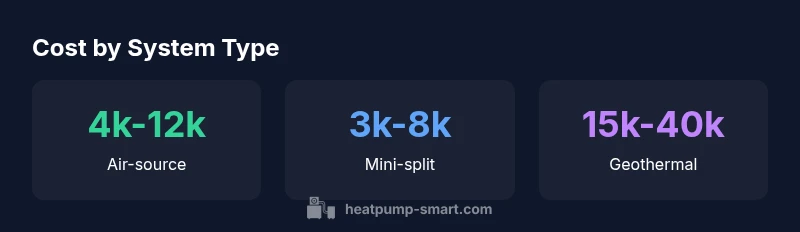
According to Heatpump Smart Analysis, installed costs for air-source electric heat pumps typically range from roughly $4,000 to $12,000, with higher-end setups including ductwork or multi-zone systems reaching $15,000 or more. Geothermal systems start higher, while ductless mini-splits can be more affordable per zone. In every case, the long-term savings depend on climate, usage, and energy prices.
Cost fundamentals for electric heat pumps
The term cost of electric heat pump encompasses more than the sticker price. Homeowners pay upfront for equipment, installation, and any required modifications to ductwork or electrical panels. In addition, there are long-term operating costs and potential savings that influence total affordability over the system’s lifetime. Heatpump Smart's analysis shows that while upfront prices can vary widely, the long-term energy savings can offset a portion of the initial investment, especially in moderate or cold climates where electric resistance heating would be less efficient. When planning a project, consider not just the purchase price but also the value of reliable year-round comfort and reduced fossil fuel use.
Upfront cost components
Upfront costs break down into several components:
- Equipment price ( outdoor unit and indoor air handler or ducted components)
- Installation labor (system hookup, refrigerant charge, electrical work)
- Ductwork and ventilation modifications (if you’re converting from electric resistance or adding zones)
- Electrical service upgrades (breaker capacity and wiring)
- Permits and inspections
- Design, load calculation, and commissioning
The exact split depends on your home’s size, existing ducts, and local labor rates. Heatpump Smart notes that a well-designed installation reduces future service calls and maximizes efficiency, which can influence total affordability in the long run.
Operating costs and savings
Operating costs hinge on electricity prices, local climate, and how you use the heat pump. In many regions, heat pumps deliver substantial efficiency gains over resistance heating, translating into meaningful reductions in annual energy bills. The potential savings typically fall within the 15–30% range for many homes, but the actual outcome depends on climate severity, the system’s efficiency, and how well it’s sized and maintained. When paired with a well-insulated envelope, the payback period improves. Heatpump Smart emphasizes that knowing your local utility rates and your heating needs helps you forecast whether an upgrade is worth it.
System types and cost ranges
Different electric heat pump configurations offer varying upfront costs and flexibility. Air-source heat pumps (central) are common for single-family homes and generally fall into the mid-to-upper portion of the price range once ductwork is included. Ductless mini-splits provide zone-based comfort with lower ductwork requirements but higher per-zonal costs. Geothermal heat pumps carry the highest upfront price due to ground-loop work, but they offer very low operating costs and excellent long-term reliability. Heatpump Smart recommends matching system type to load, climate, and future expansion plans to optimize total cost of ownership.
Geographic and climate influences
Where you live strongly affects both cost and savings. Colder climates increase heating demand, which can improve the value of a heat pump’s efficiency, but may require larger capacity and possibly more robust equipment. Utilities with higher electricity rates can shorten the payback period, while milder regions may see more modest savings. Installation costs can also vary by region due to labor rates and permitting requirements. In all cases, obtaining multiple quotes and confirming proper load calculations are essential steps in forecasting true cost and return on investment.
Efficiency ratings and price impact
Efficiency metrics such as SEER (cooling efficiency) and HSPF (heating efficiency) influence both upfront cost and ongoing operating costs. Higher efficiency units typically cost more to purchase and install but deliver greater energy savings over time. The balance between initial investment and long-term savings depends on climate, usage, and electricity prices. When evaluating bids, compare units with comparable seasonal energy efficiency ratings and ensure the contractor performs a proper load calculation to avoid under- or over-sizing.
Tax credits, rebates, and financing
A variety of incentives may reduce the net cost of a heat pump upgrade. Federal, state, and local programs, along with utility rebates, can noticeably lower upfront expenses. Financing options and performance-based rebates may also be available. Because programs change frequently by location, Heatpump Smart recommends verifying eligibility with your contractor and your utility, and documenting energy savings expectations before signing a contract. Proper documentation helps maximize any incentives you pursue.
Maintenance and lifespan considerations
Like all HVAC equipment, heat pumps require regular maintenance to maintain efficiency. Annual filter changes, coil cleaning, and periodic system checks help prevent performance decline. A well-maintained system tends to last closer to the upper end of its expected lifespan, reducing the likelihood of expensive breakdowns. While maintenance adds a small annual cost, it often yields better reliability and efficiency, reinforcing the value of choosing a reputable installer with a solid service plan.
DIY vs professional installation
Installing a heat pump involves electrical work, refrigerant handling, and refrigerant charging that are best left to licensed technicians. DIY attempts can lead to improper refrigerant charge, electrical hazards, and voided warranties. While you can research sizing and energy usage, professional installation is critical for safety, performance, and long-term reliability. Heatpump Smart consistently advises homeowners to prioritize qualified installers who perform load calculations and provide clear warranty terms.
How to estimate your costs: a practical approach
Begin with a rough target based on your home’s size and climate, then refine with quotes from multiple contractors. Use a simple three-step method: (1) estimate the equipment price for your preferred system type, (2) add installation and potential ductwork or electrical upgrades, (3) factor in permits and a conservative maintenance reserve. Finally, simulate energy cost savings using local electricity rates and your heating load. This method provides a realistic range rather than a single number and helps you compare bids effectively.
Cost scenarios: small home vs large home
For a smaller residence in a mild climate, a single-zone mini-split or a modest central air-source system might land in the lower portion of the cost spectrum, with installed costs roughly in the mid-range. A larger home in a cold climate may require multiple zones or a high-capacity central system, pushing costs toward the upper end. Geothermal remains the highest upfront option in most cases. Across scenarios, the key driver is proper sizing and achievable energy savings, which improve the financial case over time.
Choosing a contractor and obtaining quotes
To compare bids effectively, request detailed quotes that itemize equipment, installation, ductwork, electrical upgrades, and permitting. Ask for load calculations, refrigerant charge procedures, warranty terms, and a clear commissioning plan. Check references and confirm that the contractor is licensed and insured. Finally, ensure quotes assume the same system type and performance metrics so you can make an apples-to-apples comparison.
Cost ranges by heat pump system type
| System Type | Installed Cost Range | Notes |
|---|---|---|
| Air-source central (ducted) | 4,000-12,000 | Most common in single-family homes; includes outdoor unit and indoor air handler. |
| Ductless mini-split (single/multi-zone) | 3,000-8,000 | Flexible zoning; outdoor unit(s) with interior air handlers. |
| Geothermal heat pump | 15,000-40,000 | Higher upfront; longer payback but very low operating costs. |
Your Questions Answered
What is the typical upfront cost to install an air-source heat pump?
For most homes, installed costs for an air-source heat pump fall roughly in the four- to twelve-thousand-dollar range, depending on ductwork and unit capacity. Additional upgrades, such as electrical work, can shift the total higher. Always compare quotes that include a full load calculation and commissioning.
Most homes see an upfront cost in the four to twelve thousand dollar range, depending on ductwork and capacity. Get a load calculation and commissioning included when you compare quotes.
Will climate affect the overall cost of a heat pump?
Yes. Colder climates may require higher capacity and more robust equipment, increasing upfront costs, but the energy savings can be greater over time. Warmer regions may access smaller systems and lower installation costs, affecting the payback period. Talk with your installer about site-specific factors.
Climate affects both upfront cost and savings. Colder areas might cost more upfront but save more over time, while milder regions may be cheaper upfront.
Are there incentives I should consider?
There are federal, state, and utility rebates and tax credits that can reduce net cost. Availability varies by location and project type. Check with your contractor and local utility to confirm current programs and required documentation.
Look for federal and local rebates and tax credits; programs vary by location, so verify what's available with your installer.
What maintenance costs should I budget for?
Annual maintenance typically includes filter changes and a system check, with minor costs for cleaning coils or addressing minor wear. Setting aside a small yearly maintenance reserve helps sustain efficiency and prevent big repair bills.
Plan for yearly maintenance to keep efficiency up and avoid surprise repairs.
How long does installation usually take?
A standard installation often takes one to several days, depending on system type and retrofit needs. Complex projects with extensive ductwork or electrical upgrades can extend timelines. A detailed schedule should be provided in your contract.
Most installations take one to several days, depending on complexity; your contractor should give a schedule.
“A well-sized and properly installed heat pump delivers reliable comfort and strong energy savings, but the upfront investment varies widely by system type and home specifics.”
Top Takeaways
- Budget for both upfront and ongoing costs.
- System efficiency strongly influences long-term savings.
- Get multiple quotes and verify sizing calculations.
- Incentives can significantly reduce net cost.
- Professional installation is essential for performance.