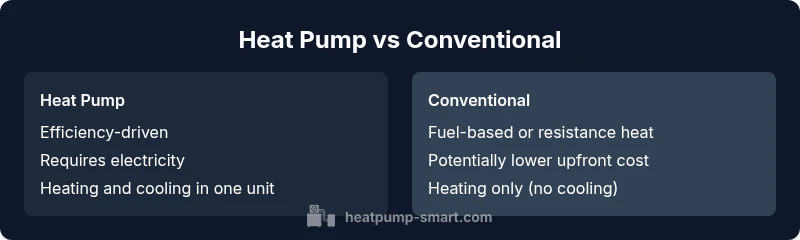
Difference Between Heat Pump and Conventional: A Practical Guide
Explore the difference between heat pump and conventional heating, including efficiency, costs, climate suitability, comfort, and maintenance to help homeowners decide.


Heat pumps move heat rather than generate it, while conventional systems primarily burn fuel or rely on electric resistance. The difference between heat pump and conventional heating is most evident in efficiency and operating costs: heat pumps typically deliver more warmth per unit of electricity, leading to lower ongoing costs in moderate climates. In very cold conditions, performance may vary and upfront costs should be weighed against potential savings.
What distinguishes heat pumps from conventional heating
Understanding the difference between heat pump and conventional heating begins with how they create warmth. A heat pump moves heat from outside to inside using electricity to power a compressor and refrigerant cycle. Conventional systems, by contrast, generate heat by burning fuel (gas/oil) or by converting electricity into heat through resistance. This fundamental distinction drives the long-term efficiency story, maintenance considerations, and resilience during seasonal extremes. According to Heatpump Smart, homeowners frequently see a favorable balance of comfort and cost over the system life in typical climates, though local conditions and usage patterns matter. This block sets the stage for evaluating both approaches across core factors like energy performance, climate suitability, upfront spend, and environmental impact.
How heat pumps work vs conventional systems
Heat pumps operate on the principle of transferring heat from a source to a living space. Even in cold air, outside heat can be moved inside with electricity powering a compressor and refrigerant cycle. Conventional heating systems, by contrast, generate heat directly by burning fuel or by using electric resistance elements. The physics is different: heat pumps leverage ambient energy to produce warmth, often delivering more energy than the electricity they consume. This fundamental mechanism explains why heat pumps can achieve high seasonal efficiency and lower running costs, while conventional systems can provide rapid warmth without relying on external energy sources. Understanding this distinction helps homeowners plan for installation, sizing, and future upgrades.
Energy efficiency and performance in typical homes
Efficiency is about how effectively a system converts energy into usable heat. Heat pumps typically achieve higher overall efficiency because they move heat rather than create it, which means less energy input is needed for the same warmth. In real-world terms, this translates to lower electricity use for the same level of comfort when temperatures are moderate and the home is well insulated. Conventional furnaces and boilers vary by fuel type and design; while some may tolerate extreme cold, efficiency can decline if the system is old or poorly maintained. Heat pumps’ performance is influenced by outdoor temperatures and the presence of auxiliary heating. Heatpump Smart’s analysis shows the best results come from properly sized systems paired with good insulation and smart controls.
Operating costs and long-term value considerations
When evaluating operating costs, consider energy use, maintenance, and the expected lifespan of components. Heat pumps typically offer lower ongoing energy costs in moderate climates because electricity used to move heat is often cheaper than burning fossil fuels. Yet, in areas with very cold winters, a heat pump may rely on supplementary heat or a secondary heating source, which can increase costs during peak demand. Conventional systems may have lower upfront cost and simpler installation, but fuel prices, maintenance, and eventual replacement can raise long-term expenses. A thorough assessment should compare total cost of ownership over 10-15 years, taking into account energy prices, climate, and the home’s insulation.
Climate and geographic suitability: where each shines
Climate matters when you choose between a heat pump and a conventional heating system. Heat pumps excel in moderate and mild climates, providing both heating and cooling with a single appliance. In very cold regions, manufacturers offer cold-climate variants or supplementary heat sources, but reliability and efficiency can vary. Conventional systems may perform more predictably in extreme cold if designed for such conditions, and in some homes they’re already integrated with existing fossil-fuel infrastructure. Decision-making should consider local electricity prices, policy incentives, and thermostat strategies to maximize comfort and efficiency.
Installation implications and upfront costs
Installing a heat pump typically involves equipment costs, refrigerant lines, and sometimes a redesign of ductwork or the installation of a mini-split system. Upfront costs are generally higher than a basic conventional furnace or boiler, but many homeowners recover costs through lower energy bills and eligible rebates. The exact figures depend on system type (air-source vs geothermal), home layout, and local labor rates. Conventional systems often require less invasive installation, especially if an existing gas line, oil line, or electrical infrastructure is already present. Both options benefit from a professional load calculation to ensure correct sizing and optimal performance.
Maintenance needs and durability
Maintenance schedules influence both the reliability and life expectancy of heating systems. Heat pumps require periodic service for refrigerant integrity, coil cleanliness, and ensuring fans and compressors run smoothly. Filter changes and thermostat calibration are common homeowner tasks. Conventional systems also need annual or semi-annual checks, especially for burners and heat exchangers in fossil-fuel models. The complexity of a heat pump can mean slightly higher service costs, but modern units are designed for longer service intervals and robust components. Regular maintenance reduces the risk of efficiency loss and unexpected outages in peak winter.
Environmental impact and refrigerants
Environmental considerations go beyond fuel type. Heat pumps typically produce lower direct emissions when powered by clean electricity, contributing to a smaller carbon footprint in many regions. Refrigerants used in heat pump systems have global warming potential, so choosing models with low-GWP refrigerants and ensuring proper leak prevention is important. Conventional systems burn fuels that release carbon dioxide and other pollutants, with environmental impact depending on the fuel mix and efficiency. A switch to heat pumps can be part of a broader decarbonization strategy for a home, particularly when combined with energy-efficient envelopes and smart controls.
Rebates, incentives, and policy context
Policy programs in many regions encourage heat pump adoption through rebates, tax credits, or financing incentives. Eligibility varies by location and system type, so it is essential to check with local utilities or government programs for the latest offerings. These incentives can significantly reduce upfront costs and improve payback periods, especially for geothermal or air-source heat pumps installed in new homes or major renovations. Heatpump Smart’s research highlights that incentives are often more accessible for energy-efficient upgrades tied to broader building performance standards.
Decision framework: how to pick for your home
A practical approach blends climate, insulation quality, and budget. Start with a climate-friendly assessment: in moderate climates, heat pumps typically deliver strong value, while in severe cold, a hybrid approach may be more prudent. Review fuel costs, electricity rates, and local incentives, then compare upfront costs against long-term savings. Consider the home’s size, existing ductwork, and the potential to pair with smart thermostats for efficiency. Finally, obtain multiple quotes and evaluate service networks to ensure reliable maintenance and support.
Common myths and misunderstandings
There are several misconceptions about these systems. Some people assume heat pumps cannot heat homes in cold weather; while older models were less effective in extreme cold, modern cold-climate variants mitigate this concern. Others worry that heat pumps are always cheaper to run; the truth depends on local electricity prices and the efficiency of the installation. Another myth is that conventional systems are uniformly inefficient; modern furnaces and boilers can be highly efficient, particularly when paired with good insulation and maintenance. By testing claims against real-world performance, homeowners can avoid overpaying for a system that does not fit their needs.
Practical checklist for a quick assessment before you buy
Use this checklist to get started: determine climate risk, inspect attic and wall insulation, assess existing ductwork, and identify any constraints on refrigerant or electrical capacity. Ask for a formal energy assessment and a whole-home load calculation. Compare two or three qualified installers, request detailed proposals and commissioning steps, and verify warranty terms. The goal is to align system choice with comfort targets, energy prices, and anticipated maintenance needs.
Comparison
| Feature | Heat pump | Conventional heating |
|---|---|---|
| Energy efficiency (qualitative) | high overall efficiency due to heat transfer | varies by fuel type; may be lower without high-efficiency equipment |
| Operating costs (qualitative) | often lower in moderate climates with clean electricity | can be higher long-term if burning fossil fuels |
| Installation cost | higher upfront cost for equipment and installation | generally lower upfront cost if retrofit is simple |
| Climate suitability | best in temperate regions; many models with cold-climate variants | reliable in cold regions when paired with appropriate system |
| Emissions | lower emissions when powered by clean grid electricity | emissions depend on fuel source and efficiency |
| Maintenance | regular refrigerant and component checks; filter changes | annual checks for burners and heat exchangers |
| Rebates & incentives | often eligible for energy-efficiency incentives | depends on local programs and system type |
Advantages
- High efficiency in moderate climates with clean electricity
- Dual heating and cooling in a single package
- Potential for lower long-term energy costs
- Access to rebates and incentives in many regions
Disadvantages
- Higher upfront installation cost and potential retrofit needs
- Performance can drop in extreme cold without auxiliary heat
- Complexity may lead to slightly higher service costs
Heat pumps generally deliver greater long-term value in temperate climates; conventional systems may be preferable where upfront cost constraints or extreme cold prevail.
Choose a heat pump for overall efficiency and cooling benefits in moderate climates. Consider conventional heating if you face tight budgets or harsh winters without reliable supplemental heat.
Your Questions Answered
What is the main difference between heat pump and conventional heating?
The main difference is how warmth is produced: heat pumps transfer ambient heat using electricity, while conventional systems generate heat by burning fuel or using electric resistance. This leads to different efficiency profiles and cost dynamics over time.
The key difference is heat pumps move heat with electricity, while conventional systems burn fuel. This affects efficiency and long-term costs. For details, see our full comparison.
Are heat pumps suitable for cold climates?
Many heat pumps are designed for cold climates, especially newer models with cold-climate editions. In the coldest conditions, they may use auxiliary heating, but overall performance can remain strong when properly sized and installed.
Yes, many heat pumps work well in cold areas, especially newer models. You might have some auxiliary heat in very cold snaps, depending on the system.
Is installing a heat pump more expensive than a conventional furnace?
Upfront installation costs for a heat pump are typically higher due to equipment and integration needs. Long-term savings can offset the initial difference, especially with incentives and favorable electricity rates.
Usually more upfront for a heat pump, but long-term savings and incentives can close the gap.
Can a heat pump replace a furnace entirely?
In many homes, a heat pump can replace a furnace, especially when paired with a backup heat source during peak cold. A professional assessment determines the best hybrid or single-system solution for your climate.
In many homes, yes—a heat pump can replace a furnace, sometimes with a backup for very cold days.
Do heat pumps require more maintenance than conventional systems?
Heat pumps require routine checks for refrigerant levels, coils, and electrical components, plus standard filter changes. Conventional systems also need regular service, particularly for burners and heat exchangers.
They both need regular checks, but heat pumps may involve refrigerant and coil care.
Are there rebates or incentives for heat pumps?
Rebates and incentives exist in many regions for heat pump upgrades, but availability varies by location and system type. Check utility programs and government portals for current offers.
Yes, many places offer rebates or incentives; check local programs for details.
Top Takeaways
- Assess climate before choosing between heat pump and conventional systems
- Evaluate total cost of ownership, not just upfront price
- Check for rebates and incentives to improve payback
- Plan for backup heating in winter extremes