Difference Between Heat Pump and Electric Heat: A Practical Comparison
Explore how heat pumps differ from electric heat in energy source, efficiency, costs, and climate suitability. A data-driven, homeowner-focused comparison for 2026 from Heatpump Smart.


For most homeowners, the difference between heat pump and electric heat boils down to energy source, efficiency, and climate. Heat pumps move heat from outside to inside (or vice versa) using electricity, delivering higher efficiency than electric resistance heating in moderate climates, while electric heat relies on resistive elements. In colder climates, heat pumps may require supplemental heat, increasing costs. Overall, heat pumps typically offer lower operating costs and better long-term value when installed correctly.
What is the difference between heat pump and electric heat?
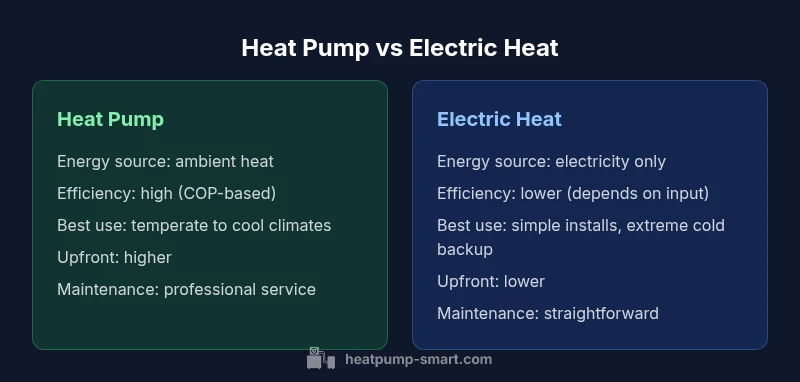
At its core, the difference between a heat pump and electric heat lies in how heat is produced. Electric heat generates warmth directly through electric resistance, converting nearly all supplied electricity into heat. A heat pump, by contrast, transfers existing heat from outside air, the ground, or water into your home using a refrigeration cycle powered by electricity. This transfer process can produce more heat per unit of electricity than direct resistance heating, especially under moderate outdoor temperatures. According to Heatpump Smart, the energy source distinction—not the total electricity use—drives much of the long-term cost and comfort outcome. For homeowners evaluating the "difference between heat pump and electric heat" this means focusing on efficiency metrics, climate, and how the system will be used year-round.
bold contentIsMarkedtrue
1.1
1.2
Comparison
| Feature | Heat pump | Electric heating |
|---|---|---|
| Energy source | Ambient heat moved by the system (air/ground/water) | Electric resistance heating (converts electricity to heat) |
| Mode of heat transfer | Refrigeration cycle moves existing heat into the home | Generates heat directly using resistive elements |
| Efficiency | High efficiency when operating in favorable outdoor temperatures; COP improves with cleaner electricity | Lower efficiency tied to direct electrical heating; efficiency is limited by input electricity |
| Operating costs | Typically lower operating costs over the life of the system | Typically higher operating costs due to continuous electricity use for heat |
| Upfront cost | Higher initial cost due to equipment, controls, and installation | Lower upfront cost, simpler installation |
| Maintenance | Requires professional service for refrigerant checks and performance | Standard maintenance is easier but may require more frequent element checks in some setups |
| Climate suitability | Excellent in temperate and cool climates; backup heat may be needed in extreme cold | Works reliably in any climate but running costs rise in very cold periods |
| Temperature performance | Strong heat output at moderate to cold temperatures; heat transfer can drop as outdoor temps fall | Consistent heating regardless of outdoor temperature, but at higher electricity use |
| Environmental impact | Lower emissions when powered by clean electricity; refrigerant choice matters | Higher emissions if electricity is fossil-heavy; no refrigerant impact beyond electricity use |
| Best use case | New homes seeking efficiency and comfort; retrofit in moderate climates | Budget upgrades, supplementary heat, or where simplicity is priority |
Advantages
- Lower operating costs over the system life when powered by clean electricity
- Better overall home comfort due to consistent heat distribution
- Supports decarbonization goals with electricity from renewables
- Potential eligibility for rebates or incentives in many regions
- Fewer emissions when paired with grid-clean energy
Disadvantages
- Higher upfront costs and longer payback periods
- Performance can decline in very cold climates without auxiliary heat
- Installation requires qualified HVAC professionals and proper system design
- Complexity of refrigerant management necessitates regular service
Heat pumps generally offer superior long-term value for most homes, especially in moderate climates; electric heat is simpler and cheaper to install upfront but tends to cost more to operate.
Choose a heat pump when you want better energy efficiency and comfort with potential rebates. If climate demands minimal auxiliary heat and upfront cost is a priority, electric heat can be a reasonable short-term choice.
Your Questions Answered
What is the main difference between heat pump and electric heat?
The main difference is how heat is produced. Heat pumps transfer ambient heat from outside to inside using a refrigerant cycle powered by electricity, while electric heat generates heat directly with resistive elements. Heat pumps are generally more energy-efficient, especially when outdoor temperatures are not extremely cold.
The key difference is energy transfer versus energy generation: heat pumps move heat and use electricity efficiently, while electric heat simply converts electricity into heat.
Do heat pumps work well in cold climates?
Heat pumps work in cold climates, but performance can vary by model and outdoor temperature. Many units include supplemental electric resistance heat for very cold days, ensuring comfort but at a higher operating cost.
Yes, modern heat pumps handle cold weather better than early models, but extreme cold may require backup heating.
Is electric heat more expensive to operate than a heat pump?
Electric resistance heating typically has higher operating costs because it converts electricity to heat without moving existing heat. Heat pumps often deliver lower operating costs when electricity prices are reasonable and outdoor temperatures are suitable for heat transfer.
Most of the time electric heat costs more to run than a heat pump, especially when you can use efficient electricity.
How do I decide if a heat pump is right for my home?
Evaluate climate, insulation, existing ducts or radiators, electricity rates, and budget. A professional load calculation compares total cost of ownership, factoring in efficiency, maintenance, and potential incentives.
If your climate isn’t extreme and you want efficiency, a heat pump is often a strong choice; get a professional assessment.
Can a heat pump replace an existing furnace?
Yes, a heat pump can replace a furnace in many homes, often with a hybrid setup in harsher winters. Proper sizing and a backup heat plan are important for reliability.
It can replace a furnace, but you may still need some backup heat during very cold spells.
What maintenance does a heat pump require?
Annual professional service is recommended, along with filter checks, outdoor unit clearance, and refrigerant/refrigerant charge checks. Regular maintenance helps sustain efficiency and system life.
Keep up with regular professional service and simple home checks to maintain performance.
Top Takeaways
- Assess climate and insulation before choosing
- Prioritize professional sizing to maximize heat-pump efficiency
- Consider long-term operating costs over initial price
- Check available incentives and electricity sources for your area
- Plan for backup heat in extreme cold when using heat pumps