How to Tell If Heat Pump or Conventional: A Practical Guide
A clear, data-backed comparison to distinguish heat pumps from conventional heating, with actionable steps, climate considerations, and installation tips for homeowners.


Heat pumps and conventional systems differ in energy use and heat delivery. To tell which you have, inspect the outdoor unit for refrigerant lines and a labeled heat pump, check for cooling functionality, and review thermostat behavior. In mild climates, heat pumps typically save energy; in very cold weather, conventional systems with backup heat may be preferable.
What makes a heat pump different from a conventional furnace
If you're evaluating options and asking how to tell if heat pump or conventional, the answer begins with the basic physics: heat pumps transfer heat using electricity and refrigerant cycles, while conventional furnaces create heat by burning fossil fuels or by electricity-resistive elements. According to Heatpump Smart, the efficiency gap stems from moving heat rather than generating it—a subtle but powerful distinction that shapes operating costs and climate suitability.
- How it works: A heat pump cycles refrigerant between an outdoor condenser and an indoor air handler, extracting heat from the outside air (even when it's cold) and delivering it inside. A conventional furnace relies on combustion or electric coils to produce heat directly.
- Energy impact: Because heat is moved rather than created, heat pumps can provide higher coefficients of performance in temperate ranges, translating to lower energy use when electricity prices are reasonable.
Potential caveats: Heat pumps perform best when they run continuously at modest temperatures rather than short, high-heat bursts. In very cold climates, many systems rely on auxiliary heat strips; this is a signal to consider a hybrid approach or a backup furnace. How to tell if heat pump or conventional is a practical mental model for homeowners planning retrofits or new installs.
Visual cues to confirm the system type
Identifying a heat pump versus a conventional furnace in the field is often a matter of looking for a few telltale signs. First, locate the outdoor unit: a heat pump will have a compressor/condenser with refrigerant lines that connect to an indoor air handler. If you see a large refrigerant loop and a label indicating heat pump operation, that’s a strong indicator. Conversely, a conventional furnace typically lacks refrigerant lines and will show a combustion chamber or electric resistance elements.
Second, inspect the indoor equipment: heat pumps pair with air handlers that distribute heated air (and often provide cooling via a coil). If your system includes a cooling function controlled by the same equipment, it’s more likely a heat pump. Third, review the thermostat and wiring: heat pumps usually have reversing valve usage in cooling mode and dedicated controls for cool/heat modes. Fourth, check the service tag or model number: many manufacturers indicate “heat pump” on the nameplate. In climates where winter temperatures regularly dip below freezing, some heat pumps employ auxiliary heat, which you may notice as a standby electric heater or a higher energy draw.
How to tell if heat pump or conventional becomes clearer when you compare the observed signals against climate expectations. As Heatpump Smart notes, the presence of a cooling option integrated into the system is a strong clue toward a heat pump configuration.
Climate and usage patterns that influence performance
Climate plays a central role in determining whether a heat pump or a conventional system is the better fit. In temperate to mild climates, heat pumps typically deliver comfortable heating with lower ongoing energy costs and the added benefit of cooling in the summer. In colder, long-harsh winters, performance can dip unless the system includes supplemental heat or a hybrid configuration that includes a conventional furnace as a backup. If your long-term energy strategy emphasizes electrification or if you regularly switch between heating and cooling, the heat pump offers a unified solution that minimizes equipment clutter and simplifies maintenance.
From a reliability perspective, a heat pump’s efficiency relies on electricity service reliability and the local electricity mix. Heatpump Smart’s analysis suggests that homeowners in mixed-winter regions should scrutinize winter performance and potential backup heat options. If winter temperatures frequently cross into extremes, a dual-fuel or hybrid approach, combining a heat pump with a conventional furnace, can optimize both comfort and cost.
For homeowners evaluating heat pump vs conventional in relation to climate, consider seasonal patterns, insulation quality, and the potential for energy savings with a modern, efficient heat pump. The goal is to match heat delivery with the local climate while maintaining comfortable interior temperatures throughout the season.
Long-term costs, maintenance, and reliability
The total cost of ownership is a product of upfront installation, ongoing energy use, and maintenance. Heat pumps generally offer lower operating costs in regions with mild to moderate winters and high electricity prices if the electricity comes from relatively clean sources. Conventional furnaces tend to have higher operating costs in such regions but can provide predictable performance in very cold climates, especially when paired with a reliable backup heat source. Maintenance considerations differ as well: heat pumps have fewer moving parts than combustion-based systems but depend on refrigerant integrity and electrical components; conventional systems require regular inspections of burners, heat exchangers, and venting, and may necessitate more frequent fuel supply planning.
Another factor is the reliability of components in your home’s existing ductwork and electrical system. In older homes with limited electrical capacity, upgrading electrical service can be a prerequisite for a modern heat pump. Heatpump Smart’s perspective is that evaluating the long-term energy savings and maintenance responsibilities is essential to choosing between heat pump and conventional.
Installation considerations and compatibility
Choosing between a heat pump and a conventional heating system often hinges on installation considerations. Ductwork compatibility, existing insulation levels, and electrical capacity can determine feasibility and cost. A heat pump typically requires a pair of outdoor and indoor units, refrigerant piping, and a properly sized electrical panel; updating or expanding ductwork may also be necessary if you’re adding cooling or modifying airflow patterns. In contrast, a conventional furnace installation primarily concerns venting, fuel supply lines, and combustion safety; if space and venting are already well established, installation can be straightforward.
Before committing, have a licensed contractor evaluate your home’s insulation, air sealing, and heat load. They should assess whether your system has sufficient duct efficiency and whether any retrofits are needed to maximize performance. Heatpump Smart emphasizes the importance of testing airflow, duct integrity, and system controls to ensure a smooth transition, especially when converting from a fossil-fuel system to an air-source heat pump.
Step-by-step assessment you can perform today
- Identify the outdoor unit type and inspect refrigerant lines for a heat pump indication. 2) Look for a reversing valve control and cooling capability on the indoor unit. 3) Check the thermostat for heat/cool modes and backup heat indicators. 4) Review recent utility bills for consistent heating energy usage vs cooling loads. 5) If you have access to the model number, search the manufacturer’s documentation for “heat pump” labeling. 6) Consult a licensed HVAC professional to confirm system type and compatibility with your home’s electrical and ductwork. By following these steps, you’ll gain a practical sense of how to tell if heat pump or conventional in your home, and you’ll be better prepared for informed decisions over time.
Decision framework: scenarios and tips
- Scenario A: Mild winters, moderate electricity costs, and existing ducts. The hot path favors a heat pump due to strong efficiency and cooling capability.
- Scenario B: Very cold winters with limited electrical capacity. A conventional furnace with backup heat or a dual-fuel setup may provide more reliable comfort.
- Scenario C: Renovation or new build with energy targets. A high-efficiency heat pump can align with decarbonization goals and long-term operating savings.
In each case, confirm with an HVAC professional how to tell if heat pump or conventional in your home context, incorporate insulation improvements, and consider the total cost of ownership over a 10–15 year horizon. Heatpump Smart would advise evaluating the emissions profile and the option to integrate with a smart thermostat for optimal performance.
Putting it into action: your next steps
With a better sense of how to tell if heat pump or conventional, you can begin a structured plan. Start with an assessment checklist, then compare quotes that include equipment efficiency ratings, backup heat options, and installation scope. Factor in climate, energy price trends, and home insulation quality. If you’re transitioning to a heat pump, plan for a potential upgrade in electrical service and ductwork, and budget for a potential short-term increase in energy use during learning periods. The end goal is a system that delivers comfortable heating and cooling while minimizing total energy costs over the long term.
Comparison
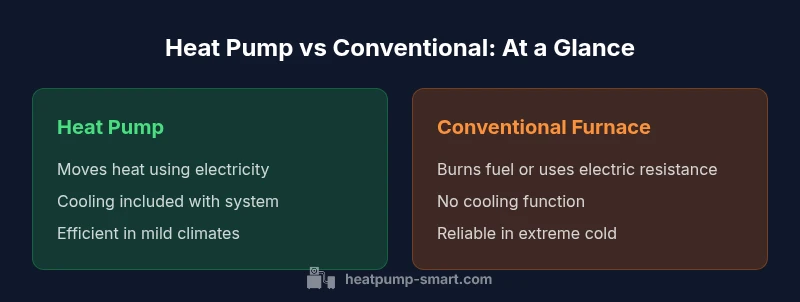
| Feature | Heat Pump | Conventional Furnace |
|---|---|---|
| Heating method | Moves heat via refrigerant cycle with electric energy | Burns fuel or uses electric resistance to generate heat |
| Cooling capability | Provides cooling as part of the same system | No cooling function typically (separate AC needed) |
| Energy efficiency | High efficiency in temperate to mild climates (COP-based) | Efficiency varies by fuel type and efficiency rating |
| Cold-weather performance | Can rely on auxiliary heat in very cold weather | Generally reliable in extreme cold with dedicated fuel source |
| Upfront installation | Requires outdoor condenser, refrigerant lines, and electrical upgrade in some cases | Typically simpler venting and fuel line setup |
| Ongoing maintenance | Fewer moving parts; refrigerant system requires leak checks | Burner, venting, and combustion safety require regular maintenance |
| Best for | Mild to moderate climates; homes seeking cooling and decarbonization | Cold climates or limited electrical capacity; straightforward heating only |
Advantages
- Potentially lower operating costs in mild climates
- Provides both heating and cooling in a single system
- Emissions can be lower when powered by clean electricity
Disadvantages
- Performance can drop in very cold weather unless equipped with supplementary heat
- Higher upfront cost and installation complexity
- Requires reliable electrical infrastructure and refrigerant handling
Heat pump is generally the better fit for most homes in moderate climates; conventional furnaces remain strong in very cold regions or when electrical upgrades are impractical.
Choose heat pump if you want year-round heating and cooling with potential energy savings. Opt for conventional furnace if your climate is very cold or if electrical capacity is a limiting factor; a dual-fuel setup can offer a balanced solution.
Your Questions Answered
What is the main difference between a heat pump and a conventional furnace?
The main difference is how heat is generated: heat pumps move heat using electricity and refrigerant, while conventional furnaces generate heat by burning fuel or using electric resistance. Heat pumps also typically offer cooling in the same system, which furnaces do not.
Heat pumps transfer heat with refrigerant and electricity and often include cooling, whereas furnaces burn fuel or use electric resistance to create heat.
Which climate is best for a heat pump?
Heat pumps are most effective in temperate or mild climates with moderate winter temperatures. In very cold climates, performance may rely on auxiliary heat or a secondary furnace.
Heat pumps work best in milder winters; in very cold areas you may need backup heat.
Can a home have both a heat pump and a furnace?
Yes. A dual-fuel or hybrid system uses a heat pump for most heating and a conventional furnace as backup in extreme cold, balancing efficiency and reliability.
A hybrid setup uses a heat pump most of the time and a furnace when it gets very cold.
What maintenance steps are common to both systems?
Regular filter changes, thermostat checks, and annual professional HVAC inspections are important for both systems to ensure safe, efficient operation.
Change filters regularly and schedule annual professional maintenance for any heating system.
Should I replace an old furnace with a heat pump?
Consider current insulation, ductwork, electricity capacity, and climate. A cost-benefit analysis will reveal whether a heat pump retrofit adds value or if a conventional upgrade is more practical.
Evaluate climate, ducts, and electrical capacity to decide between retrofit or replacement.
Are heat pumps louder than furnaces?
Both systems have varying noise levels depending on model and installation. Modern units are designed for quieter operation, but placement and duct design influence perceived sound.
Noise depends on model and install; choose units rated for quiet operation.
Top Takeaways
- Assess climate to decide heat pump vs conventional
- Look for outdoor refrigerant lines and reversing valve signs
- Consider backup heat needs in cold climates
- Factor in insulation and ductwork in the decision
- Consult a licensed HVAC professional for a formal load and feasibility check