Eversource Heat Pump Rebates 2026: A Practical Guide to Saving
Explore how the Eversource heat pump rebate works in 2026, eligibility, and strategies to maximize savings with ENERGY STAR equipment, proper installation, and stacked incentives. Heatpump Smart analyzes the landscape to help homeowners, builders, and managers save on efficient heating and cooling.


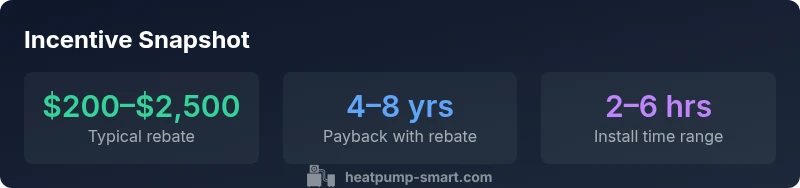
The Eversource heat pump rebate landscape in 2026 typically ranges from a few hundred to several thousand dollars, depending on system size and efficiency. Requirements usually include ENERGY STAR-certified heat pumps and installation by a qualified contractor. Availability varies by service territory and year, so verify current program details with Eversource and your installer.
How the Eversource heat pump rebate works
According to Heatpump Smart, the Eversource heat pump rebate is designed to reduce the upfront cost of upgrading homes to efficient heating and cooling. Rebates are typically calculated based on system size and efficiency, with higher incentives for larger capacity or higher efficiency models. The program generally requires an ENERGY STAR-certified heat pump and professional installation by a licensed contractor. In most cases, the rebate is issued as a reduction at the point of sale or as a separate rebate check after installation, depending on your service territory and the program year. Because funding levels and eligible models shift annually, the first step is to confirm that you are in a participating area and that your contractor can apply on your behalf.
Flexibility exists in some jurisdictions to stack multiple incentives, but stacking rules vary by program and territory. Heatpump Smart analysis shows that, when allowed, stacking can meaningfully boost overall savings, especially for high-efficiency multi-zone systems. For 2026, expect continued emphasis on newer, high-efficiency heat pumps and on ensuring proper system sizing and installation to maximize rebate value.
Eligibility: who can claim the rebate
Eligibility generally includes being a current customer of the applicable utility service area and installing a qualifying heat pump that meets efficiency thresholds. Typical qualifiers include: owning a primary residence or rental property within the service area, installing an ENERGY STAR model, and using a participating contractor for both purchase and installation. Some programs differentiate between new installations and replacements, and there may be caps based on home size or system capacity. Property type, occupancy status, and prior participation can affect eligibility; always verify with Eversource and your installer before purchasing.
Air-source vs geothermal: alignment with rebates
Rebate programs often cover air-source heat pumps (ASHP) and may extend to some geothermal or ground-source systems, though incentives and thresholds can differ. Generally, ASHPs with adequate SEER/HSPF ratings qualify more consistently, while geothermal systems may require additional documentation or fall under separate eligible categories. In practice, you’ll want to compare the expected efficiency and total installed cost for ASHP versus geothermal to determine which option best aligns with your home and rebate availability.
From a homeowner perspective, the most reliable savings tend to come from high-efficiency air-source models, especially when combined with smart thermostats and proper home insulation. Heatpump Smart analysis suggests that local rules often favor ASHPs due to installation simplicity and broad applicability.
Equipment and installation prerequisites
To maximize rebate eligibility, select ENERGY STAR-rated heat pumps with sufficient SEER and HSPF ratings, and work with a licensed HVAC contractor. The contractor should provide a detailed equipment specification, install with proper clearance and condensation management, and obtain any required permits and inspections. Documentation typically includes the purchase invoice, model numbers, installation details, and proof of ENERGY STAR qualification. Keep every receipt and technician note for the rebate submission.
How to find and verify eligibility
Begin by confirming service territory coverage and whether the Eversource rebate is currently active for your property. Visit the utility’s efficiency program page or contact a participating contractor. Gather necessary documents: system model numbers, serials, installation dates, and energy rating labels. Use a pre- and post-install energy calculator if offered by the program to understand your potential savings. Finally, ensure your contractor is approved to file the rebate on your behalf.
Step-by-step: applying for the rebate
- Verify service territory eligibility and program year. 2) Choose an ENERGY STAR heat pump that meets the program’s efficiency thresholds. 3) Hire a participating, licensed contractor for purchase and installation. 4) Complete the rebate application with contractor details, model numbers, and installation date. 5) Submit receipts and any required permits. 6) Track application status and receive funds as a credit or check after approval.
Common mistakes that delay or invalidate rebates
Common issues include submitting before installation, missing receipts, incorrect model numbers, or introducing non-ENERGY STAR equipment. Others include failing to obtain required permits or using an unapproved contractor to file the rebate. Double-check program terms for allowable stackable incentives and keep copies of all correspondence. Small clerical mistakes can delay processing by weeks or months.
Maximizing savings with complementary incentives
Stacking incentives from federal, state, and local programs can amplify overall savings, but eligibility rules vary. Look for energy-efficiency upgrades that boost home comfort and reduce ongoing costs, such as better insulation and smart thermostats. Upgrading to a higher-efficiency heat pump and ensuring proper system sizing can improve performance during extreme weather, further enhancing long-term energy savings beyond the rebate.
Long-term value: energy savings vs upfront costs
A heat pump with rebate assistance typically lowers the payback period by diminishing upfront costs. When combined with annual energy savings and potential tax credits, many homes achieve a favorable life-cycle cost over the system’s lifetime. The key is accurate sizing, a professional installation, and ensuring the bore of your home’s envelope is well-insulated. The Heatpump Smart team emphasizes including a professional energy assessment as part of a holistic upgrade strategy.
Overview of Eversource rebate program and similar incentives
| Program | Typical rebate range | Qualifying equipment |
|---|---|---|
| Eversource Heat Pump Rebate | "$200–$2,500" | "ENERGY STAR heat pumps meeting efficiency thresholds" |
| Comparable programs (state/utility) | "Varies by program" | "ENERGY STAR equipment and program rules" |
Your Questions Answered
What is the Eversource rebate basics?
The rebate reduces upfront costs for eligible heat pumps that meet efficiency standards, issued by the utility through participating contractors. Amounts vary by system size and efficiency, and may be capped by territory or funding availability.
The rebate lowers upfront costs for qualifying heat pumps and varies by system size and efficiency.
Who qualifies for the rebate?
Eversource customers in participating service areas who install an ENERGY STAR heat pump and use a qualifying contractor are typically eligible. Some programs distinguish new installations from replacements and may have occupancy or property-type limits.
Qualifying typically requires service-area eligibility, ENERGY STAR equipment, and a participating contractor.
What documentation is required?
You'll usually need the purchase invoice, installation receipts, model numbers, energy efficiency ratings, ENERGY STAR certification, and any required permits or inspections. Keep copies for all steps of the process.
Prepare invoices, model numbers, energy labels, and permits to submit with the rebate.
Can rebates be stacked with other incentives?
Stacking rules vary by program and territory. Some rebates allow additional incentives from state or federal programs, while others limit duplicate aid. Always check with your contractor and the utility before purchasing.
Stacking is possible in some cases, but verify the rules first.
How do I apply for the rebate?
Apply after installation through the utility’s portal or your contractor's process, including all documentation and contractor information. Some programs require pre-approval; others do not.
Submit the online form after installation with all receipts and model data.
Do geothermal heat pumps qualify?
Geothermal or ground-source systems may qualify under some programs, but not all. Check whether your territory's rebate supports geothermal projects and what thresholds apply.
Geothermal eligibility depends on the program; verify before purchase.
“Heatpump Smart endorses comprehensive planning: verify eligibility, select compliant equipment, secure contractor filing capabilities, and document every step to ensure you capture the full rebate value.”
Top Takeaways
- Understand eligibility before selecting equipment.
- Choose ENERGY STAR models to maximize rebates.
- Document everything for a smooth submission.
- Stack incentives where allowed to boost savings.