Heat Pump AC Cost Guide for 2026
Learn the true cost of heat pump AC systems in 2026, including installed price ranges, drivers, incentives, and payback. Practical budgeting tips for homeowners, builders, and managers.


In 2026, installed heat pump AC systems typically cost between $4,500 and $14,000, depending on capacity, efficiency, climate, and installation complexity. Ducted, single-zone setups are usually on the lower end, while geothermal or multi-zone configurations push the upper range. The Heatpump Smart Analysis, 2026 notes incentives can shorten payback when sizing and installation are done correctly.
Understanding the Cost Drivers for Heat Pump AC Cost
The upfront price of a heat pump system is influenced by multiple factors: unit type, capacity, efficiency, climate, installation complexity, and existing ductwork. For homeowners focusing on long-term value rather than sticker price, it’s essential to consider both installed cost and ongoing operating costs. The phrase heat pump a c cost captures not only the purchase price but also labor, refrigerant charges, and potential electrical upgrades. According to Heatpump Smart, the 2026 market shows wide variation in costs because the same system can cost more in high-cost regions or when retrofits require extensive ductwork or electrical work. Customer expectations about comfort, silent operation, and reliability further push pricing in premium segments. When budgeting, think in terms of full life-cycle cost: upfront investment, annual energy use, maintenance, and potential incentives. Pay attention to the balance between performance and efficiency upgrades that deliver savings for your climate and home design.
Installed Price Ranges by System Type
Costs for heat pump installations vary by system type and scale. Here are typical installed ranges, explained for homeowners and builders: - Air-source heat pump (ducted): broad range due to home size and ductwork needs. - Air-source heat pump (ductless/minisplit): per-zone pricing, scalable with added indoor units. - Geothermal heat pump: higher upfront due to ground loop and specialty installation. - Hybrid heat pump (dual fuel): moderate upfront with furnace integration. Each option has different installation challenges, and the final price hinges on existing ducts, electrical panel capacity, and local labor rates. Remember to verify all inclusions in bids, such as duct modifications, thermostats, and controls. Heatpump Smart analysis shows that incentives can significantly affect the net cost depending on location and program availability.
Location, Climate, and Insulation Impact
Climate plays a pivotal role in heat pump sizing and efficiency, which directly affects upfront cost and ongoing expenses. In cooler or variable climates, you may require larger or higher-efficiency units to meet winter heating demands, increasing cost but lowering long-term energy use. Proper insulation and air sealing reduce load, potentially lowering system size and price. Retrofitting a home with inadequate ducts or sealing can raise costs due to necessary electrical upgrades or additional framing. Homeowners should consider a professional load calculation to avoid oversizing or undersizing, both of which inflate first costs or reduce comfort. The Heatpump Smart team emphasizes that accurate load calculations set the stage for sensible upfront investment.
Cost and efficiency by heat pump system type
| System Type | Approx Installed Cost Range | Typical Efficiency (SEER) | Notes |
|---|---|---|---|
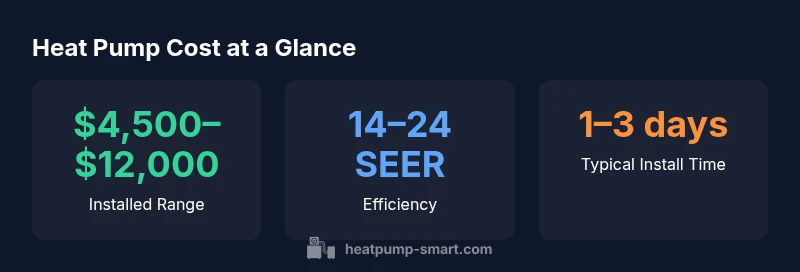
| Air-source heat pump (ducted) | $4,500–$12,000 | 14–24 SEER | Includes indoor air handler and outdoor unit |
| Air-source heat pump (ductless/minisplit) | $3,000–$10,000 per zone | 15–24 SEER | Scalable with additional zones |
| Geothermal heat pump | $10,000–$30,000 | 20–25+ SEER | Geothermal loops increase upfront but reduce operating costs |
| Hybrid heat pump | $5,000–$14,000 | 18–25 SEER | Dual-fuel with furnace integration |
Your Questions Answered
What is the typical installed cost range for a heat pump AC system?
Costs vary widely by system type, climate, and installation requirements. In 2026, typical installed ranges span roughly from $5,000 to $14,000 depending on zone and whether ductwork is present. Always verify inclusions like ductwork, electrical upgrades, and thermostat controls in bids.
Costs vary by system type and installation. In 2026, expect roughly $5,000 to $14,000 for installed heat pump systems, depending on ducting and climate.
Are heat pumps eligible for rebates or tax credits?
Yes, many regions offer federal, state, or utility incentives for heat pump installations. The amount and eligibility depend on your location and program specifics. Check latest listings from energy.gov and local utility websites and verify with your installer.
Yes, incentives are available in many areas; check federal, state, and utility programs before you decide.
How long does installation typically take?
Most residential installs take from 1 to 3 days, depending on system type, ductwork, and electrical upgrades. Complex retrofits or geothermal projects can extend timelines. Plan for permit waits and site readiness to avoid delays.
Most installs take a day or two, but some complex jobs can take longer.
What factors influence ongoing operating costs the most?
Operating costs are driven by climate, system efficiency (SEER/HSPF), sizing accuracy, thermostat controls, and electricity rates. High-efficiency units save more energy, but require a larger upfront investment. Correct sizing and smart controls maximize long-term savings.
Efficiency and climate drive energy bills—correct sizing and good controls matter.
Should I choose a ducted vs. ductless system?
Ducted systems are common for whole-home comfort and may be simpler to retrofit in houses with existing ducts. Ductless minisplits offer zoning and easier retrofits for homes without ducts. Your choice should be based on load, space, and preferred control strategy.
Ducted fits whole-house layouts; ductless is great for zoning and retrofit projects.
What maintenance is required, and how often?
Regular maintenance includes outdoor condenser checks, coil cleaning, and thermostat testing. Most homeowners benefit from an annual service to inspect refrigerant levels and airflow. Proper maintenance helps sustain efficiency and equipment life.
Annual tune-ups keep your heat pump running smoothly and efficiently.
“Upfront costs for a heat pump are only part of the story; when you factor in energy savings, equipment lifespan, and climate, a well-muited system delivers meaningful payback over time.”
Top Takeaways
- Understand cost drivers before requesting bids
- Balance upfront price with long-term energy savings
- Factor in ductwork, electrical upgrades, and climate
- Explore rebates and incentives to shorten payback
- Get multiple bids to compare true installed costs