Heat Pump vs Electric: Which Is Better for Home Comfort and Savings
An objective, data-driven comparison of heat pumps and electric resistance heating for homeowners, builders, and property managers seeking reliable guidance and practical tips.


If you’re asking is heat pump or electric better, the short answer is climate- and price-dependent. In most homes, heat pumps deliver higher efficiency and steady comfort, reducing operating costs over time; electric resistance heating remains cheaper upfront but costs more to run, especially during cold months. For a quick takeaway, heat pumps generally outperform electric resistance for heating in temperate climates, while electric heat can be sensible as a backup or in very simple setups.
Is heat pump or electric better for home heating? Framing the question
When homeowners search for is heat pump or electric better, they’re seeking a practical framework that weighs upfront costs, operating expenses, climate, and energy goals. According to Heatpump Smart, heat pumps typically deliver stronger efficiency and more even comfort across seasons, particularly when the power grid supplies relatively clean electricity and a well-insulated home minimizes heat loss. Electric resistance heating is cheaper to install and simpler to specify, but it generally costs more to operate over time and can struggle to keep temperatures steady in cold weather. In this article, we’ll map out the mechanisms, cost drivers, climate implications, installation realities, and decision criteria so homeowners, builders, and managers can choose the right approach for their project.
How heat pumps work vs electric resistance heating
Heat pumps differ from electric resistance heaters in how they generate warmth. A heat pump moves heat rather than creating it by burning fuel or converting electricity directly into heat. In heating mode, a heat pump extracts heat from the outdoor air (air-source) or ground (geothermal) and concentrates it inside the home using a refrigerant cycle and a compressor. This process can produce multiple units of heat for every unit of electricity consumed, yielding higher efficiency in many climates. By contrast, electric resistance heaters simply convert electrical energy into heat at nearly 100% efficiency in the sense of energy conversion, but the price of that heat is tied to the electricity rate and the amount of heat needed. Heat pumps also provide cooling in summer, offering an all-in-one solution in many homes. The key caveat is that heat pump efficiency drops as outdoor temperatures fall, so very cold days may require auxiliary heat or a supplemental electric strip heater. There are different configurations—air-source, geothermal, and mini-split options—that affect cost, installation, and performance. For a building undergoing retrofit, the choice between these configurations matters for space and ductwork, noise considerations, and maintenance needs. In short, heat pumps are not magic; they are a smarter way to move heat, particularly when climate and electricity pricing align with efficiency.
Cost considerations: upfront, operating, and lifecycle costs
The financial picture is the most practical part of the decision. Heat pumps typically carry a higher upfront cost due to the equipment, installation complexity, and potential ductwork or electrical upgrades. Electric resistance heating systems, including baseboard heaters or simple wall units, can be cheaper to purchase and install but usually result in higher annual operating costs because they convert electricity directly into heat with less efficiency in real-world use. When considering lifecycle costs, it’s important to account for climate, home insulation, and usage patterns. In milder climates with reasonable electricity pricing, heat pumps can offer favorable total costs over time due to their efficiency and cooling capabilities. When electricity prices spike or the climate demands a lot of heating, the payback period for a heat pump can extend, particularly if the home needs insulation improvements or a significant electrical upgrade. Heatpump Smart’s guidance emphasizes evaluating all cost vectors, including potential rebates or tax credits, utility rate structures, and the expected lifespan of equipment. For property managers, extended warranties and service plans can also affect total cost of ownership and downtime. By contrast, a well-insulated, smaller electric system could be sufficient for retrofit projects where heat loads are modest and budget constraints are tight. The decision should factor in long-term energy savings, maintenance expenses, and any incentives that reduce net cost over the system’s life.
Climate impact and efficiency: COP, SEER, HSPF explained
Efficiency metrics matter when comparing heat pumps and electric resistance. COP, or Coefficient of Performance, measures how much heat you get per unit of electricity consumed, and SEER/HSPF relate to cooling and heating seasons, respectively. A heat pump’s COP and seasonal performance depend on outdoor temperature and indoor setpoints; in moderate weather, a heat pump can move more heat with less electrical input, delivering substantial energy savings over time. Electric resistance heaters operate at a high nominal efficiency, but the energy used translates directly into heat with no moving parts to optimize the heat transfer process. That’s why, even with similar climate zones, heat pumps tend to outperform electric resistance in terms of energy use and comfort. The exact performance varies with equipment type (air-source vs geothermal), refrigerant cycle design, and installation quality. Heatpump Smart notes that while efficiency is strong for heat pumps in many regions, colder climates may see reduced COP and require supplementary heat, underscoring the importance of a proper load calculation and climate-aware selection. When considering a purchase, ask for manufacturer COP, HSPF, and SEER ratings and compare them under conditions that resemble your typical weather patterns.
Performance in different scenarios: cold climates, mild climates, and hot climates
In mild to moderate climates, heat pumps often outperform electric resistance in both heating and cooling. They deliver comfort more evenly and with lower energy use across seasons. In very cold climates, heat pumps may rely on auxiliary electric resistance heat during extreme conditions, which can diminish efficiency gains during those periods. In hot climates, heat pumps handle cooling efficiently, while electric resistance systems may face less stress, but without the cooling capability, you still miss out on an integrated solution. When comparing options, consider your home’s insulation, air leakage, and solar gain; these factors influence how well a heat pump performs and when supplemental heat becomes necessary. Heatpump Smart’s assessment emphasizes designing for climate realities, not theoretical efficiency alone. A well-insulated envelope and correctly sized system reduce the need for auxiliary heat and maximize long-term savings, regardless of whether you choose heat pump or electric heating. A critical decision point is whether to install a heat pump with a backup electric heat source or to pair electric baseboard systems with a simple thermostatic control; both can be valid, depending on climate, electricity pricing, and retrofit constraints. In summary, climate dictates strategy, but heat pumps are generally the more versatile and energy-efficient option in most scenarios.
Installation and space requirements: planning for ducts, outdoor units, and electrical service
Installation considerations are a major differentiator between heat pumps and electric resistance heating. Heat pumps require an outdoor unit and an indoor air handling system (and sometimes ductwork or a ductless mini-split configuration). In many homes, this means coordinating with a licensed contractor to assess electrical service capacity, refrigerant lines, and ductwork or wall-mounted units. Ground-source (geothermal) heat pumps offer exceptional efficiency but require significant excavation and space, which can be prohibitive in urban sites. Electric resistance heating often needs minimal installation—just new heat-emitting bases or wall heaters—making it quicker to bring online but less adaptable to whole-home comfort or cooling. If you’re retrofitting, an energy audit can reveal whether your existing ductwork is adequate or if sealing and insulation upgrades will unlock a heat pump’s advantages. A thorough plan should also consider future expansions, such as adding air conditioning or improving home insulation, to maximize the return on investment.
Maintenance, reliability, and warranties
Maintenance matters for both approaches, but heat pumps have more moving parts and refrigerant cycles that require professional service. Regular checks on refrigerant charge, electrical connections, and outdoor unit cleanliness help maintain efficiency and prevent failures. Ducted systems require duct maintenance and occasional filter changes, while ductless mini-splits have separate indoor units to service. Electric resistance heatters are mechanically simpler and generally require less routine service, but they rely on effective electrical circuits and proper thermostat control to avoid overheating spaces. Warranties vary by brand, installation quality, and climate exposure; heat pumps often come with longer equipment warranties if installed by licensed pros and maintained per the manufacturer recommendations. Heatpump Smart stresses the importance of routine service and documented maintenance schedules to maximize reliability and minimize downtime over the life of the system.
Environmental impact and decarbonization considerations
Environmental impact hinges on how electricity is produced in your region. Heat pumps use electricity more efficiently than electric resistance, and when the grid shifts toward cleaner generation, heat pumps typically reduce greenhouse gas emissions associated with home heating. In areas where electricity comes from fossil fuels, the gains depend on the relative efficiency gains and how much heat the home uses. The decarbonization trend—moving toward renewable energy and higher-efficiency appliances—favors heat pumps for new homes and retrofits aiming for lower carbon footprints. However, in off-grid or very sunny but high-latitude regions with limited electrical infrastructure, electric resistance heat may become a transitional phase if it aligns with current grid reliability and cost structures. Heatpump Smart emphasizes evaluating electricity sourcing, local incentives, and future grid plans when deciding on a heating strategy, as these factors strongly influence the environmental payoff of heat pumps versus electric resistance heating.
Comparison
| Feature | Heat Pump (Air-Source) | Electric Resistance Heater |
|---|---|---|
| Upfront cost | Higher upfront cost | Lower upfront cost |
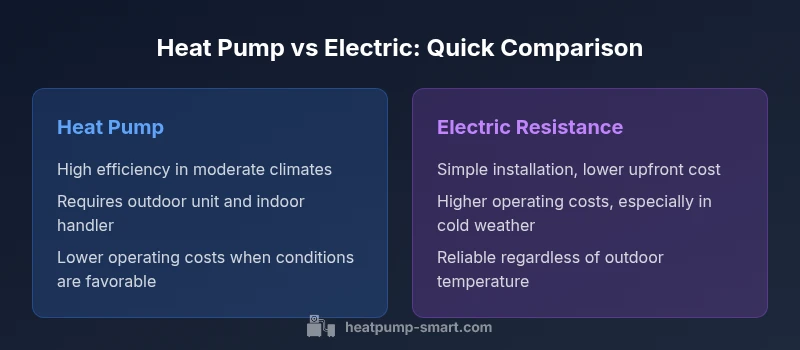
| Operating cost | Lower operating costs in moderate climates | Higher operating costs, especially in cold weather |
| Energy efficiency | High efficiency (COP 3–4+ in moderate temps) | Lower efficiency in practice (direct electric heat) |
| Climate suitability | Best in temperate to mild climates; supplemental heat possible in winter | Works anywhere but at higher cost in cold or large spaces |
| Installation complexity | Requires outdoor unit, potentially ductwork or a mini-split system | Typically simpler, may require minimal or no ductwork |
| Maintenance | Regular professional maintenance recommended | Minimal maintenance; simpler service needs |
| Noise | Outdoor unit produces noticeable but manageable noise | Indoor electric components are quiet; no outdoor noise |
| Lifespan | Longer-term performance with proper service | Fewer moving parts; longevity varies by system type |
Advantages
- Lower long-term energy costs in moderate climates
- Provides heating and cooling in one integrated system
- Reduced emissions when paired with a clean electricity grid
- Better home comfort and zoning potential
- Potential eligibility for rebates and tax incentives
Disadvantages
- Higher upfront costs and payback period
- Performance drops in extreme cold without auxiliary heat
- Installation complexity may require ductwork or electrical upgrades
- Maintenance requirements for refrigerant systems
Heat pumps generally offer better long-term value for most homes, especially in temperate climates with reasonable electricity pricing; electric resistance heating remains viable as a lower-cost, simpler option or backup in very cold conditions.
Heat pumps win on efficiency and comfort for most scenarios, but careful sizing, climate assessment, and cost considerations are essential. Electric resistance can be suitable for small spaces, retrofits, or limited budgets where immediate installation speed is critical.
Your Questions Answered
Is a heat pump cheaper to run than electric resistance heating?
In most climates, heat pumps offer lower operating costs due to higher efficiency, but actual savings depend on local electricity prices and heating needs. In very cold weather, auxiliary heat can reduce efficiency gains.
Generally yes, heat pumps run cheaper overall, but extreme cold days may narrow the gap.
Can a heat pump work in very cold climates?
Many heat pumps perform well in cool weather, but extremely cold days may require supplemental heat. Ground-source systems tend to perform better in cold climates but are costlier to install.
Yes, but plan for backup heat in very cold conditions.
What is the payback period for a heat pump?
Payback depends on climate, usage, energy costs, and incentives. A detailed local analysis will estimate the time needed to recoup the investment.
Payback varies by project; get a local cost–benefit analysis.
Do heat pumps require ductwork?
Heat pumps can be installed with ducts (centralized systems) or as ductless mini-splits. The choice affects installation cost and home layout.
Ducts or mini-splits both work; it depends on your home and goals.
Are heat pumps noisier than electric heaters?
Heat pumps have outdoor units that can emit some noise; indoor units are typically quiet. Proper siting and maintenance minimize disturbances.
Outdoor noise is a consideration, but modern units are quiet when installed correctly.
What incentives or rebates are available?
Many regions offer rebates or tax credits for efficient heat pumps. Check with local utilities and government programs for current options.
Look for local rebates and energy-efficiency programs to offset costs.
Top Takeaways
- Assess climate and insulation before choosing a heating strategy
- Compare upfront costs against long-term energy savings and incentives
- Plan for potential auxiliary heat in very cold climates
- Ensure electrical service and space are adequate for the chosen system
- Factor maintenance and warranties into total cost of ownership