Heat Pumps Too Expensive to Run? A Practical Cost-Cut Guide
Struggling with a heat pump that's too expensive to run? Learn common cost drivers, sizing checks, insulation fixes, and smart operating tips to slash energy bills in a practical Heatpump Smart guide.


If your heat pump feels like it’s too expensive to run, start with the basics: verify proper sizing, seal leaks, and optimize thermostat settings. In most homes, high costs come from an oversized unit, poor insulation, or duct losses rather than the unit itself. This guide explains a step-by-step approach to diagnose and reduce running costs without sacrificing comfort.
Understanding the cost reality of heat pumps
If you’ve ever thought the heat pump is the culprit behind a rising energy bill, you’re not alone. The phrase heat pump too expensive to run is common among homeowners who expect a single device to solve all comfort while keeping costs ultra-low. In reality, running costs depend on several interacting factors: how large the system is for your home (sizing matters more than most people realize), how well your home is insulated, the design and condition of ducts, and how you actually use the system day to day. According to Heatpump Smart, the biggest savings come from three practical levers: correct sizing, a well-sealed envelope, and intelligent operation. By understanding these levers, you can dramatically lower your bills without sacrificing comfort in winter or summer. This article walks you through a diagnostic mindset and concrete steps to reduce running costs.
Common factors driving high running costs
Many households encounter high running costs due to a combination of sizing, insulation, and usage patterns. Oversized heat pumps waste energy by short cycling and defrosting more often in winter, while undersized units work harder to reach setpoints, increasing electricity use. Poor insulation and air leaks around doors, windows, attic hatches, and ductwork let conditioned air escape, making the system work harder. Duct losses, dirty coils, and reduced refrigerant performance also erode efficiency. Finally, inefficient operation—like leaving the system on all day or running at high fan speed—can quickly inflate energy bills. Heatpump Smart analysis shows that improving the building envelope and ensuring proper sizing often yields more savings than chasing marginal efficiency gains in an aging unit.
How to check if your unit is properly sized
Proper sizing starts with a professional load calculation, commonly a Manual J assessment, to determine whether the heat pump matches your home’s heating and cooling needs. A unit that’s too large cools and heats quickly but wastes energy and harms humidity control; a unit that’s too small can’t keep up in extreme weather and runs constantly. Look at the equipment nameplate for rated SEER, EER, and HSPF values, and ask your installer for a recent load calculation. If you suspect mismatches, request a second opinion and compare the calculated load to the current system’s capacity. Proper sizing isn’t glamorous, but it is the single most cost-effective fix when costs spike.
Envelope and insulation: why it matters
Your home’s envelope is the first line of defense against energy waste. Even a perfectly sized heat pump loses efficiency if warm air leaks out in winter or cool air slips out in summer. Sealing air leaks around windows and doors, insulating attic spaces, and ensuring proper ceiling and floor insulation reduces the heating and cooling load the system must handle. Upgrading weatherstripping and sealing penetrations can deliver noticeable savings without touching the HVAC equipment. In many homes, these envelope improvements outperform new equipment in terms of cost per saved kilowatt-hour.
Operating the system efficiently: thermostat and defrost fundamentals
Smart operation hinges on how you schedule and control the heat pump. Program a thermostat to lower heating or cooling when you’re away or asleep, and use eco or energy-saving modes when appropriate. In many climates, a heat pump uses more energy during defrost cycles in cold weather; keeping the outdoor coil clear and ensuring proper humidity can minimize unnecessary defrost. If you notice frequent short cycling, consult a professional to recheck controls, sensors, and zoning. Small changes in scheduling can yield meaningful reductions in running costs.
Maintenance that saves money over time
Regular maintenance keeps the system operating near peak efficiency. Replace or clean air filters every 1–3 months, depending on use and filter type, and schedule professional inspections at least once a year. Clean the outdoor unit and ensure unobstructed airflow; inspect refrigerant lines for wear and leakage only with a licensed technician. Coil cleaning, refrigerant checks, and electrical connections are tasks best left to pros. Routine maintenance reduces the likelihood of costly breakdowns and keeps efficiency high, which translates into lower energy use.
When to consider upgrading or switching strategies
If the home is older or the climate has changed significantly, you might reassess the economics of continuing with a heat pump. In some cases, improvements in the building envelope plus better controls can bring costs down enough that a replacement isn’t urgent. In others, you may decide that a higher-efficiency model, a heat pump with a different refrigerant, or a hybrid system offers better long-term value. The decision should be guided by a cost-benefit analysis that accounts for installation costs, expected energy savings, and available incentives.
Cost comparisons: heat pump vs alternate heating options
For some homes, a heat pump remains the best option, while for others, a traditional furnace or boiler plus supplemental heat may be preferable. Compare total cost of ownership, including installation, maintenance, and energy use over the expected life of the system, rather than upfront price alone. If you’re truly trying to reduce out-of-pocket costs, focus on envelope improvements and correct sizing first, then reassess after several seasons of operation. Heatpump Smart emphasizes a data-driven approach to determine when costs are primarily due to external factors (rates, climate) versus equipment limitations.
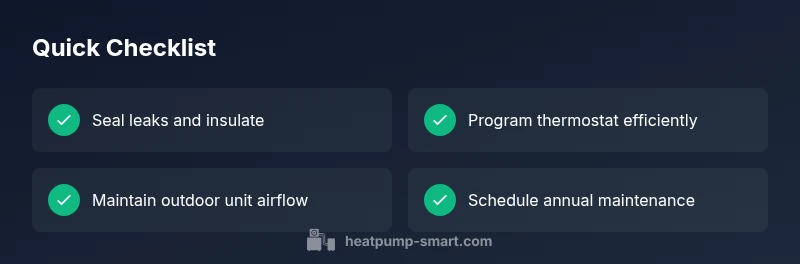
Quick-start checklist to reduce running costs today
- Seal gaps around doors and windows and add weatherstripping
- Schedule a professional size assessment if you suspect mismatches
- Optimize thermostat programming for occupancy and setback periods
- Keep the outdoor unit clear of debris and ensure airflow
- Schedule regular maintenance to sustain efficiency
Steps
Estimated time: 60-90 minutes
- 1
Review energy usage and bills
Gather last 12–24 months of energy bills and note seasonal peaks. Compare with previous years to identify if costs are rising consistently. This baseline helps you measure the impact of subsequent fixes.
Tip: Download usage data from your utility portal and track seasonal trends. - 2
Inspect building envelope
Check for drafts around doors, windows, and attic hatches. Add weatherstripping and attic insulation where needed to reduce heat gain/loss.
Tip: Use a smoke pencil or handheld thermal camera if available to locate leaks. - 3
Evaluate thermostat behavior
Ensure your thermostat is programmed for occupancy. Avoid leaving the system on continuous mode; use setback periods and adaptive scheduling.
Tip: Match your schedule to your actual daily routine for maximum savings. - 4
Inspect outdoor unit and clear space
Remove leaves, snow, and debris from the outdoor coil area; ensure 2 feet of clearance for proper airflow.
Tip: Keep plants trimmed back to maintain unobstructed airflow. - 5
Confirm proper sizing with a pro
Ask for a Manual J calculation and compare it with current unit capacity. If mismatched, plan a sizing correction.
Tip: Request both SEER/EER and HSPF values and verify they align with climate needs. - 6
Test duct integrity
If you notice uneven temperatures or excessive dust near vents, duct leaks may be present. Consider duct sealing or rehab.
Tip: Duct sealing can often cut losses more than minor equipment upgrades. - 7
Assess defrost behavior
In cold weather, frequent defrost cycles can raise energy use. Ensure coils aren’t iced over and humidity levels are appropriate.
Tip: Schedule a coil cleaning if icing occurs more than occasionally. - 8
Plan next steps with a professional
If issues persist, obtain a written assessment and a cost estimate for repairs, envelope improvements, or a potential upgrade.
Tip: Compare multiple quotes and look for energy-efficiency incentives. - 9
Decide on upgrade vs repair
Weigh ongoing costs, climate suitability, and expected savings to determine whether repair or replacement offers the best value.
Tip: Document a small, data-driven project plan with expected payback.
Diagnosis: Heat pump seems to be expensive to run or monthly energy bills are higher than expected
Possible Causes
- highUnit sizing is incorrect (oversized or undersized)
- highPoor building envelope (air leaks, inadequate insulation)
- mediumDuct losses or leaky ducts
- mediumInefficient operating settings or long run cycles
- lowOutdoor coil fouling or restricted airflow
Fixes
- easyObtain a modern load calculation and confirm unit size matches home needs
- easySeal leaks and improve insulation around attic, doors, and windows
- mediumInspect and seal ductwork; consider professional duct testing
- easyOptimize thermostat schedules and reduce unnecessary defrost cycles
- mediumClean or service outdoor coil and ensure proper airflow
Your Questions Answered
Why is my heat pump expensive to run?
Common causes include incorrect sizing, poor insulation, duct losses, and inefficient operation. Addressing these factors can dramatically reduce energy use without sacrificing comfort.
Typically, incorrect sizing, leaks, or poor insulation drive high running costs. Fix these first for real savings.
How can I tell if my heat pump is the right size for my home?
Have a professional perform a load calculation (Manual J) to determine your home’s heating and cooling needs. Compare the result to your current unit’s capacity and efficiency ratings.
A professional load calculation confirms whether your unit matches your home’s needs.
What quick changes reduce running costs?
Program a thermostat schedule, enable energy-saving modes, and keep the outdoor unit clear of debris. These small steps often yield immediate savings.
Set a schedule and keep the outdoor unit clean for fast wins.
When should I consider upgrading to a more efficient model?
If your unit is aging or your building envelope has been upgraded without system adjustments, upgrading to a higher-SEER model or a different refrigerant type may be cost-effective in the long term.
If efficiency has stalled after improvements, an upgrade could pay off over time.
Is it worth comparing heat pump costs to a furnace?
Yes. Compare total ownership costs, including installation, maintenance, and annual energy use. In some climates, a furnace with a supplemental heat source can be cheaper overall.
Sometimes a furnace plus supplemental heat is the better deal, depending on climate and usage.
Watch Video
Top Takeaways
- Verify proper unit sizing and a sealed envelope first.
- Seal leaks and improve the home envelope to cut costs.
- Optimize thermostat schedules and maintenance for savings.
- Consult a pro if costs remain high after improvements.