Heat Pump vs Electric Furnace: A Comprehensive Comparison for Home Comfort
A detailed, analytical comparison of heat pump versus electric furnace, covering efficiency, costs, climate suitability, installation, and long-term value for homeowners and builders.


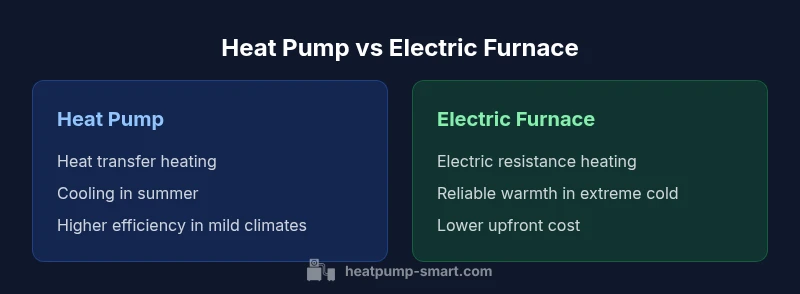
Heat pump versus electric furnace offers distinct value depending on climate, electricity prices, and comfort priorities. In most temperate regions, a well-sized heat pump delivers higher seasonal efficiency and lower operating costs, while still providing cooling. In very cold climates, an electric furnace can offer straightforward reliability, though operating costs can rise with electricity prices. This quick comparison highlights core differences in efficiency, costs, and practical suitability to guide homeowners, builders, and property managers in making a well-informed choice.
Key Differences at a Glance
According to Heatpump Smart, deciding between a heat pump versus electric furnace hinges on climate, electricity prices, and your comfort priorities. Both systems heat a home, but they do so in fundamentally different ways and with different long-term costs. In many temperate regions, a correctly sized heat pump delivers superior seasonal efficiency and year-round comfort by moving heat rather than creating it. In very cold climates, an electric furnace provides direct, dependable warmth, though energy bills and emissions depend on your electricity source and usage. This section distills the core differences and sets the stage for deeper analysis in the following sections. Understanding these distinctions helps homeowners, builders, and property managers ask the right questions about sizing, installation, and operating costs. The goal is to pick a system that matches climate, home insulation, and budget while maximizing long-term value. The phrase heat pump versus electric furnace captures a spectrum of performance, not a simple winner.
How Each System Works
The fundamental difference between a heat pump and an electric furnace lies in how they generate or move heat. A heat pump transfers heat from outside to inside (and vice versa for cooling) using a refrigerant-cycle compressor, an outdoor unit, and an interior air handler. It consumes electricity to move heat, delivering warmth efficiently when outdoor temperatures are moderate and humidity is balanced. By contrast, an electric furnace uses electric resistance coils to generate heat directly from electricity. No heat transfer occurs from the outdoors; warmth is produced in situ. When you compare heat pump versus electric furnace, you’re weighing heat transfer efficiency against resistance heating. The choice depends on climate, insulation, and energy pricing. For homes with good envelope performance, a heat pump often provides superior comfort at lower running costs, especially if cooling is a priority as well as heating.
Efficiency, Costs, and Climate
Efficiency for heating devices is generally described with metrics like COP (coefficients of performance) for heat pumps and simple watt-to-watt comparisons for electric furnaces. In practical terms, heat pumps can offer higher seasonal efficiency because they move existing heat rather than generate it. This makes operating costs lower in many regions with moderate electricity prices. Heatpump Smart analysis shows that operating costs are highly sensitive to electricity rates and climate; in mild to cool seasons, a heat pump can outperform an electric furnace on a lifecycle basis. However, when outdoor temperatures drop substantially, heat pumps rely on supplemental heat or backup resistance, which can increase energy use. An electric furnace, while often having higher upfront efficiency losses on a per-hour basis, may be preferred in extremely cold locations where resistance heating remains stable and predictable. Always evaluate the house envelope, insulation levels, and duct distribution to understand true cost implications. The best approach is to run a climate-adjusted cost comparison that includes installation and maintenance to determine long-term value.
Heating Performance Across Winter Conditions
Winter performance is a decisive factor when choosing between a heat pump and an electric furnace. In moderate cold, heat pumps keep comfort high with lower energy consumption than resistive heating. As outdoor temperatures fall beyond the heat pump’s efficient operating envelope, supplemental heat becomes necessary, potentially raising costs and complicating controls. Electric furnaces maintain consistent, rapid warmth in extreme cold, delivering steady output regardless of outdoor conditions. The decision is often shaped by climate data and electricity pricing. In areas with reliable, affordable clean electricity, heat pumps tend to provide superior season-long performance and lower emissions. In areas with very harsh winters or where grid reliability fluctuates, a supplemental strategy might be needed. Heatpump Smart’s guidance emphasizes evaluating your local climate profile and designing a hybrid strategy that minimizes fossil-fuel use while prioritizing occupant comfort.
Cooling Capabilities and Seasonal Efficiency
One notable advantage of many heat pumps is their dual function: heating in winter and cooling in summer. A heat pump not only heats but also provides air conditioning through the same refrigerant cycle, giving homeowners an all-season climate control solution. Electric furnaces lack cooling capability, so homes with electric heat require separate AC systems. If you live in a region with hot summers or desire integrated climate control, heat pumps offer a significant value proposition. The efficiency of cooling depends on the indoor air distribution, refrigerant charge, and the size of the outdoor unit relative to the home’s cooling load. When evaluating heat pump versus electric furnace options, consider whether you want a single system that handles both heating and cooling, which can simplify maintenance and improve overall comfort.
Installation Considerations and Home Readiness
Installing a heat pump typically requires careful planning around ductwork, outdoor clearances, and space for the outdoor unit. Geothermal and air-source variants have different installation footprints and site requirements. Electric furnaces, by contrast, can be simpler to install if ductwork is already in place and electrical service is capable of supporting additional load. For retrofits, a heat pump may require upgrades to wiring, thermostats, and sometimes duct sealing or insulation improvements to ensure optimal performance. Home readiness factors—insulation, air sealing, window performance—play a critical role in determining the overall efficiency and cost-effectiveness of either option. Heatpump Smart’s practical guidelines emphasize a whole-home assessment to determine whether a heat pump, an electric furnace, or a hybrid solution provides the best balance of comfort and cost.
Maintenance, Lifespan, and Reliability
Maintenance needs differ between systems. Heat pumps require periodic refrigerant checks, coil cleaning, and fan inspections, along with standard furnace or air handler filter changes. Electric furnaces primarily demand periodic element inspections and filter maintenance, with fewer moving parts in some designs. The long-term lifespan of heat pumps depends on usage patterns, climate, and maintenance, but many systems offer extended warranties when properly serviced. Electric furnaces can be highly reliable with fewer components exposed to outdoor conditions, but annual or biannual service remains important to ensure safe and efficient operation. For property managers overseeing multiple units, a proactive maintenance plan reduces the risk of unexpected downtime and maximizes the system’s return on investment.
Comparison
| Feature | Heat Pump | Electric Furnace |
|---|---|---|
| Energy Efficiency (seasonal) | Higher efficiency under mild to cool conditions; COP-based performance | Lower efficiency due to resistive heating; no heat transfer advantage |
| Heating Performance in Cold Climates | Very efficient with supplemental heat options; best in moderate cold | Reliable constant heat but higher ongoing electricity use in cold snaps |
| Cooling Capability | Yes, whole-home cooling using the same system | No built-in cooling; separate AC required |
| Initial Cost | Higher upfront cost for equipment and installation | Typically lower upfront cost for equipment |
| Installation & Space | Ducting needs; outdoor unit placement; possible site work | Interior unit and ductwork; simpler outdoor footprint |
| Maintenance and Lifespan | Regular refrigerant and coil maintenance; longer-term ecosystem | Fewer moving parts; frequent filter changes; straightforward service |
Advantages
- Lower operating costs in moderate climates
- Year-round comfort with cooling capability
- Reduced emissions when powered by clean electricity
- Potential rebates and incentives
- Fewer fossil-fuel dependencies in new builds
Disadvantages
- Higher upfront equipment and installation costs
- Performance drops in extreme cold without backup heat
- More complex installation and potential ducting upgrades
- Hedging against electricity price volatility
Heat pumps win in most moderate climates; electric furnaces remain viable in extreme cold or retrofit-constrained homes
For homes in temperate regions, a heat pump typically offers better long-term value and comfort. In ultra-cold locations or where retrofitting is challenging, an electric furnace or hybrid approach may be preferable.
Your Questions Answered
What is the fundamental difference between a heat pump and an electric furnace?
A heat pump moves heat into or out of the home using refrigerant cycles, while an electric furnace generates heat directly with electric resistance coils. Heat pumps can offer higher efficiency in milder weather; electric furnaces deliver steady heat in very cold conditions.
A heat pump moves heat where it’s needed and can cool in summer, while an electric furnace creates heat with electricity. Heat pumps are usually more efficient in moderate climates; electric furnaces are reliable in extreme cold.
Are heat pumps effective in very cold climates?
Heat pumps work well in many cold regions, especially with supplemental heat strategies. In extreme cold, performance can decline and costs may rise unless backup heating is employed.
Heat pumps can work in cold weather, but you may need backup heat for the coldest days.
Do heat pumps provide cooling as well as heating?
Yes. Most heat pumps provide both heating and cooling using the same system, which can simplify installation and maintenance, and improve overall home comfort.
Heat pumps usually cool and heat with one system, making year-round climate control easier.
What should I consider about installation costs and rebates?
Installation costs vary with system type, existing ductwork, and electrical capacity. Many regions offer rebates or tax incentives for heat pumps, particularly when paired with efficient home insulation or geothermal options.
Installation and available rebates can significantly affect the total cost; check local programs.
Which system has lower maintenance requirements?
Electric furnaces generally have fewer moving parts than heat pumps, but heat pumps require periodic refrigerant, coil, and fan checks. Both systems benefit from regular filter changes and annual professional inspections.
Both need maintenance; heat pumps require refrigerant and coil checks, furnaces need standard service.
Can I retrofit my existing furnace with a heat pump?
Retrofitting often involves upgrading the ductwork and possibly the electrical panel, thermostat, and controls. In some cases, a hybrid or dual-fuel system may be a better fit for ongoing heating needs.
Retrofitting is possible but may require duct and electrical upgrades; a hybrid setup can be a good compromise.
Top Takeaways
- Assess climate and electricity costs before deciding
- Heat pumps offer dual heating/cooling and higher efficiency in mild climates
- Electric furnaces provide reliable warmth in extreme cold and simpler retrofits
- Consider ductwork, insulation, and home envelope to maximize efficiency
- Explore rebates and flexible financing to offset upfront costs