Heat Pump vs Furnace: Choosing the Best System for 2026
A rigorous comparison of heat pumps and furnaces, covering efficiency, climate suitability, upfront costs, maintenance, and long-term value to help homeowners decide.


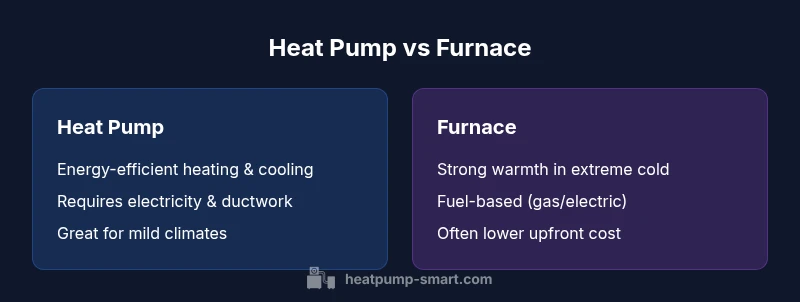
Heat pumps are often the more energy-efficient choice in moderate climates, offering heating and cooling. Furnaces deliver reliable warmth in extreme cold or where gas is inexpensive. The best decision depends on climate, electricity and gas prices, insulation, and existing ducts. This quick compare helps homeowners weigh upfront costs against long-term value.
Why homeowners compare heat pump vs furnace
According to Heatpump Smart, many homeowners start with a straightforward question: heat pump vs furnace, which system will cost less to run over the life of the home? The decision isn't just about purchase price; it's about operating costs, reliability, and comfort across seasons. Heat pumps work by transferring heat rather than creating it, delivering heating in winter and cooling in summer. Furnaces generate heat by burning fuel or using electric resistance, offering robust warmth but typically without cooling. In practice, the right choice depends on climate, energy markets, and how you use your home. Homes in mild climates often benefit from heat pumps because the heat delivered per kilowatt-hour of electricity can surpass the warmth produced by electric heaters when temperatures aren't extreme. In very cold regions, however, furnaces often offer more predictable warmth and may partner with gas or propane to reduce energy costs. The goal is to compare apples to apples: total cost of ownership, maintenance needs, and reliability, not just sticker price.
Performance and efficiency: heat pump vs furnace
Performance and efficiency are the core dimensions of any heat pump vs furnace comparison. Heat pumps rely on electricity to move heat and can achieve high seasonal efficiency ratings in milder conditions, especially when combined with modern controls and properly sized ductwork. Their efficiency is typically expressed through seasonal metrics such as SEER (cooling) and HSPF (heating), coupled with their COP (coefficient of performance). Furnaces, by contrast, are primarily evaluated with AFUE (annual fuel utilization efficiency), which measures how effectively they convert fuel into heat. When you compare these systems, consider your climate zone and electricity costs. In moderate climates, a heat pump’s energy savings can be substantial, while in persistent cold spells, a gas furnace or dual-fuel system often maintains warmth with less reliance on electrical consumption. The right choice balances efficiency with reliability and the cost of fuels in your region.
Climate suitability and comfort: where each shines
Climate plays a decisive role in determining whether heat pumps or furnaces provide the most comfort at the lowest cost. Heat pumps excel in temperate climates where outdoor temperatures rarely plunge below freezing; advanced models now perform well into cold snaps with auxiliary heat options. They also provide cooling, which can simplify home comfort year-round. Furnaces thrive in extreme cold, where burner-based heating can deliver steady warmth without depending on outdoor air temperatures. If your area experiences harsh winters, you may still use a heat pump as a primary heat source paired with a furnace or electric resistance backup. Duct design, insulation, and window performance also influence how effectively each system maintains even temperatures across rooms. Ultimately, climate resilience and comfort consistency should guide your selection.
Costs, installation, and payback: weighing upfront vs long-term value
Upfront costs set the initial tone for a heat pump vs furnace decision, but total cost of ownership over 10–15 years often matters more. Heat pumps typically involve higher initial installation costs due to equipment and refrigerant work, especially for new ducted systems or complex retrofits. Furnaces generally have lower upfront costs, but fuel expenses and maintenance accumulate over time. Payback depends on local electricity and fuel prices, insulation quality, and how you use the home. In milder regions with rising electricity rates, heat pumps may offer quicker payback, aided by cooling functionality that offsets separate air conditioning costs. In colder areas with cheap gas, a furnace or dual-fuel arrangement might be more economical. Grants, rebates, and utility incentives can shift the economics in favor of heat pumps, so check local programs.
System lifespan, maintenance, and reliability: long-term planning
Both systems require maintenance, but the maintenance profile differs. Furnaces demand regular combustion checks, venting inspections, and filter changes, with costs driven by gas prices and labor. Heat pumps require refrigerant checks, coil cleaning, and outdoor unit maintenance, plus occasional electrical inspections for controls and wiring. Lifespan expectations are similar for modern units when properly sized and installed, typically 15–20 years for heat pumps and 15–25 years for furnaces depending on usage and care. Reliability hinges on duct integrity, refrigerant seal maintenance, and venting efficiency for furnaces. If you anticipate frequent repairs or high service costs, factor those into your decision. A well-designed system with proper sizing and professional installation is key to minimizing unexpected expenses over time.
Sizing considerations and installation nuances: getting it right
Sizing is critical to performance and comfort. An undersized heat pump struggles to meet demand on cold days, while an oversized system cycles too frequently and wastes energy. For furnaces, improper sizing can lead to short cycling, uneven heating, and increased wear. A professional load calculation that considers climate, insulation, window performance, and occupancy patterns is essential for both options. Ductwork must be evaluated for leaks and pressure balance; refrigerant line insulation and proper indoor/outdoor unit placement affect efficiency. Installation complexity varies: heat pumps often require more refrigerant work, electrical capacity, and sometimes well-planned drainage and condensate handling. Cooperating contractors who follow local code requirements and manufacturer guidelines help ensure a high-performing, safe installation.
Energy use and environmental impact: sustainability considerations
Energy choices have environmental implications. Heat pumps pull electricity from the grid and can reduce emissions if your grid is decarbonizing, especially when paired with rooftop solar or community renewables. They also minimize direct combustion emissions on-site, which is appealing for indoor air quality. Furnaces burn fuel, emitting CO2 and other pollutants; their environmental footprint depends on fuel type and efficiency. In regions with clean electrical grids, heat pumps generally offer a lower carbon footprint over the life of the system, though the impact can vary with usage patterns and maintenance. For homeowners aiming for sustainability, selecting a high-efficiency heat pump with a backup heat strategy can optimize both comfort and environmental performance.
Common mistakes and myths: debunking typical assumptions
Many homeowners believe heat pumps can’t handle cold climates or that furnaces are always the simplest fix. Neither blanket claim is accurate. Modern cold-climate heat pumps perform well with auxiliary heat, and high-efficiency furnaces with properly sized ducts can deliver consistent warmth with reasonable operating costs. Another frequent misconception is that more expensive equipment always means better value; in reality, control systems, insulation, and duct sealing often determine long-term savings more than the unit alone. A thorough assessment should consider local climate, electricity or gas prices, and building envelope performance. Finally, avoid oversizing or undersizing based solely on square footage; a professional load calculation will ensure the system meets actual heating and cooling demand.
Decision checklist: a practical framework to choose
To decide between a heat pump and a furnace, work through this checklist: 1) Assess your climate and the likelihood of needing rapid warm-up on cold days; 2) Compare long-term operating costs using local energy prices; 3) Evaluate the compatibility of your existing ducts and the potential need for upgrades; 4) Consider cooling needs as well as heating; 5) Check available rebates and incentives; 6) Model scenarios with a contractor using a load calculation; 7) Factor in maintenance expectations and reliability. A structured evaluation helps you choose the system that best balances comfort, energy use, and cost.
What to expect during installation and practical tips
Installation timelines vary by system type and home complexity. Expect initial assessments, load calculations, and ductwork or refrigerant piping work. Indoor and outdoor units require careful placement to minimize noise and maximize airflow. Plan for temporary disruption during installation, especially if duct renovations are needed. Post-installation, a commissioning test ensures controls, thermostats, and sequencing function correctly. Practical tips include scheduling work during milder weather, preparing for potential minor electrical upgrades, and arranging for a professional inspection after the first heating season to verify efficiency and comfort levels.
Authoritative sources
For further reading and independent guidance, consult established authorities:
- https://www.energy.gov/eere/buildings/articles/heat-pumps-a-guide
- https://www.energy.gov/energysaver/heat-pumps
- https://www.energystar.gov/products/heating_cooling/heat_pumps
Real-world scenarios: when heat pumps win vs when furnaces win
Consider a home in a temperate climate with good insulation and moderate winter temperatures; a heat pump can provide efficient heating and cooling and may offer significant operating savings. In a region with very cold winters or high gas prices, a gas furnace or dual-fuel setup can deliver reliable warmth and cost stability. For homes with existing ductwork that’s well-sealed and insulated, a properly sized heat pump paired with backup heat can balance comfort and efficiency. In contrast, if your climate demands sustained high heat without supplementation, a furnace may be the simpler, lower-risk option. Your decision should account for energy prices, environmental goals, and comfort expectations, rather than a one-size-fits-all recommendation.
Comparison
| Feature | Heat pump | Furnace |
|---|---|---|
| Energy efficiency (seasonal performance) | Higher seasonal efficiency in mild/moderate climates (SEER/HSPF) | High AFUE options; efficiency varies by model |
| Climate performance | Great in milder winters; may require auxiliary heat in extreme cold | Excellent warmth in extreme cold; no cooling function |
| Upfront cost | Typically higher due to equipment and installation complexity | Generally lower upfront for standard furnaces |
| Operating costs | Electricity-based; savings depend on rates and climate | Fuel costs depend on price and efficiency; can be stable if gas is inexpensive |
| Maintenance | Refrigerant and coil maintenance; outdoor unit care | Combustion safety checks; venting and filter changes |
| Best use case | Homes in moderate climates seeking cooling and heating with potential savings | Cold climates with ducted systems or gas availability |
Advantages
- Potential energy savings in moderate climates
- Heats and cools; single system for year-round comfort
- Lower emissions when electricity is clean
- Space-saving interior equipment in some layouts
Disadvantages
- Higher upfront installation costs for heat pumps
- Performance can drop in very cold weather without supplemental heat
- Gas furnaces involve fuel costs and emissions
- Outdoor unit noise in certain installations
Heat pumps are typically the better long-term value in moderate climates; furnaces are more reliable in extreme cold or where gas is readily available.
Heat pumps offer strong energy efficiency and dual functionality in temperate regions, while furnaces provide consistent warmth in very cold climates. The right choice depends on climate, energy prices, and home insulation.
Your Questions Answered
What is the main difference between a heat pump and a furnace?
A heat pump transfers heat and provides cooling, using electricity, while a furnace generates heat by burning fuel or using electric resistance. The heat pump can act as both a heater and an air conditioner, whereas a furnace focuses on heating. Your climate and energy costs largely determine which is more economical.
Heat pumps move heat and can cool, while furnaces create heat. Climate and energy costs drive which option saves you more over time.
Can a heat pump replace a furnace in cold climates?
In very cold climates, a heat pump may require auxiliary heat to maintain comfort, but many homes successfully use heat pumps year-round with supplemental heat sources. A dual-fuel or backup heating strategy often provides the best balance of comfort and efficiency.
Yes, but you’ll likely need backup heat in extreme cold.
What are typical installation costs for heat pumps vs furnaces?
Installation costs vary widely by home and region. Heat pumps generally have higher upfront costs due to equipment, ductwork, and refrigerant work, while furnaces can be cheaper to install, especially if ductwork is already in good condition. Rebates can offset the difference.
Heat pumps cost more upfront, but incentives may help.
Do heat pumps require backup heat in winter?
Many heat pumps use backup heat during very cold periods to maintain comfort and speed. Modern systems are designed to minimize backup usage through better performance at lower temperatures and smarter thermostats.
Backup heat is common in cold snaps with heat pumps.
How do maintenance needs differ between the two?
Furnaces require combustion safety checks and regular venting inspections, while heat pumps need refrigerant checks and outdoor coil maintenance. Both benefit from annual professional servicing to sustain efficiency and safety.
Furnaces need combustion checks; heat pumps need refrigerant and coil care.
Which is better for energy savings overall?
Heat pumps often deliver better energy savings in moderate climates due to efficient heat transfer and cooling capability. In areas with high electricity costs or very cold winters, a furnace or dual-fuel system may offer more predictable costs.
Heat pumps usually save more energy where winters aren’t extreme.
Top Takeaways
- Assess climate first to guide system selection
- Consider total cost of ownership, not just sticker price
- Pair heat pumps with backup heat in cold climates for reliability
- Ensure proper ductwork sizing and professional installation
- Check for rebates and incentives to improve value