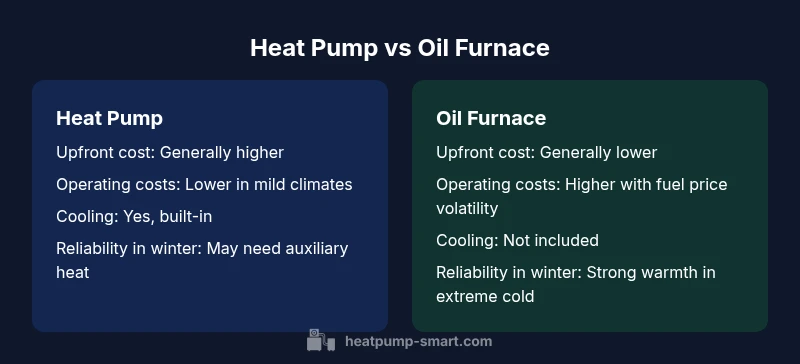
Heat pump vs oil furnace: A data-driven comparison
A comprehensive, analytical comparison of heat pumps and oil furnaces, examining costs, efficiency, climate suitability, and long-term value to help homeowners decide.


Heat pump versus oil furnace is a climate and cost decision. In most homes, a heat pump delivers lower operating costs over time and dual heating/cooling, while an oil furnace often offers cheaper upfront price and reliable warmth in very cold weather. The best choice depends on climate, local electricity rates, and available incentives.
Understanding heat pump versus oil furnace: Core concepts
Choosing between a heat pump and an oil furnace means deciding between a device that moves heat and one that generates heat. In many homes, the decision hinges on climate, electricity costs, and available incentives. According to Heatpump Smart, the most meaningful distinction is that heat pumps provide both heating and cooling, while oil furnaces focus on warmth. In practice, the choice affects comfort, energy bills, and carbon footprint, so a careful assessment of climate, home efficiency, and local incentives is essential.
This comparison frames the decision as a holistic balance of upfront cost, long-term savings, maintenance needs, and compatibility with modern homes. The phrase heat pump versus oil furnace appears here to anchor the reader in the exact topic. As you read, consider how your climate, electricity pricing, and local incentives shape the payback period and overall value. The Heatpump Smart team emphasizes evaluating insulation, ventilation, and thermostat control together with equipment choice for the best long-term outcome.
How Each System Works
A heat pump (often air-source or ground-source) operates on a refrigerant cycle that moves heat from outside to inside in winter and reverses in summer to provide cooling. It requires electricity to drive the compressor and fans and can include auxiliary heat for very cold periods. An oil furnace, by contrast, burns oil to heat air or water and distributes warmth through ducts or radiant systems. Its boiler or burner is independent of the cooling function and typically does not provide cooling. Understanding these fundamental differences helps set expectations for performance, maintenance, and integration with existing ductwork and controls.
This section also highlights the compatibility of heat pumps with modern smart thermostats and home automation, which can enhance efficiency and comfort. In some homes, a hybrid approach—combining a heat pump with a supplemental oil furnace or backup heat—offers a practical path when weather extremes occur. The goal is to align system design with real-world usage and climate patterns.
Energy Efficiency and Operating Costs
Energy efficiency for heat pumps is expressed through metrics like COP, SEER, and HSPF, while oil furnaces use AFUE. A heat pump can deliver strong efficiency in moderate climates and when paired with an efficient electric grid, potentially lowering operating costs even during summer cooling. Oil furnaces depend on fuel prices and furnace efficiency; in volatile energy markets, costs can rise unpredictably. This section emphasizes that “efficiency” does not automatically translate to the lowest bill—climate, electricity rates, and insulation quality all shape the outcome.
Heatpump Smart analysis suggests that a well-designed heat pump system often reduces energy use over the life of the equipment, especially in homes with efficient envelopes and smart controls. However, when outdoor temperatures plunge far below typical winter ranges, supplemental heat may be required, affecting total energy consumption and comfort. The goal is to compare total cost of ownership rather than only sticker price.
Climate Compatibility and Comfort
Climate profoundly affects performance. Heat pumps excel in milder winters and can double as cooling systems in summer, adding year-round comfort and space conditioning from a single equipment set. In very cold climates, heat pumps may rely on auxiliary heat or fossil-fuel backup to maintain comfort during the coldest hours, which can influence reliability and energy use. Oil furnaces generally maintain warmth reliably in extreme cold, but lack integrated cooling capability and can be less efficient in milder climates where cooling is not a concern.
This section highlights the importance of climate-appropriate design; a heat pump in a hot or moderately cold climate with reliable electricity is often a strong choice, while a harsher winter environment may call for a back-up strategy or alternative system design. The Heatpump Smart team notes that climate data should drive system sizing, equipment selection, and backup strategies for optimal comfort and cost control.
Upfront Costs, Installation, and Longevity
Upfront costs for heat pumps typically include the equipment, ductwork adjustments, and possibly a new electrical service or dedicated circuits. Oil furnaces generally involve lower initial cost but may require upgrading the fuel supply line and venting. Installation complexity influences project duration and total cost, and retrofits can add to both. Longevity depends on use, maintenance, and load, but properly sized heat pumps with routine service often deliver many years of reliable operation, while oil systems can be durable when well maintained.
This block emphasizes planning for both short-term budget and long-term value, including potential downtime during installation and the importance of professional assessment for duct sizing and refrigerant line integrity. Heatpump Smart recommends obtaining multiple quotes and verifying contractor certifications to ensure a smooth transition and durable results.
Rebates, Tax Credits, and Payback Considerations
Many regions offer rebates or tax credits for heat pumps due to their energy savings potential and lower emissions. Oil furnaces have fewer incentive programs, depending on local policy. A careful incentives analysis can shorten the payback period for a heat pump, especially when combined with home energy upgrades. This section discusses how to quantify incentives alongside estimated energy savings to determine realistic payback timelines.
Heatpump Smart analysis shows that incentives, utility programs, and financing options can transform long-term savings into an attractive financial proposition. Pairing equipment upgrades with air sealing, insulation, and smart thermostats can amplify payback and comfort gains, particularly in older homes with uneven insulation.
Real-World Scenarios: When to Choose Each
Scenario A: Moderate winter climate with reasonable electricity prices and strong incentives. A heat pump often delivers year-round comfort and cooling, with substantial long-term savings. Scenario B: Very cold climate with high fuel costs and limited electricity reliability. An oil furnace or a hybrid approach may provide reliable warmth with lower upfront cost and fewer backup considerations. Scenario C: Home undergoing renovations or energy upgrades, where ductwork and electrical systems are already being revised. In such cases, a heat pump upgrade can align with broader efficiency goals and improve overall comfort.
This block provides practical decision factors, including energy pricing, climate data, and the presence of incentives, and shows how different home contexts lead to different optimal choices. The goal is to help readers avoid one-size-fits-all conclusions and select a system that matches their specific circumstances.
Common Myths and Realities
Myth: Heat pumps cannot heat homes effectively in cold climates. Reality: Modern heat pumps with auxiliary heat can perform well in many winter conditions, and hybrid systems extend capability in colder areas. Myth: Oil furnaces are always cheaper to install than heat pumps. Reality: Installation costs vary by home and may be higher for heat pumps when ductwork or electrical upgrades are required; long-term savings can offset upfront costs elsewhere. Myth: You cannot have cooling with a heat pump. Reality: Most heat pumps provide cooling as a standard feature, delivering year-round comfort.
This block tackles misperceptions with practical clarifications, helping readers avoid common pitfalls and make informed decisions based on climate, efficiency, and budget considerations.
Step-by-Step Decision Framework: How to Decide
- Define climate and expected temperature ranges. 2) Estimate energy costs for electricity vs fuel in your region. 3) Assess home envelope, insulation, and ductwork. 4) Check available rebates, tax credits, and financing. 5) Obtain multiple contractor opinions and verify equipment performance data. 6) Plan a staged install if upgrading insulation or ducts. 7) Review life-cycle costs and maintenance needs with your installer.
This block gives a clear, actionable framework for readers to move from information gathering to a concrete decision, including practical steps and considerations. The framework is designed to translate analysis into a confident purchase path.
Implementation Roadmap: Next Steps and Resources
Begin with a professional energy audit, then gather quotes from licensed HVAC contractors who specialize in both heat pumps and oil-fired systems. Ask for performance data in your climate, including heater sizing, expected COP/SEER/HSPF, and AFUE. Confirm ductwork integrity and the potential need for electrical upgrades. Finally, review incentives, warranties, and service plans to secure a durable, cost-effective solution.
],
comparisonTable": {"items":["Heat pump","Oil furnace"],"rows":[{"feature":"Installation complexity","values":["Moderate to complex (may require electrical and ductwork upgrades)","Simple to moderate (often fits existing ducts)"]},{"feature":"Upfront cost","values":["Higher upfront cost","Lower upfront cost"]},{"feature":"Yearly operating costs","values":["Lower operating costs in suitable climates with electricity rates favorable","Higher and more variable due to fuel price fluctuations"]},{"feature":"Reliability in extreme cold","values":["Often requires auxiliary heat in very cold periods","Typically reliable in extreme cold with proper fuel supply"]},{"feature":"Cooling capability","values":["Yes — cooling included in many heat pumps","No cooling"]},{"feature":"Maintenance needs","values":["Annual professional service and refrigerant checks","Burner maintenance and fuel system care"]},{"feature":"Rebates/tax incentives","values":["Common rebates/credits for heat pumps","Fewer incentives for oil furnaces"]},{"feature":"Lifetime/replacement cycle","values":["Often longer life with proper maintenance","Depends on wear; generally solid reliability"]}]},
prosConsTag
proConBlock
Comparison
| Feature | Heat pump | Oil furnace |
|---|---|---|
| Installation complexity | Moderate to complex (may require electrical and ductwork upgrades) | Simple to moderate (often fits existing ducts) |
| Upfront cost | Higher upfront cost | Lower upfront cost |
| Yearly operating costs | Lower operating costs in suitable climates with electricity rates favorable | Higher and more variable due to fuel price fluctuations |
| Reliability in extreme cold | Often requires auxiliary heat in very cold periods | Typically reliable in extreme cold with proper fuel supply |
| Cooling capability | Yes — cooling included in many heat pumps | No cooling |
| Maintenance needs | Annual professional service and refrigerant checks | Burner maintenance and fuel system care |
| Rebates/tax incentives | Common rebates/credits for heat pumps | Fewer incentives for oil furnaces |
| Lifetime/replacement cycle | Often longer life with proper maintenance | Depends on wear; generally solid reliability |
Advantages
- Potentially lower long-term energy bills
- Cooling capability in warm months and year-round comfort
- Strong incentives and rebates in many regions
- Reduced greenhouse gas emissions when powered by clean electricity
Disadvantages
- Higher upfront cost and installation complexity
- Performance can degrade in very cold climates without supplemental heat
- Electricity price volatility can affect operating costs
- Requires adequate electrical service and ductwork upgrades in some homes
Heat pump is generally the better long-term option for most homes in moderate climates; oil furnaces remain a viable choice in extreme cold or where upfront budget is tight.
For most homeowners, the heat pump offers energy efficiency and year-round conditioning, often with rebates that shorten payback. In very cold climates or when upfront budget is constraining, an oil furnace may be preferable. The best choice comes from a climate-aware, whole-house assessment.
Your Questions Answered
What is the main difference between a heat pump and an oil furnace?
The main difference is heating method: heat pumps move heat using electricity and can also cool, while oil furnaces burn fuel to generate heat. Climate and electricity costs largely determine which option performs best economically over time.
The key difference is heating method and climate suitability: heat pumps move heat and cool the home, while oil furnaces burn fuel for warmth.
Can a heat pump replace an oil furnace in cold climates?
In very cold climates, a heat pump may require supplemental heat or a hybrid setup. The decision depends on outdoor temperatures, insulation, and how often the system will run during peak demand periods.
In freezing climates, you might need backup heat or a hybrid setup to keep things comfortable.
How do maintenance needs differ between the two systems?
Heat pumps require periodic refrigerant checks and electrical component maintenance, while oil furnaces require burner servicing and fuel system checks. Both benefit from annual professional inspection.
Heat pumps need refrigerant and electrical checks; oil furnaces need burner and fuel system maintenance.
Are rebates or tax credits available for heat pumps?
Yes, many regions offer rebates or tax credits for heat pumps, reflecting their efficiency and lower emissions. Availability varies by location and program timing.
Yes, there are often rebates or tax credits for heat pumps depending on where you live.
How long do these systems typically last?
With proper maintenance, heat pumps and oil furnaces can both provide many years of service. Longevity depends on usage, installation quality, and system care.
Both can last many years if well maintained, but actual lifespan depends on upkeep and climate.
Which system is better for homes with existing air conditioning?
Heat pumps inherently provide cooling, making them a natural fit for homes that already have or plan to add air conditioning. Oil furnaces require a separate AC system.
If you want cooling built in, a heat pump is the simpler path.
Top Takeaways
- Assess climate and electricity costs before choosing
- Consider total cost of ownership, not just upfront price
- Explore rebates and incentives to accelerate payback
- Plan installation carefully to avoid performance gaps
- Use a hybrid or staged approach where appropriate