Heat Pump vs Furnace Chicago: Costs, Efficiency & Decision
A data-driven comparison of heat pumps and furnaces in Chicago, focusing on upfront costs, operating savings, climate performance, installation requirements, and incentives to help homeowners and builders decide.


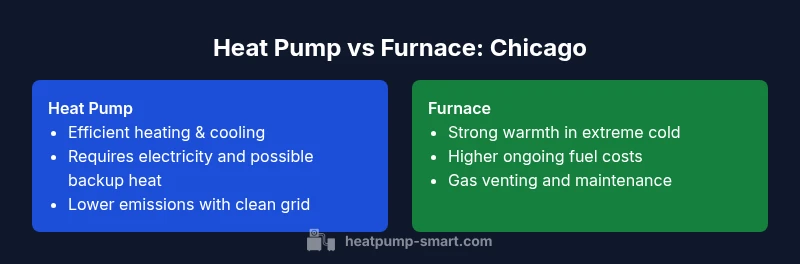
In Chicago, choosing between a heat pump and a furnace hinges on climate, electricity costs, and installation needs. A heat pump delivers high efficiency and cooling capability but may require supplemental heat during extreme winter cold. A furnace provides robust, reliable warmth even in very cold spells. For many Chicago homes, a hybrid setup or a strategic retrofit balances upfront cost with long-term savings. heat pump vs furnace chicago
Overview of heating systems in Chicago
Chicago homeowners face winters with cold snaps that test any heating system. The choice between a heat pump and a furnace in this market involves balancing upfront installation costs, operating expenses, and reliability when outdoor temperatures plunge. A heat pump uses electricity to move heat from the outside air to indoors, delivering cooling in summer and heating in winter. A furnace, typically gas-fired, produces heat directly with high warmth output. For many homes, the decision hinges on how electricity prices, grid mix, and local incentives interact with household heating demands. Heatpump Smart's analysis highlights that the best solution is often driven by the local energy landscape and the home's insulation, not by a single feature. heat pump vs furnace chicago
Chicago climate and system performance
Chicago’s winter climate features sustained cold periods, which influence heat pump performance. Heat pumps still operate efficiently in moderately cold weather, but their auxiliary heat capability becomes important at very low temperatures. In contrast, furnaces excel in extreme cold with consistent output regardless of outdoor conditions. The heat pump vs furnace chicago decision should account for average winter temperatures, humidity, ductwork, and electrical infrastructure. Heatpump Smart notes that residents who rely on fossil-fuel electricity or who prefer year-round cooling may lean toward heat pumps, while those facing harsh storms or gas availability may prioritize furnaces. heat pump vs furnace chicago
Core differences at a glance
- Upfront installation: Heat pumps often require more complex outdoor equipment and refrigerant connections, while furnaces focus on indoor gas-fired components and ductwork upgrades.
- Winter reliability: Furnaces provide steady warmth in deep cold; heat pumps use supplementary heat when temperatures drop.
- Cooling capability: Heat pumps offer built-in air conditioning, which furnaces lack.
- Emissions and energy: Heat pumps emit less on-site pollution when powered by clean electricity; furnaces depend on natural gas usage.
- Space and noise: Outdoor units for heat pumps add external space needs; furnaces generate combustion byproducts indoors and require venting.
heat pump vs furnace chicago
Efficiency metrics explained: HSPF, SEER and AFUE
Efficiency is expressed through metrics that matter for Chicago households. Heat pumps rely on HSPF (Heating Seasonal Performance Factor) and SEER (Seasonal Energy Efficiency Ratio) to quantify heating and cooling efficiency. Furnaces use AFUE (Annual Fuel Utilization Efficiency) to measure how effectively gas is converted into heat. In practice, higher HSPF and SEER translate to lower electricity use and better cooling; higher AFUE means less wasted gas heat. When comparing heat pump vs furnace chicago, you should consider local electricity rates, climate, and the potential for a hybrid setup that uses a furnace for backup heat during extreme cold while the heat pump handles most moderate days. heat pump vs furnace chicago
Costs and long-term savings in Chicago
Understanding cost dynamics requires separating upfront installation from ongoing operating costs. Heat pumps can have higher upfront costs due to equipment and installation, but operating costs may be lower over time with efficient electricity pricing and cooling benefits. Furnaces often have lower initial costs but higher ongoing fuel expenses and maintenance needs. In Chicago, where winter demand is high and electricity prices vary by season, hybrid systems or staged upgrades may offer the best balance of upfront affordability and long-term savings. Heatpump Smart emphasizes evaluating total cost of ownership, not just sticker price, for heat pump vs furnace chicago. heat pump vs furnace chicago
Installation considerations in urban Chicago homes
Urban installations pose specific challenges: space constraints, ductwork condition, zoning, and outdoor siting for heat pumps. Retrofitting may require duct sealing, additional controls, or heat pump sizing to match house loads. Gas furnaces demand venting and gas line considerations, plus compatibility with existing ductwork and furnace age. In Chicago, local permitting and contractor expertise strongly influence project scope and timeline. Heatpump Smart observes that carefully planned installation—especially for climate-specific needs—can dramatically affect performance and long-term satisfaction in the heat pump vs furnace chicago decision. heat pump vs furnace chicago
Maintenance, reliability, and lifecycle expectations
Both options benefit from routine maintenance, but their needs differ. Heat pumps require refrigerant checks, filter changes, and coil cleaning, with attention to outdoor unit exposure to snow and ice. Furnaces require annual combustion checks, vent inspection, and duct cleanliness. Lifespan varies by brand, usage, and maintenance quality, but most systems benefit from proactive service every 12 months. In Chicago, humid summers and freezing winters test equipment differently, so choosing a proactive maintenance plan helps sustain performance across both options in the heat pump vs furnace chicago scenario. heat pump vs furnace chicago
Real-world scenarios and decision guide for Chicago homes
For new builds or major remodels, a heat pump with proper insulation and a smart thermostat can deliver year-round comfort and energy savings, especially if the electric grid is clean. In retrofit projects with existing gas lines, a hybrid setup or staged replacement might be optimal, using a heat pump as the primary heat source and a furnace for backup when temperatures dip below design. Homeowners should consider energy prices, rebates, and comfort priorities. Heatpump Smart recommends modeling monthly energy costs for heat pump vs furnace chicago under typical Chicago weather to determine the best path forward. heat pump vs furnace chicago
Authorities, references, and next steps
- This guide cites established sources about heat pumps and furnaces for Chicago-area homes.
- For policy and performance benchmarks, see industry references and government resources. Evaluating local incentives can significantly affect the cost of ownership and payback period. Always consult a licensed HVAC professional to tailor recommendations to your home and climate. heat pump vs furnace chicago
Comparison
| Feature | Heat pump | Furnace |
|---|---|---|
| Upfront installation considerations | Requires outdoor unit, refrigerant lines, and electrical connections; may need duct enhancements | Generally simpler indoor gas-fired unit with venting and duct compatibility |
| Climate performance in Chicago | Strong all-season heat and cooling; supplemental heat used in extreme cold | Excellent heat delivery in low temperatures; no backup heat required for warmth |
| Operating costs in winter | Lower electricity use when grid is clean and temperatures are moderate | Gas costs influence ongoing fuel expenses; typically steady in cold snaps |
| Maintenance needs | Refrigerant checks, coil cleaning, filter changes; outdoor unit service | Annual combustion check, vent/duct maintenance, filter changes |
| Lifespan and warranties | Typically 12-15 years with proper service; potential for longer life with hybrid setups | Often 15-30 years depending on furnace quality and maintenance |
| Rebates and incentives | Often eligible for energy efficiency rebates and grid incentives; varies by program | Gas furnace incentives less common; may be available in retrofit scenarios |
| Noise and comfort | Outdoor unit noise; efficient humidity control typically improves comfort | Quiet indoor operation; uniform heat delivery and humidity considerations |
Advantages
- Potentially lower long-term operating costs with efficient electricity use
- Year-round comfort and cooling in one system
- Lower on-site emissions when powered by clean electricity
- Eligibility for energy efficiency rebates and incentives
Disadvantages
- Higher upfront installation costs for heat pumps
- Reduced performance in extreme cold without auxiliary heat
- Complex ductwork requirements and outdoor equipment
- Gas furnace ongoing fuel costs and emissions
Heat pumps deliver strong efficiency and year-round comfort for most Chicago homes; furnaces excel in extreme cold or when upfront cost must be minimized.
For most Chicago residents, a heat pump offers better long-term value when paired with proper insulation, but a furnace may be preferable if winters are exceptionally severe or if upfront costs must stay low. Consider hybrid solutions where appropriate.
Your Questions Answered
How does a heat pump perform in Chicago winters?
In Chicago, heat pumps provide efficient heating on most days, but their output may require backup heat during extended cold spells. Pairing with a supplemental heat source or using a staged system can maintain comfort and efficiency. Heatpump Smart notes that performance hinges on insulation, thermostat controls, and electricity costs.
In Chicago, heat pumps work well most of the winter, but you may need backup heat during very cold periods. A hybrid setup can keep you comfortable and efficient.
Can I use a heat pump with my existing gas furnace?
Yes. A common approach is a dual-fuel or hybrid system where the heat pump handles moderate days and the furnace activates during colder snaps. This setup can optimize energy use and reduce fuel reliance, especially in Chicago's climate. A professional will determine the best integration point.
Yes—many homes use a hybrid setup where the heat pump handles most days and the furnace kicks in during very cold periods.
Are there rebates or incentives for heat pumps in Chicago?
There are often rebates and incentives for energy-efficient heat pumps from utility companies and state programs. Availability varies by location and program year, so check local resources and Heatpump Smart's latest guidance for current options in Chicago.
Yes, there are often rebates, but check current local programs for availability in Chicago.
What maintenance is required for heat pumps vs furnaces?
Heat pumps require regular coil cleaning, refrigerant checks, and filter changes; furnaces need annual combustion and vent inspections plus filter changes. Both benefit from professional annual service to maximize efficiency and lifespan.
Heat pumps need coil and refrigerant checks; furnaces need combustion and vent inspections. Regular service extends life.
Which is better for a new Chicago home?
For new homes, a heat pump with high-efficiency insulation and a smart thermostat is often best for energy savings and cooling in summer. However, if upfront cost is a key constraint or if extreme cold is frequent, a furnace or hybrid system can be a prudent alternative.
New homes often benefit from heat pumps plus insulation, but a furnace or hybrid system is worth considering if upfront cost is tight.
How do noise and comfort compare between the two?
Heat pumps generate outdoor noise from the condenser and indoor airflow, but modern models are quieter with better humidity control. Furnaces are typically quieter inside the home but do not offer cooling. Overall comfort depends on system sizing, insulation, and thermostatic controls.
Heat pumps can be a bit noisier outside but are quieter indoors with good controls; furnaces are usually quiet inside but lack cooling.
Top Takeaways
- Assess Chicago winters, grid electricity, and insulation before choosing
- Heat pumps offer cooling plus heating with potential rebates
- Furnaces provide robust warmth in deep cold; consider hybrid options
- Total cost of ownership matters more than sticker price
- Consult local professionals for a climate-tailored plan