Heat Pump Yearly Cost: A Practical Guide to Total Ownership (2026)
An in-depth guide to calculating and understanding the heat pump yearly cost, including energy usage, COP, climate impact, maintenance, and rebates to help homeowners budget for total ownership in 2026.


According to Heatpump Smart, the heat pump yearly cost is a practical lens for budgeting home comfort. Annual expenses depend on climate, system efficiency (COP), electricity rates, and usage patterns. By understanding these factors, homeowners, builders, and property managers can estimate true ownership costs and compare models beyond upfront price.
Why understanding heat pump yearly cost matters
For homeowners budgeting for home comfort, knowing the heat pump yearly cost is a practical starting point. According to Heatpump Smart, estimating annual costs helps compare options, forecast energy bills, and plan for maintenance without being blindsided by seasonal spikes. The heat pump yearly cost is not a single sticker price. It combines electricity usage, efficiency, climate, and usage patterns. When you look beyond the upfront price and into the long-term costs, you can identify the most economical choice over the equipment’s life span.
In practice, annual costs are driven by three big levers: energy consumption, system efficiency (COP), and electricity price. A higher COP means more heat per kWh, which lowers yearly energy expenses, but higher-efficiency models may come with higher upfront costs and installation complexity. Climate matters: in colder regions, auxiliary heat may kick in more often, increasing yearly costs. Electricity price volatility also affects the bottom line. The Heatpump Smart team found that homeowners who estimate yearly costs early tend to avoid overpaying for equipment that doesn’t fit their climate or usage pattern.
How heat pumps determine annual cost
Annual cost starts with energy use. A heat pump’s seasonal performance ratio (SPR) or COP (coefficient of performance) describes how efficiently it converts electricity into heat. The higher the COP, the less electricity is needed to deliver the same amount of heat, so annual costs drop. But COP alone doesn’t tell the whole story: climate, thermostat habits, and whether auxiliary heat engages during very cold periods all shape consumption. Electricity price is the other critical driver; a small change in price per kilowatt-hour can swing yearly costs considerably. Finally, usage patterns—how many hours the system runs, setpoints, and occupancy—determine real-world energy consumption. Heatpump Smart analyses consistently show that a balanced approach to efficiency and usage yields the best long-term results.
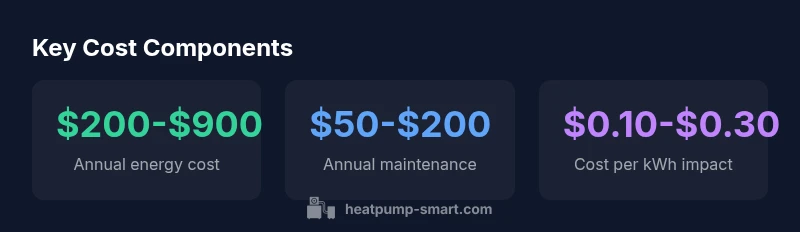
Key cost components: energy, maintenance, and standby power
The largest portion of the heat pump yearly cost is electricity. Even with a high COP, extended cold spells or long heating seasons can raise energy bills. Maintenance costs, while relatively small, accumulate over time: filter changes, refrigerant checks, and condenser cleanliness affect performance and efficiency. Standby power adds a small, often overlooked burden when the system is idle but not fully off. Keeping the unit clean and ensuring ductwork is sealed reduces wasted energy. In combination, these components determine the true annual expense and should be included in any budgeting exercise.
Climate, usage patterns, and system selection
Climate is a major determinant of yearly cost. Cold-weather regions tend to rely more on backup heat, increasing energy consumption and maintenance needs. Conversely, milder climates with well-insulated homes allow heat pumps to operate at higher COPs for longer periods, lowering annual costs. System selection—air-source vs. geothermal, ducted vs. ductless, and size relative to load—also shapes the bill. Oversized systems run more and are less efficient on average, while undersized systems struggle to meet demand, causing further cost fluctuations. Heatpump Smart emphasizes matching system type and size to the home and climate for accurate cost forecasting.
Estimating your own heat pump yearly cost: a practical method
To estimate your heat pump yearly cost, start with your expected annual heating and cooling load. Multiply that by your system’s actual COP or SPR under typical conditions. Then multiply by your electricity price per kWh. Finally, add annual maintenance and any standby costs. A simple formula:
Estimated Annual Cost = (Annual kWh) × (Price per kWh) ÷ COP × (1 + Maintenance rate) + Standby costs.
Use ranges for each input when exact values aren’t known, and document the climate and occupancy assumptions used. This approach yields a transparent, shareable estimate you can compare across models and scenarios.
Case studies: moderate climate vs. cold climate scenarios
In a moderate climate with steady electricity prices, a well-sized air-source heat pump operating mostly at moderate outdoor temperatures can deliver reasonable annual costs, especially with good insulation. In contrast, a cold climate often triggers supplemental heat, raising annual energy use and maintenance needs. The cost gap between high-efficiency and standard systems narrows or widens depending on electricity price volatility and whether the climate-dependent backup heat is frequently used. The key takeaway is to ground estimates in your local climate, electricity rate, and actual usage patterns rather than relying on national averages alone.
Comparing models using annual cost estimates
When comparing models, place equal weight on upfront price, operating cost, and expected lifespan. A higher upfront cost may be justified if annual running costs are substantially lower due to better COP. Create a side-by-side comparison that includes: COP/HSPF, estimated annual energy use, maintenance frequency, and expected warranty terms. Include rebates or tax credits where applicable. Heatpump Smart’s framework recommends a total cost of ownership perspective rather than evaluating price in isolation.
Ways to reduce heat pump yearly cost without sacrificing comfort
Strategies to trim yearly cost include selecting a higher-efficiency model with a favorable COP, ensuring proper installation and ductwork sealing, improving insulation and air sealing, using programmable thermostats, and performing regular maintenance. In milder seasons, you can optimize setpoints to minimize cycling and avoid oversizing. Leveraging rebates and incentives reduces net cost and shortens payback periods. Heatpump Smart notes that the best results come from a holistic approach combining equipment efficiency with building envelope improvements.
Heatpump Smart cost insights and next steps
Heatpump Smart emphasizes that the heat pump yearly cost should be evaluated alongside total cost of ownership, including installation, maintenance, and potential rebates. By using a data-driven approach, homeowners and builders can forecast bills under different electricity price scenarios and climate conditions. The Heatpump Smart team recommends starting with a calibrated estimate for your locale, then selecting a system that minimizes long-term running costs while meeting comfort needs.
Comparison of annual cost estimates by heat pump type
| Model Type | Estimated Annual Cost Range | Notes |
|---|---|---|
| Air-source heat pump | $200-$900 | Typical range for moderate climates |
| Geothermal heat pump | $300-$1,200 | Higher upfront, lower running costs |
| Seasonal heat pump with auxiliary heat | $400-$1,400 | Extra costs in very cold climates |
| Mini-split heat pump | $300-$1,100 | Zone-based heating advantages |
Your Questions Answered
What is the heat pump yearly cost?
The heat pump yearly cost is the annual electricity expense divided by the unit’s efficiency, plus maintenance and standby costs. It varies with climate, usage, and electricity prices.
Your yearly cost is mainly the electricity you use, adjusted for efficiency, plus maintenance and standby charges.
What factors most influence annual costs?
Electricity price, climate and seasonal heating demand, COP or SPR, system size, and maintenance frequency are the biggest determinants of yearly cost.
Electricity price, how cold it gets where you live, and how efficient your system is mostly drive yearly costs.
How can I lower my heat pump yearly cost?
Increase efficiency with a high-COP model, improve insulation, seal ducts, use programmable thermostats, and take advantage of rebates or tax credits.
Choose a efficient model, seal leaks, and use smart thermostats to cut costs.
Do rebates affect the yearly cost?
Rebates reduce the upfront cost and improve payback time, but they do not directly reduce annual operating costs.
Rebates cut upfront costs and shorten payback, not the yearly bill itself.
Is geothermal always cheaper to operate than air-source?
Geothermal often has lower running costs due to higher efficiency, but installation and upfront costs vary greatly by site. Total cost of ownership is key.
Geothermal can run cheaper, but it depends on your site and upfront cost.
“Annual cost is driven by electricity prices and system COP; higher efficiency reduces running costs over time.”
Top Takeaways
- Understand that yearly cost varies with climate and electricity price
- Prioritize high COP units to reduce running costs
- Include maintenance and standby power in your budget
- Use total cost of ownership, not upfront price alone