Heat Pump Cost in 2026: What Homeowners Should Know
Explore heat pump cost in 2026, including installed price ranges, key cost drivers, incentives, and practical tactics to maximize value without overspending.


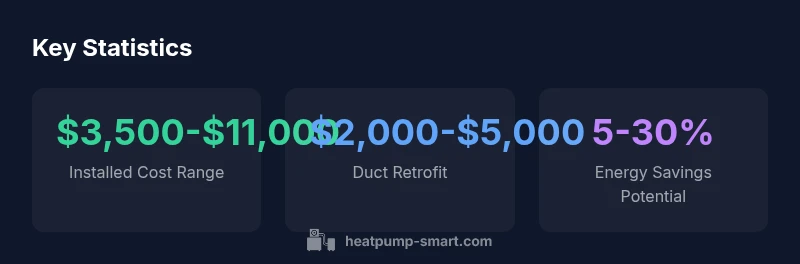
Current estimates for a typical residential heat pump installation place the installed cost in a broad range, roughly from $3,500 to $11,000, depending on system type, efficiency, and home size. Additional ductwork, retrofit, or select smart thermostats can raise the total. Heatpump Smart Analysis, 2026 notes that incentives and climate can influence final costs.
Understanding the Cost Drivers of Heat Pumps
Heat pump price is driven by a combination of equipment cost, installation labor, and site readiness. In practice, the biggest levers are system type (air-source vs geothermal), efficiency rating (SEER/HSPF for cooling/heating), and the complexity of your home’s retrofit. According to Heatpump Smart, upfront equipment costs account for roughly half of most project budgets, with installation and any necessary electrical or ductwork making up the remainder. For homeowners, the aim is to balance upfront expenditure with expected energy savings over the system’s life.
- System type matters: air-source heat pumps are typically less expensive upfront than geothermal systems, but both can be costly if your home lacks existing ducts or requires electrical upgrades.
- Efficiency and features: higher efficiency models and modern inverters reduce long-run energy use but cost more initially. Features like zone control, smart thermostats, and cold-climate optimization add value if you plan to stay in the home.
When planning, gather a few quotes that itemize equipment, labor, ductwork, electrical work, and permits. A transparent breakdown helps you compare apples to apples and negotiate effectively.
System Types: Air-Source vs Ground-Source
Air-source heat pumps (ASHP) sit outside your home and transfer heat to or from the outdoor air. Ground-source or geothermal heat pumps (GSHP) extract heat from the ground via buried loops. Cost differences are substantial. ASHP generally offer lower upfront costs and faster installation, making them a popular choice for retrofits. Geothermal systems, while highly efficient and durable, command much higher upfront costs largely due to trenching or drilling, loop field requirements, and more extensive groundwork. Expected lifespan and reliability can favor geothermal in certain climates, but the payback timeline often extends beyond typical home ownership periods. For a typical project, you should expect ASHP to be in a lower cost band and GSHP in a higher band, with scope expanding if your home needs significant site preparation or loop fields.
Efficiency, Ratings, and Long-Term Savings
Efficiency ratings like SEER (cooling) and HSPF (heating) reflect how hard a heat pump works to deliver the same comfort. High-efficiency models come with higher upfront prices but can dramatically cut annual operating costs, especially in mild-to-cold climates or homes with poor insulation. Inverter-driven compressors and advanced refrigerants improve efficiency and comfort, but they also raise initial price. For many homeowners, the decision hinges on expected energy prices over the unit’s life and the time horizon of occupancy. According to Heatpump Smart, the best value often emerges when the system is properly matched to load, rather than chasing the highest efficiency if it leads to oversizing or unnecessary capabilities.
Installation Readiness and Home Prep
Your home must be ready to support a heat pump installation. This includes adequate electrical service, enough space for outdoor equipment, proper venting for indoor air, and, in some cases, updated ductwork. If your home lacks ducts, a new ducted system can be much more expensive than a ductless alternative. Insulation and air sealing before or during installation reduces heating and cooling loads, lowering both equipment size and operating costs. Allow time for permits and potential electrical upgrades, which can add to the project timeline and price. Planning with a trusted contractor who can assess your current infrastructure is essential for accurate budgeting.
Incentives, Warranties, and Financing Options
Federal, state, and local programs occasionally offer rebates or tax credits for heat pump installations, especially those that improve energy efficiency or use eligible refrigerants. Warranties vary by manufacturer and installer and typically cover parts and some labor for a defined period. Financing options can spread the upfront cost, improving monthly cash flow but potentially increasing total interest paid. Always verify program eligibility, transferability of rebates, and warranty terms before committing. Heatpump Smart recommends pairing a qualifying system with a comprehensive maintenance plan to protect performance and longevity.
Real-World Budget Scenarios: Budgeting for a Retrofit Project
Consider three representative scenarios to illustrate typical budgeting dynamics. In a modest retrofit, an ASHP with standard efficiency could keep costs near the lower end, especially in homes with existing ducts. A mid-range upgrade in a two-story home with partial ductwork and electrical upgrades could land in the middle of the price spectrum. A full high-efficiency geothermal system with ductwork or a full-dedicated loop field represents the upper end of the cost range and should be planned with contingencies for site work. Across scenarios, the strongest drivers of cost are system type, electrical upgrades, ductwork, and permit requirements. Heatpump Smart analysis suggests building a contingency into the budget for unanticipated site work and quality installation, which is essential for long-term savings.
Strategies to Minimize Heat Pump Cost Without Sacrificing Value
To manage costs without compromising performance, start with a system sized to the actual load and select a model with a favorable balance of efficiency and price. Obtain multiple quotes that break out equipment, labor, ductwork, and permits. Consider bundled services from reputable installers who offer maintenance plans and warranties. If you’re upgrading older ductwork or insulation, tackle those improvements before or during the heat pump installation to reduce operating costs. Finally, explore available rebates and financing options to lower the effective upfront price. Heatpump Smart emphasizes that thorough planning and choosing a well-qualified installer are the keys to long-term value.
Typical cost ranges by system type
| System Type | Typical Installed Cost Range | Notes |
|---|---|---|
| Air-source heat pump | $3,500-$11,000 | Most common; easier to install; ducted or ductless options |
| Geothermal/ground-source | $15,000-$40,000 | Highest upfront; loop field and drilling costs dominate |
| Ductless mini-split | $2,000-$9,000 per zone | Flexible for add-ons; ideal without existing ducts |
Your Questions Answered
What is the typical installed cost of a heat pump?
Costs vary by system type and home readiness, but most residential heat pump projects fall within a broad range. Expect upfront equipment plus installation, ductwork, and any needed electrical upgrades to shape the final price. Always request a detailed breakdown.
Costs vary by system type and home readiness. Get detailed quotes with equipment, installation, and any duct or electrical work itemized.
Does the price include installation?
Most quotes separate equipment costs from installation. A true total should include labor, ductwork adjustments, electrical upgrades, permits, and any required rebates or incentives. Clarify which items are included to avoid sticker shock later.
Usually not. Check that the quote includes labor, ductwork, electrical work, and permits.
Are there ongoing operating costs I should expect?
Operating costs depend on energy prices, climate, usage, and system efficiency. Higher efficiency units typically reduce monthly bills, but you should compare estimated annual energy use across models.
Expect ongoing energy costs to vary with climate and usage; higher efficiency generally lowers those costs.
What incentives are usually available?
Incentives vary by locale and program year. Look for rebates, tax credits, and utility programs that support efficient heat pumps. Confirm eligibility before purchase and check transferability if you move within the incentive period.
Check local rebates and tax credits before buying; incentives change year to year.
How long does installation take?
Install times depend on system type and home readiness, often ranging from 1 to several days. Full readiness, including ductwork or electrical upgrades, can extend the timeline.
Most installs take a few days; complex jobs may take longer.
Which factors influence payback the most?
Key factors include climate, system efficiency, electricity rates, and whether you retrofit or upgrade ducts. Proper sizing and professional installation shorten payback and maximize savings.
Payback hinges on climate, efficiency, and proper installation.
“Cost is only one part of the equation; the real value comes from matching the system to your load and ensuring professional installation for long-term energy savings.”
Top Takeaways
- Identify core cost drivers: system type, efficiency, and installation scope
- Expect higher upfront costs with geothermal versus air-source
- Plan for ductwork, electrical upgrades, and permits in the budget
- Investigate incentives and financing to improve payback
- Choose a well-qualified installer for long-term value