Heat Pump Monthly Cost: What to Expect in 2026
Learn how heat pump monthly cost is calculated, the factors driving it, how to estimate your bills, and proven strategies to reduce running costs in 2026.


Heat pump monthly cost is the monthly electricity bill for operating a heat pump for heating or cooling. It varies with climate, home size, insulation, and the system’s efficiency (COP). Local electricity rates and the amount of auxiliary heat also shape the bill. Heatpump Smart emphasizes modeling costs from kWh, rate, and COP to set realistic expectations.
Understanding the concept of heat pump monthly cost
Heat pump monthly cost represents the ongoing electricity expense for running a heat pump to heat or cool your home. It primarily depends on climate, home size, insulation, and the system’s efficiency, often expressed as COP (coefficient of performance). A higher COP means more heat per unit of electricity, lowering the monthly bill. Local electricity rates, thermostat behavior, and the amount of auxiliary heat (electric resistance heat) used during cold snaps also shape the final number. Heatpump Smart analysis in 2026 highlights that seasonal swings are normal: winter bills tend to be higher when the heat pump works harder, while shoulder seasons can produce meaningful savings if cooling loads are modest. For budgeting purposes, start with an estimate of your monthly kWh usage, multiply by the local rate, and adjust for COP. A data-driven forecast—using weather patterns, equipment efficiency, and price signals—helps homeowners avoid surprises.
How the cost is calculated in practice
Calculating the monthly cost starts with estimating electrical energy use for heating. The basic formula is: monthly cost ≈ (monthly kWh consumption) × (local electricity rate). In heat pumps, COP modifies this relationship: a higher COP means fewer kWh are needed for the same heating load. COP is not constant; it varies with outdoor temperature, humidity, and system maintenance. Real-world usage hinges on thermostat setpoints, occupancy, and whether auxiliary heat is engaged during very cold days. If you also use cooling, apply the same COP concept in reverse. Many utility programs offer time-of-use pricing; shifting some heating to off-peak hours can reduce bills. Regular maintenance—clean filters, clear airflow, and proper refrigerant charge—helps preserve COP and prevent efficiency losses. By separating heating and cooling loads and using regionally representative weather data, homeowners can build credible monthly projections and compare scenarios such as sizing adjustments or insulation improvements.
Key drivers of monthly cost
Several factors drive the monthly cost of running a heat pump. Climate and seasonality matter most: harsher winters increase heating demand and may trigger auxiliary heat. System type also matters: air-source heat pumps typically have different COP trajectories than geothermal systems, with ground-source systems often achieving higher COP under certain conditions but at higher upfront cost. Sizing and building envelope are critical: an under-sized unit runs longer to meet demand, while an oversized unit can short-cycle and waste energy. Building insulation and airtightness directly affect how much heat your home loses, so upgrades there reduce the needed load. Thermostat behavior and control strategies can cut unnecessary runtime; smart zoning, occupancy patterns, and programmable schedules help. Electricity rate structures, such as time-of-use pricing or demand charges, influence monthly costs. Finally, maintenance quality (filter changes, coil cleaning, refrigerant checks) preserves efficiency. Overall, the cost is a function of climate, efficiency, usage patterns, and rate design, not a single number.
Seasonal patterns and climate impact
Seasonality governs heat pump monthly cost. In winter, cold outdoor temperatures reduce COP and may necessitate auxiliary heat, increasing energy use. In milder months, the heat pump can meet most heating demand with higher efficiency, driving down the monthly cost. Summer costs depend on cooling load, humidity, and runtime; COP can remain favorable, but extended cooling periods still raise energy use. Regional climate differences matter: coastal, dry, and high-altitude areas each exhibit distinct load profiles. The duty cycle—the fraction of time the compressor is active—often tracks outdoor conditions and indoor comfort targets. Homes with strong insulation and tight envelopes maintain steadier temperatures and avoid sharp bill spikes. For budgeting, simulate monthly heating-only and cooling-only scenarios and build a year-long plan. Planning for seasonal variability helps prevent underestimation and informs smarter upgrades.
How to estimate your own monthly cost
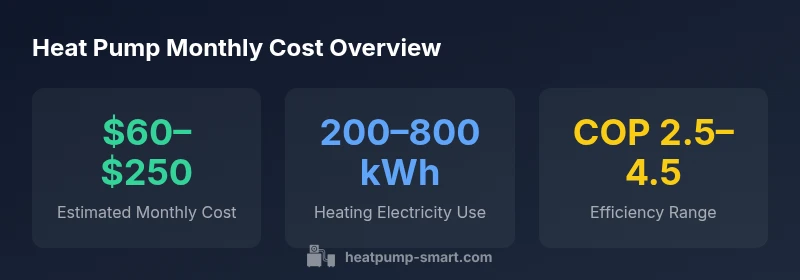
To estimate your own monthly heat pump cost, start with historical electricity usage and rate data. Determine your typical heating load in kWh, based on previous seasons or climate-based design loads. Multiply the load by the number of heating hours in a month and adjust for COP and outdoor temperatures. COP values commonly range from about 2.5 to 4.0, but real-world values depend on equipment, maintenance, and climate. Multiply the resulting kWh by your local rate, accounting for any time-of-use pricing. If you use cooling, treat winter and summer separately since patterns differ. Utilities often offer calculators; a professional energy audit can refine inputs. After calculating base costs, add a cushion for maintenance, defrost cycles, and potential inefficiencies from dirty filters or low refrigerant charge. Finally, compare with a baseline heating option (e.g., a furnace) to assess relative monthly costs and determine whether a heat-pump conversion makes financial sense.
Strategies to reduce heat pump monthly cost
Smart strategies can noticeably reduce costs. Improve insulation and air sealing to lower heat loss and the required heating load. Upgrading windows or adding storm protection reduces heat transfer. Use a programmable or smart thermostat to minimize unnecessary runtime and maximize occupancy-based comfort. Weatherization upgrades and envelope improvements support lower energy use year-round. Keep the heat pump running efficiently: ensure proper refrigerant charge, replace filters monthly, and schedule professional maintenance. Clear the outdoor unit of debris, ensure unrestricted airflow, and consider a COP-enhancing upgrade if the current unit is aging. If your utility offers time-of-use pricing, shift high-draw heating tasks to off-peak periods. Consider combining heat pump improvements with other energy upgrades (insulation, solar, or heat-recovery ventilation) to maximize savings. Finally, monitor monthly energy use after changes to quantify savings and justify investments.
When a heat pump makes financial sense
A holistic assessment of upfront costs, operating costs, maintenance, and incentives determines financial viability. While a heat pump may have a higher upfront price than some alternatives, long-term operating costs are often lower, especially in regions with higher electricity prices or cold climates; rebates can shorten the payback period. Evaluate total cost of ownership over 5–10 years, factoring in energy price trends and system lifespan. A properly sized unit coupled with good insulation and a modern thermostat can produce predictable monthly costs, aiding budgeting. For rentals or multi-unit buildings, consider zoning and control strategies to maximize efficiency. In regions with rebates or tax credits, the break-even horizon shortens. In mild climates with modest heating needs, savings may be smaller, but cooling demand can still deliver meaningful reductions. Heatpump Smart recommends a professional Heat Load Calculation and efficiency assessment to decide whether a heat-pump solution is financially advantageous for your home.
Cost comparison by heat pump type
| Scenario | Approx Monthly Cost Range | Notes |
|---|---|---|
| Air-source heat pump (typical home) | $60–$250 | Depends on climate and electricity rate |
| Geothermal heat pump (ground-source) | $40–$180 | Typically higher upfront cost but lower operating cost |
Your Questions Answered
What factors influence heat pump monthly cost?
Many variables affect the monthly cost, including climate, insulation, system efficiency (COP), occupancy patterns, and electricity rates. A well-insulated home with a properly sized heat pump helps keep costs predictable.
Costs depend on climate, insulation, efficiency, usage, and rates.
How does climate affect COP and monthly cost?
COP generally declines as outdoor temperatures drop, which can raise monthly costs due to more electricity use for heating. In milder weather, COP improves and bills tend to fall.
Colder weather lowers COP and can raise costs.
Is a heat pump cheaper to run than a furnace?
In many cases, heat pumps offer lower operating costs because they move heat rather than burn fuel. However, the economics depend on electricity prices, climate, and a proper system size.
Often cheaper to run, but depends on climate and rates.
How can I quickly reduce my monthly heat pump costs?
Improve insulation, seal air leaks, install a smart thermostat, and maintain the unit regularly. Shifting some usage to off-peak hours can also lower bills in many utilities.
Insulate, seal leaks, and optimize controls to save fast.
Do rebates affect monthly costs?
Rebates typically reduce upfront costs or taxes rather than monthly bills directly. They shorten payback and improve overall ownership economics.
Rebates cut upfront costs and payback time.
“Heat pumps can dramatically lower operating costs when they operate at peak efficiency, but the monthly bill hinges on climate, home insulation, and correct sizing.”
Top Takeaways
- Estimate monthly cost with kWh × rate and COP.
- Expect winter bills to rise due to auxiliary heat.
- Improving insulation reduces monthly costs significantly.
- Shifting usage to off-peak times can save money.
- Rebates can shorten the payback period and improve value.