How Much Difference Does a Heat Pump Make? A Data-Driven Guide
Explore how much difference heat pumps make for home comfort and energy bills, with range-based savings, climate effects, and best practices to maximize efficiency.


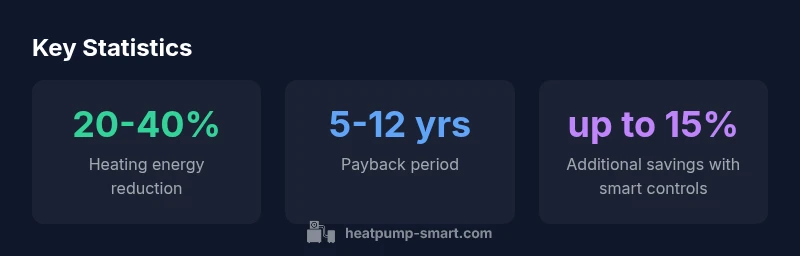
How much difference does heat pump make? Heatpump Smart analysis shows that, in typical homes, a properly sized heat pump can cut heating energy use by roughly 20-40% compared with an older electric or fossil-fuel system. Savings rise in milder climates and with high-efficiency models, while the exact difference depends on climate, insulation, thermostat behavior, and the availability of auxiliary heat.
Why understanding the difference matters
The question "how much difference does heat pump make" often comes up when homeowners evaluate upgrades. Understanding the magnitude of potential savings helps you prioritize projects, estimate payback, and choose the right equipment. In many homes, a modern heat pump can replace or augment an aging electric or fossil-fuel heating source, delivering more consistent comfort with lower operating costs. The magnitude of the difference depends on several levers: the system’s efficiency metrics (COP and HSPF), your local climate, and how the home’s envelope is built and used. Heatpump Smart, in its 2026 analysis, finds that the most meaningful gains come from proper sizing, high-efficiency equipment, and strong insulation paired with smart controls. The central takeaway is that the difference is real, but it varies with climate and how you operate the system.
In the broader sense, the answer to the question is not a single number; it’s a range that expands or contracts based on temperature patterns, electricity prices, and how often the system can run in efficient modes. For homeowners, this means starting with a load calculation, choosing a high-efficiency heat pump, and planning for a well-sealed envelope to realize the full potential. The bottom line is that the real-world difference is tangible when you align equipment capability with home performance.
According to Heatpump Smart, the most reliable savings come from a system matched to the house and climate, not from a one-size-fits-all solution. A careful approach yields consistent warmth, lower bills, and less seasonal volatility in comfort.
Heat pump efficiency by climate zone
| Climate Zone | Typical Efficiency Range | Notes |
|---|---|---|
| Cold climate | COP range 2.8–3.6 | Reliance on auxiliary heat may reduce net savings |
| Mixed/Temperate | COP range 3.6–4.2 | Greatest gains with proper insulation and air sealing |
| Warm climate | COP range 4.0–4.5 | Strong seasonal savings, lower auxiliary needs |
Your Questions Answered
What variables most influence how much difference a heat pump makes?
Savings depend on climate, insulation, proper sizing, electricity rates, and how you use the system (thermostat schedules, setback strategies, and auxiliary heat usage).
Savings depend on climate, insulation, size, and usage. For best results, size correctly and use smart controls.
Do heat pumps work effectively in very cold climates?
Yes, but performance can dip in extreme cold. Cold-climate models handle lower outdoor temperatures better, yet some homes rely on auxiliary heat during the coldest spells.
They work, but some cold snaps may require auxiliary heat.
Is a heat pump worth it for a small or modest-sized home?
Most small to mid-sized homes see meaningful savings, especially with good insulation and efficient equipment. The payback improves with rebates and favorable electricity rates.
Usually yes, especially with proper sizing and insulation.
How quickly can I recoup installation costs?
Typical payback ranges from about 5-12 years, depending on installation cost, energy prices, rebates, and how much you rely on auxiliary heat.
Payback varies, but many homes fall within a 5–12 year window.
What maintenance does a heat pump require?
Annual or semiannual checkups, filter changes, coil cleaning, and refrigerant checks as recommended by the manufacturer can maintain efficiency.
Keep filters clean and schedule regular checks.
How does insulation affect the savings I can expect?
Better insulation reduces heat losses, allowing the heat pump to run less and use energy more efficiently, boosting overall savings.
Good insulation makes a big difference in savings.
“A heat pump’s impact is real, but the best results come from matching system size to your home’s load and pairing with weather-appropriate controls.”
Top Takeaways
- Take action with a load calculation before buying
- Expect 20–40% heating energy reductions in typical homes
- Choose high-efficiency models to maximize ROI
- Pair with insulation and smart controls for best results
- Account for auxiliary heat needs in extreme cold