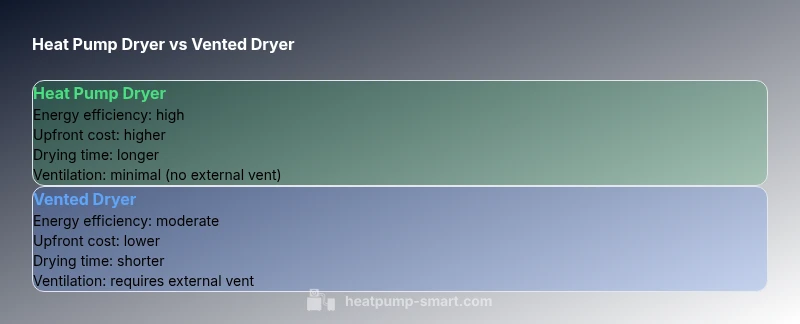
Heat Pump vs Vented Dryer: An Analytical Comparison for Home Laundry
Compare heat pump dryers with vented models to understand energy use, costs, performance, and installation considerations. Heatpump Smart analysis guides homeowners and builders in choosing the right dryer for space, climate, and budget.


Heat pump dryers generally deliver higher energy efficiency and lower running costs than vented models, making them the smarter long-term choice. They also reduce heat and humidity in the room, which is ideal for apartments and climate-controlled homes. However, the upfront price is higher and some cycles are longer, which may matter for busy households.
Why the question matters for home laundry
Choosing between a heat pump dryer and a vented dryer is not just about what dries clothes fastest. It’s about balancing upfront investment with long-term energy savings, space constraints, and climate considerations. For many homeowners and property managers, the decision hinges on how much energy you’re willing to save over time versus how quickly you need to complete daily laundry loads. The Heatpump Smart team notes that in typical residential setups, heat pump dryers offer meaningful advantages in energy efficiency and indoor comfort, especially in smaller homes or apartments where building heat and humidity are concerns. The broader context includes evolving efficiency standards, rebates, and a growing emphasis on sustainability in the home. When evaluating options, consider not only the unit itself but also your laundry pattern, climate, and ventilation possibilities.
How heat pump dryers work
Heat pump dryers use a closed-loop system that recycles hot air through a heat exchanger, extracting moisture from clothes while keeping the air inside the drum relatively cool. Because heat is reused, they require less energy to reach the required drying temperature. Modern models often include intelligent sensor features that adjust cycle duration based on fabric type and load size. The result is lower electricity consumption per cycle and a smaller environmental footprint over the appliance’s lifetime. They can also operate effectively in spaces where external venting is impractical, which makes them a practical choice for urban homes and retrofits.
How vented dryers work
Vented dryers rely on a traditional hot air cycle. The drum heats air, which circulates through the load and exits the dryer through a vent to the outdoors. This approach typically provides faster drying times per cycle but at a higher energy cost. The venting requirement means you’ll need a path to the outside (wall vent or duct), and regular vent maintenance to prevent lint buildup. In many homes, particularly older buildings or apartments with tight closets, the vent route can be a limiting factor. In exchange for speed, you trade some energy efficiency for upfront affordability and elimination of condensation concerns inside the living space.
Energy efficiency and running costs explained
Energy efficiency is the single most consequential factor in the heat pump vs vented dryer decision. Heat pump models operate with a high coefficient of performance (COP) by reclaiming heat, resulting in lower electricity use across typical loads. In practice, homeowners can expect noticeably lower annual energy bills with heat pump dryers, especially in households doing multiple loads weekly. Vented dryers, while cheaper to buy, consume more energy per load and generate more exhaust heat inside the home, increasing cooling or heating demands in some climates. Consider your electricity rates, laundry volume, and whether you value long-term savings over short-term purchase price.
Drying performance and cycle considerations
Drying performance varies by fabric type and moisture content. Heat pump dryers excel with synthetics, cottons, and mixed fabrics when care is a priority, but they may require longer cycles for heavy or bulky items like towels and blankets. Sensor-based cycles help optimize the duration to prevent overdrying, protecting fabrics over time. Vented dryers can deliver faster dry times for standard cottons and towels, which some households prize when quick turnaround is essential. If you routinely need speed, you may find vented models appealing, though at a higher energy cost.
Installation, space, and ventilation requirements
Heat pump dryers are well-suited to spaces without a dedicated vent since they recondition air internally. However, many models still generate condensate that requires drainage or a condensate collection option. Vented dryers demand a properly installed outdoor vent, which can complicate renovations or multi-story installations. In tight spaces, the compact footprint and quieter operation of some heat pump models can be a major advantage. When evaluating options, map your laundry area layout, potential drainage solutions, and the feasibility of a vent path.
Maintenance, reliability, and lifespan
Heat pump dryers tend to have longer lifespans with fewer moving parts exposed to direct heat compared to vented units. Regular maintenance focuses on lint filtration, condenser cleaning, and occasional filter replacement. Vented dryers require lint screen cleaning and vent duct inspections to prevent fire risk and maintain efficiency. Regardless of type, routine maintenance reduces the likelihood of breakdowns and helps sustain performance. Packaging that includes good warranties and accessible service networks adds to long-term reliability considerations.
Environmental impact and sustainability
From a sustainability perspective, heat pump dryers typically offer a smaller carbon footprint over their lifespan due to lower energy consumption. The reduced energy draw translates into fewer emissions associated with electricity use, which is particularly meaningful in regions relying on fossil-fuel-powered grids. Vented dryers have higher energy use per cycle, which can compound in high-load households. For builders and homeowners aiming to minimize environmental impact, heat pump technology aligns well with energy-efficiency goals and green building standards.
Cost considerations: upfront vs long-term
Upfront pricing for heat pump dryers is higher, reflecting the advanced heat-exchange system and longer-term energy savings. Vented dryers often come with lower initial costs but higher ongoing energy expenses. When evaluating total cost of ownership, include expected energy usage, maintenance, and potential rebates or incentives for efficient appliances. In many markets, incentives favor high-efficiency heat pump models, offsetting some of the premium over time. A practical approach is to estimate annual energy costs for your typical laundry load and compare against the upfront delta.
Which scenario favors heat pump vs vented
Heat pump dryers are a strong fit for small spaces, humid environments, or homes seeking reduced indoor heat buildup and humidity. They are also appealing for households with substantial laundry needs who want lower operating costs and sustainability benefits. Vented dryers may win when initial cost sensitivity is high, when fastest possible drying is a priority, or when outdoor venting is already part of the home’s design. Match your choice to your climate, space, and budget realities.
Decision checklist for buyers
- Evaluate your laundry volume and cycle frequency.
- Assess space constraints: venting feasibility versus condensate drainage.
- Consider electricity costs and incentives for high-efficiency appliances.
- Check fabric-care needs: delicates benefit from precise sensors in heat pump models.
- Review maintenance requirements and service availability in your area.
- Compare total cost of ownership over 5–10 years, not just the purchase price.
Practical testing and how to evaluate models
When possible, test cycles with similar loads and fabrics across models. Look at cycle duration, energy use displays, and effectiveness on synthetic versus natural fibers. Read independent test results and user reviews focusing on real-world performance. For apartment dwellers or homes with limited ventilation, confirm venting constraints and condensate disposal options. Heat pump vs vented dryer comparisons should consider your day-to-day laundry needs and maintenance tolerance.
Practical tips for installation and use in cold climates
Cold climates can influence dryer efficiency and condensation behavior. Ensure the condensate line is protected from freezing and that the dryer is installed with adequate clearance for heat exchange. In homes with limited ventilation, a heat pump dryer minimizes indoor heat release and humidity, contributing to stable comfort levels. Regularly check seals and gaskets to maintain efficiency across seasons.
Comparison
| Feature | heat pump dryer | vented dryer |
|---|---|---|
| Energy efficiency | high | moderate |
| Operating costs (annual) | lower | higher |
| Initial cost | $800-$1,500 | $400-$900 |
| Drying time per cycle | longer on average | shorter on average |
| Ventilation requirements | no external vent needed (condensing) | needs external venting |
| Maintenance | condenser cleaning and filter care | lint filter cleaning and vent inspections |
Advantages
- Lower energy consumption over time
- Reduced indoor heat and humidity
- Do not rely on external venting in many installations
- Gentler fabric care for delicate items
Disadvantages
- Higher upfront cost
- Longer cycle times for some loads
- Condenser/drainage maintenance required
- Potentially larger footprint for some high-capacity models
Heat pump dryer generally wins for efficiency and long-term cost, while vented dryers win on upfront price and cycle speed
For most homes prioritizing energy savings and indoor comfort, heat pump dryers are the better long-term choice. If upfront cost and fastest drying are your primary concerns, vented dryers remain a viable option.
Your Questions Answered
What is a heat pump dryer and how does it differ from a vented dryer?
A heat pump dryer recycles heat to dry clothes more efficiently, using less energy than traditional vented dryers. It typically requires no external vent, though some models need drainage for condensate. Vented dryers expel hot air through a vent and generally dry faster but use more energy.
A heat pump dryer reuses heat to dry clothes with less energy, often without needing an outdoor vent. A vented dryer expels hot air through a vent and usually dries faster but costs more to operate.
Do heat pump dryers dry as quickly as vented models?
Heat pump dryers typically have longer cycle times for heavy loads, but sensor-driven cycles optimize for fabric type to protect garments. Vented dryers often complete cycles more quickly, especially for large, bulky loads.
Yes, heat pump dryers can take longer on heavy loads, while vented models are usually faster for big items.
Are heat pump dryers worth it for small apartments?
Yes, especially when venting options are limited. Heat pump models minimize heat and humidity in living spaces and can operate without exterior vents, which is advantageous in compact layouts.
For small apartments, heat pump dryers are often preferable because they limit indoor heat and usually don’t require external venting.
Can I install a heat pump dryer without venting?
Most heat pump dryers are condenser types that don’t require external venting, but some models may need drainage for condensate. Always verify the installation requirements for your chosen model.
Most heat pump units don’t need a vent, but you should confirm condensate drainage needs with the manufacturer.
What kind of energy savings can I expect?
Energy savings depend on usage and electricity costs, but heat pump dryers typically reduce per-load energy use compared with vented models. Local incentives can further improve payback.
Expect noticeable energy savings over time, and check for local rebates for high-efficiency appliances.
Which is better in cold or humid climates?
Heat pump dryers are often advantageous in cold or humid climates due to lower heat dissipation into living spaces and reduced humidity. Vented models might be preferred where rapid drying is essential and venting is readily available.
In cold or humid climates, heat pumps usually help reduce humidity indoors, though vented models may offer speed if venting is easy.
What maintenance do these dryers require?
Heat pump dryers require periodic condenser cleaning and lint filter maintenance. Vented dryers need vent inspections to prevent lint buildup and fire hazards.
Condenser cleaning for heat pumps and vent inspections for vented dryers are the main maintenance tasks.
Are there any rebates for high-efficiency dryers?
Yes, many regions offer rebates or tax credits for high-efficiency appliances, including heat pump dryers. Check local utility programs and federal incentives for the latest options.
Look for local rebates or tax credits for efficient dryers through utilities or government programs.
Top Takeaways
- Prioritize heat pump dryers for energy savings
- Consider space and venting constraints before choosing
- Factor in total cost of ownership, not just purchase price
- Heat pump models are gentler on fabrics
- Check local incentives for high-efficiency appliances