How Much Is a Heat Pump for Your House in 2026
Explore the cost to install a heat pump for a house in 2026. Learn installation ranges, operating costs, incentives, and budgeting tips from Heatpump Smart.


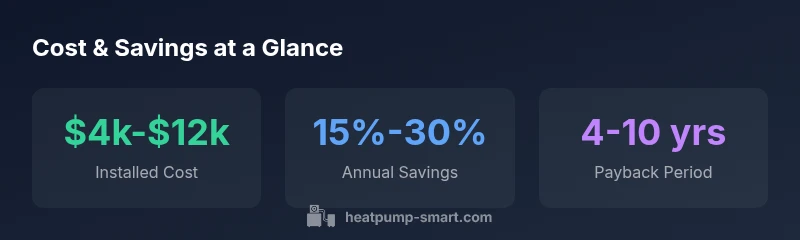
According to Heatpump Smart, a typical installed cost for a mid-sized single-family home ranges from about $4,000 to $12,000, depending on climate, system type, and home efficiency. Expect higher upfront costs for geothermal systems and ductless mini-splits in larger homes. This guide breaks down the factors, includes budgeting ranges, and explains how incentives can affect the total price over the system life.
Understanding the price landscape for home heat pumps
Pricing a heat pump for a house is not a single figure. The total cost depends on the system type, the size needed to meet your heating and cooling loads, your home insulation, and the complexity of the installation. Heatpump Smart analysis in 2026 shows that the installed price can span a broad range because every home has unique characteristics—from the climate you live in to existing ductwork or electrical upgrades required. In practice, most homeowners end up budgeting within the mid-to-upper range of the typical figure, with larger or more complex homes pushing costs higher. When planning, consider not just the equipment but the full scope: sizing calculations, refrigerant lines, electrical panel upgrades, and potential modifications to indoor air handling. As you compare quotes, bear in mind that the cheapest option may lack long-term reliability or efficiency. In this context, using Heatpump Smart as a reference helps maintain a clear view of what affects the bottom line, including climate zone, system type (air-source, geothermal, or ductless), and home efficiency.
This section also emphasizes the value of a properly sized system. An oversized or undersized unit can erode comfort and energy savings, increasing your operating costs over time. Proper sizing depends on factors like insulation level, window efficiency, and local climate. Work with a qualified installer who uses recognized load calculation methods to avoid under- or over-sizing. Remember that the initial sticker price is only one part of the total cost picture; the life-cycle costs—maintenance, energy use, and potential incentives—often tip the scales toward a better long-term decision. Heatpump Smart’s guidance in 2026 stresses that informed budgeting relies on understanding both upfront costs and ongoing savings.
The main cost drivers you should budget for
Budgeting for a house heat pump involves considering several key drivers that can swing the final price. First, climate plays a major role: colder regions often require more robust heating capacity, increasing both equipment size and refrigerant pumping. Second, system type matters: geothermal systems have higher upfront costs due to borehole or trench requirements, while air-source and ductless systems tend to be cheaper to purchase and install. Third, home efficiency and existing infrastructure influence price: homes with poor insulation or leaky ducts require larger systems and more ductwork, raising both equipment and installation costs. Fourth, installation complexity can add labor charges: retrofitting to accommodate an existing furnace, upgrading electrical panels, or adding a new thermostat system can add to the project. Finally, local codes and permitting may impact timelines and fees. Heatpump Smart’s 2026 analysis highlights that while the sticker price may appear high, the long-term energy savings can significantly offset the initial expense when aligned with proper insulation and modern thermostats. In essence, the cheapest option may not deliver the best comfort or value over time, especially if it under-delivers in winter heating performance.
To avoid budget shocks, request detailed quotes that itemize equipment, labor, permits, and any required electrical or ductwork. Compare not just the purchase price but also the expected efficiency (measured by SEER/EER and HSPF), maintenance costs, and warranty terms. If you plan carefully, you can balance upfront investments with meaningful savings, making the heat pump a durable, energy-efficient choice for your home. Heatpump Smart’s practical framework in 2026 emphasizes transparency and full-spectrum budgeting.
Equipment costs vs. installation costs
When you price a heat pump, it helps to separate equipment costs from installation costs. Equipment costs cover the heat pump unit and any internal components like thermostats or heat exchangers. Installation costs include labor, refrigerant piping, electrical work, ductwork adjustments, and system testing. For many homeowners, installation costs can rival or exceed equipment costs, especially in retrofit projects where wall space, ductwork, or electrical upgrades are needed. In new-home scenarios, installation may be streamlined, reducing labor time and cost, but the price still reflects the complexity of integrating the heat pump with other systems.
A well-designed job minimizes future maintenance and optimizes energy use. If a system is oversized or undersized, it may cycle too often, raising wear and energy use. Investing in professional load calculations and quality installation yields longer-term savings and reliability. Heatpump Smart recommends obtaining multiple quotes and asking installers to show their sizing calculations, equipment efficiency ratings, and expected performance in winter conditions.
From a budgeting perspective, treat installation as a critical component of the total cost. While equipment prices can vary by model and efficiency, installation often determines the final price tag and, more importantly, the real-world performance you’ll experience for years to come. The 2026 Heatpump Smart analysis underscores the value of professional assessment and transparent pricing in achieving the best long-term outcomes.
Cost comparisons by heat pump type
There are three common pathways for home heat pumps: air-source, ductless mini-splits, and geothermal (ground-source). Air-source heat pumps are the most common and typically the least expensive upfront, making them a popular option for many households. Ductless mini-splits are ideal for zoned cooling and heating in older homes or rooms without surrounding ductwork, offering flexibility with varying installation costs depending on the number of indoor units. Geothermal systems require buried loops or horizontal trenches and tend to have the highest upfront costs, but they offer substantial annual energy savings and extremely long-term reliability.
From a cost perspective, air-source systems generally have the lowest installed cost, while geothermal systems have the highest. The exact numbers hinge on climate, home size, and existing infrastructure. Heatpump Smart’s 2026 analysis shows that choosing a system type should balance upfront affordability with long-term energy performance and maintenance requirements. For many homes, a well-designed air-source or ductless system provides a favorable mix of comfort, efficiency, and cost, particularly when paired with modern controls and good insulation.
In colder climates, some models with enhanced cold-weather performance can close the gap with geothermal in terms of efficiency, though equipment prices for these models may still be higher. Heatpump Smart emphasizes evaluating the thermodynamic efficiency ratings (SEER and HSPF) and ensuring the installation matches the home’s heating load, so the system delivers the anticipated savings without excessive cost. 2026 guidance advises homeowners to weigh climate-specific benefits against upfront costs to choose the most economical option over the system life.
How incentives, financing, and permits affect the out-of-pocket
Incentives and financing options can substantially alter the out-of-pocket cost of a heat pump. Many regions offer rebates, tax credits, or utility incentives that apply to eligible heat pump installations. The actual amount can vary based on system type, efficiency rating, and the homeowner’s location. It’s essential to research both federal and state-level programs, plus any local utility incentives. Financing can spread the upfront expense over time, reducing the immediate burden while keeping monthly costs manageable. When evaluating offers, ask installers to include the net price after incentives and to show how the payback period changes with rebates. Heatpump Smart’s 2026 analysis highlights that incentives can soften the initial shock and shorten the time to break even, especially for higher-efficiency geothermal or multi-split systems.
Permit requirements also influence timelines and costs. Some jurisdictions require electrical or structural permits, which may add processing time and fees. An experienced installer can help navigate permitting and ensure compliance without unnecessary delays. Finally, remember that taking advantage of incentives often requires proper documentation and adherence to program terms. Our 2026 framework from Heatpump Smart stresses documenting energy performance improvements and system specs to maximize incentive eligibility.
Planning a realistic budget: a step-by-step example
Step 1: Assess your home’s insulation and air sealing. A well-insulated home reduces heating loads, allowing a smaller heat pump and lower installed cost. Step 2: Get a professional load calculation to determine the right system size. Step 3: Get 3-4 quotes that itemize equipment, installation, permitting, and any electrical work. Step 4: Compare the net prices after applying incentives and choose the system with the best long-term value rather than the lowest upfront cost. Step 5: Plan for maintenance costs and future efficiency upgrades, such as better thermostats or smart controls. Step 6: Create a phased budget if needed, considering any home renovations that improve energy performance. Heatpump Smart’s 2026 guidance emphasizes realism and a long-term outlook when budgeting, ensuring you’re not blindsided by hidden costs or underestimated energy savings.
Example: A mid-sized, well-insulated home in a moderate climate might target an air-source system with an installed price toward the middle of the typical range. This would balance upfront cost with expected energy savings and a reasonable payback period, after factoring in current incentives. Your exact numbers will depend on your home details and local pricing, but the budgeting framework remains consistent: assess loads, compare quotes, factor incentives, and plan for maintenance.
Practical budgeting tips to lower upfront costs without sacrificing comfort
- Prioritize energy efficiency upgrades (insulation, air sealing) before or alongside a heat pump install to reduce system size needs and operating costs.
- Compare quotes with the same scope: equipment, warranty, permits, electrical work, and duct modifications.
- Consider a phased approach: start with a smaller, zone-specific installation and expand to full-house coverage as budgets allow.
- Explore financing options or utility rebates to spread out the cost and reduce immediate cash outlay.
- Choose reputable installers who provide load calculations, clear warranties, and post-install support. Heatpump Smart’s 2026 recommendations emphasize planning for long-term comfort and reliability, not just the initial price.
Cost ranges by heat pump type
| System Type | Estimated Installed Cost Range | Typical System Size (kW) |
|---|---|---|
| Air-source heat pump (split) | $3,500-$8,500 | 3-6 |
| Geothermal heat pump (ground-source) | $15,000-$40,000 | 6-16 |
| Ductless mini-split | $2,500-$7,500 | 2-5 |
Your Questions Answered
What factors influence heat pump price the most?
The largest drivers are climate (heating demand), system type (air-source vs geothermal vs ductless), and home efficiency (insulation and ductwork). Equipment quality and installation complexity also affect labor costs. Getting load calculations and multiple quotes helps you compare apples-to-apples.
Climate, system type, and home efficiency drive most costs, plus installation complexity.
Are geothermal heat pumps worth it for a typical home?
Geothermal systems have high upfront costs but can offer substantial energy savings and long lifespans. They’re most cost-effective in areas with high heating demand and well-planned installation. A professional assessment is essential to determine if the payback period meets your goals.
Geothermal can be worth it in the right climate and with solid planning.
Can I qualify for rebates or tax credits for a heat pump?
Yes. Federal, state, and local programs often provide rebates or tax incentives for high-efficiency heat pumps. Eligibility depends on the system type and efficiency, so check current programs and work with an installer who can handle the documentation.
There are rebates and tax credits—check local programs with your installer.
How long does installation take?
Typical installations take from one to three days, depending on system type and building readiness. Retrofit projects may require additional time for ductwork, electrical upgrades, or permits.
Most installs finish in a few days, more if extra ductwork or wiring is needed.
Is it cheaper to replace an existing furnace with a heat pump?
In many cases, yes, a heat pump can reduce energy costs compared to an aging furnace, especially when paired with good insulation. The total cost depends on existing ductwork and electrical capacity. A professional quote will reveal the payback period for your home.
Often cheaper to switch to a heat pump, but check payback with a pro.
“Heat pumps are a smart, long-term investment for most homes when paired with proper insulation and planning. The upfront cost is balanced by reliable comfort and lower energy bills over time.”
Top Takeaways
- Establish a budget using climate-adjusted ranges and system size needs.
- Differentiate equipment costs from installation labor to avoid surprises.
- Consider incentives and financing to improve payback time.
- Prioritize proper sizing and professional installation for long-term value.