Heat Pump Costs in the UK: A 2026 Guide
Discover how much heat pumps cost in the UK in 2026, including upfront installation ranges, running costs, and factors that influence price. Practical guidance for homeowners, builders, and property managers.


The typical installed cost for a UK air-source heat pump ranges from £8,000 to £18,000 for a full system, including the outdoor unit and installation; ground-source is usually higher, potentially £15,000 to £30,000. Costs vary by property size, insulation, heat pump efficiency, and installer fees. Grants and incentives can reduce upfront payments; payback periods depend on energy prices and usage.
Understanding the cost landscape in the UK
To answer how much heat pump uk costs, you need to look at upfront equipment and installation plus potential savings over time. The Heatpump Smart team notes that costs vary dramatically with system type (air-source vs ground-source), house size, insulation quality, and the complexity of retrofitting radiators and underfloor heating. In this guide, we examine price drivers, typical ranges, and practical steps to get a reliable quote. According to Heatpump Smart analysis, the single biggest factor is installation complexity, which can add thousands to the base price. For context, government strategies and market dynamics in 2026 continue to influence both supplier pricing and consumer subsidies. See GOV.UK and Energy Saving Trust for current guidance.
Upfront cost components and what you actually pay
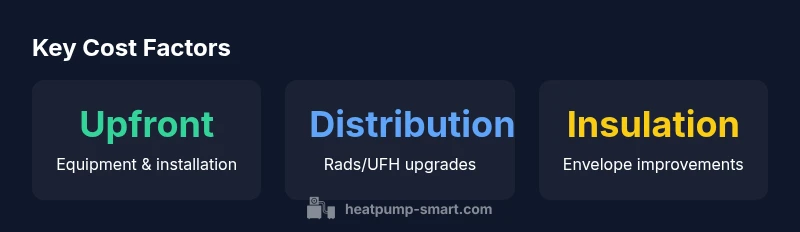
Upfront costs for a heat pump project break down into three main buckets: equipment, installation, and any necessary upgrades to your home’s heating distribution (radiators, underfloor heating, controls). The heat pump unit itself is only part of the total; you’ll also pay for an outdoor unit (for air-source systems), refrigerant charging, wiring, and potentially an electrical upgrade, especially if your existing system is old or undersized. A typical UK project will also factor in adding smart controls and weather compensation features. While air-source systems are the most common and generally cheaper to install, ground-source systems require excavation and loop installation, which can significantly push up the bill. In 2026, the Heatpump Smart analysis highlights that supplier and installer charges can vary by region, and larger homes with complex layouts tend to require more work and higher prices.
How installation details drive price
Installation price is not just the unit. It includes site readiness, pipework, radiator upgrades, trenching, and even planning permissions in some cases. Properties with older radiators or insufficient pipework often need larger distribution changes, increasing both materials and labor costs. If your home already has properly sized radiators and good insulation, the installation can be quicker and cheaper. Conversely, homes needing significant system reconfiguration or additional electrical work will see higher install fees. When planning, request a detailed breakdown from the installer and compare multiple quotes to understand where costs arise and how they might be reduced through mitigations like improved insulation or partial retrofits.
Running costs and potential savings
Running costs for heat pumps depend heavily on the system’s efficiency (SCOP) and your heating demand. Modern air-source heat pumps typically deliver seasonal COPs around 2.5–4.0 under UK winter conditions, with higher efficiency in milder weather. Compared to gas boilers, heat pumps can offer substantial reductions in energy use, particularly when paired with well-insulated homes. However, the actual savings hinge on energy prices, usage patterns, and how well your home retains heat. As a result, the proportion of annual energy bills saved can vary widely by household and region. The Heatpump Smart team notes that better-insulated homes and smarter controls yield the largest savings, while poor insulation diminishes potential benefits. For broader context, many homeowners in 2026 report meaningful reductions in carbon footprints alongside cost reductions when a heat pump replaces an older boiler.
Grants, incentives, and financing options
In the UK, there are government-backed schemes and green finance options aimed at reducing upfront costs for heat pump installations. These incentives can substantially shorten payback periods, though the availability and amounts change over time. Always verify current eligibility and application windows with official sources and consult an energy advisor. In addition to grants, some manufacturers offer financing plans or energy efficiency loans. While incentives can help, it’s essential to perform a full total-cost-of-ownership analysis that includes installation, running costs, maintenance, and potential future upgrades to your home’s insulation and distribution network. See GOV.UK and Ofgem guidance for up-to-date program details.
How to estimate your quote: a practical checklist
Start with a precise site assessment by a qualified installer. Gather details on your current heating system, insulation levels, window quality, and the size of the space you intend to heat. Request separate quotes for air-source and ground-source options to compare not just the unit price but the total installation cost. Ask for a full bill of materials, labor, and any required electrical work. Require a post-install commissioning report and a performance guarantee. Use a calculator or estimator to model yearly energy usage with your local tariffs; factor in potential energy price volatility. Finally, consider long-term maintenance costs and the expected lifespan of the system to determine the best value over 15–25 years.
Site readiness and planning for UK homes
Site readiness directly impacts price and feasibility. Homes with limited external space, shared walls, or noisy surroundings may require additional mitigation measures, such as acoustic enclosures or special mounting. Insulation improvements—draught-proofing, loft insulation, wall insulation—can reduce the heating load and the required size of the heat pump, lowering both upfront and running costs. For retrofits, evaluate whether your radiators or underfloor heating can be upgraded to work efficiently with a heat pump. Planning ahead for electrical upgrades (like dedicated circuits and protection) helps avoid expensive last-minute changes. In all cases, a well-planned installation yields the best long-term value.
Case scenarios: small flat vs large detached home
Small flats or compact London apartments typically need less outdoor space and may use smaller heat pumps, resulting in lower upfront costs. Conversely, large detached homes with multiple zones may require larger systems, more extensive plumbing and electrical work, and potentially multiple indoor units, driving up both equipment and installation expenses. A mid-sized semi-detached home often falls somewhere in between. The key is to size the system correctly, ensure adequate insulation, and align distribution to minimize heat losses. With proper sizing and a well-insulated envelope, a heat pump can deliver reliable comfort at a predictable cost profile, even as energy prices fluctuate.
Practical takeaway for homeowners and managers
If you’re evaluating how much heat pump uk costs, start with a realistic budget that includes a cushion for installation complexity and potential electrical upgrades. Demand quotes that itemize each cost, and seek references or independent assessments. Prioritize installers who offer comprehensive aftercare, a clear performance guarantee, and energy-saving controls. Always couple the equipment choice with home improvements that improve insulation and airtightness to maximize long-term savings. Heatpump Smart’s experience shows that the best outcomes come from integrated planning rather than a single component replacement.
Cost comparison of UK heat pump options
| Option | Typical Installed Cost (UK) | Typical Running Cost / Savings | Notes |
|---|---|---|---|
| Air-source heat pump | £8,000-£18,000 | Savings of 15-40% vs gas boilers | Most common; easier installation |
| Ground-source heat pump | £15,000-£30,000 | Variable; higher upfront | Requires land/space for loops |
Your Questions Answered
What factors influence heat pump costs in the UK?
Costs are driven by system type (air-source vs ground-source), home size, insulation quality, radiator/underfloor heating upgrades, and installation complexity. Electrical upgrades and planning requirements can also add to the price.
Costs depend on system type, home size, insulation, and installation complexity.
Are there grants to reduce upfront costs?
Yes, there are government-backed schemes and incentives that can reduce upfront costs. Availability and amounts change over time, so verify current options with official sources and an energy advisor.
Grants can help, but check current schemes and eligibility.
How long does installation take?
Typical installation spans a few days for air-source systems, but can extend for ground-source projects due to trenching and loop installation. Your installer will give a precise window after site assessment.
Installation usually takes a few days for air-source and longer for ground-source.
Is a heat pump cheaper to run than a gas boiler?
Heat pumps often run cheaper per kilowatt of heat when conditions are favorable, especially in well-insulated homes. The exact savings depend on energy prices and usage patterns.
Heat pumps can be cheaper to run, depending on energy prices and insulation.
What maintenance does a heat pump require?
Regular checks by a qualified technician, cleaning of filters and coils, and annual servicing ensure optimal performance and efficiency. No fuel storage to manage, unlike some older systems.
Regular professional checks and seasonal maintenance keep it efficient.
How do I know if my home is suitable for a heat pump?
A well-insulated home with modest heating demand is ideal. Houses with poor insulation or high heat losses may need upgrades before a heat pump delivers adequate comfort and savings.
Good insulation helps heat pumps work better.
“A properly sized and installed heat pump can deliver significant energy savings, but the total cost of ownership matters just as much as upfront price.”
Top Takeaways
- Estimate total cost, not just unit price
- Insulation and heating distribution drive value
- Air-source is usually cheaper to install than ground-source
- Grants can reduce upfront costs; check current schemes
- Careful sizing yields the best long-term savings