How Much Is a Heat Pump Without a Grant
Estimate upfront costs for a heat pump without grants, including equipment, installation, and key cost drivers. Learn ranges, scenarios, and how to compare quotes with Heatpump Smart guidance.


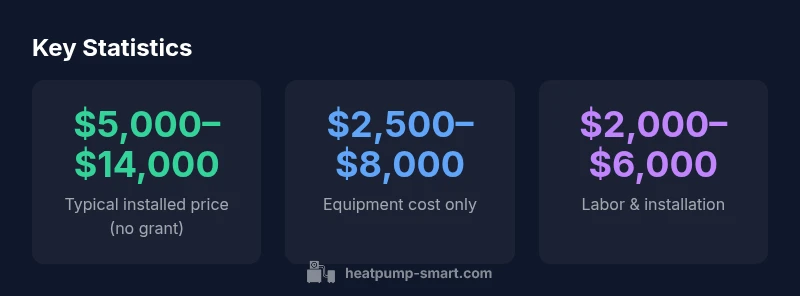
Without a grant, the installed cost of an air-source heat pump typically ranges from USD 5,000 to 14,000, depending on system type, efficiency, and installation complexity. Geothermal options or larger homes can push costs higher. Use these ranges to anchor quotes before negotiating with local installers. Keep in mind regional labor and permit costs may shift the final figure.
What the price covers: equipment, installation, and more
According to Heatpump Smart, the sticker price you see for a heat pump is only part of the story. The total cost typically includes the equipment itself (outdoor unit, indoor coil, refrigerant lines), installation labor, ductwork or ductless adaptations, electrical upgrades, and necessary permits. If you’re replacing an older system, there may be removal and disposal costs for the old equipment. In many homes, retrofits require additional components like a smarter thermostat, zoning controls, or a condensate pump. Geothermal systems, while efficient, usually incur higher upfront costs due to trenching or boreholes. Ductless mini-splits add cost per zone but save on ductwork where renovations aren’t feasible. Regional labor rates, permits, and site access can shift the final figure, so start with a broad price range before narrowing quotes.
This block sets the foundation for evaluating quotes and understanding what you’re paying for beyond the label price. Heatpump Smart’s framework emphasizes transparent line items and a clear view of long-term value rather than chasing the lowest upfront number.
Price ranges by system type: air-source vs geothermal vs ductless
Prices vary considerably by system type. Air-source heat pumps are typically the most common and often the most cost-effective upfront option for many homes, especially where ductwork is already in place. Geothermal (ground-source) systems tend to have higher upfront costs because of drilling, loop field installation, and longer horizon for service access, but they can offer superior efficiency in appropriate climates. Ductless mini-splits provide targeted cooling/heating in specific zones and can reduce ductwork costs, but the per-zone price scales with the number of indoor units. Heatpump Smart’s analysis shows that the choice between these options should align with home layout, climate, and long-term energy goals. When planning without a grant, expect a broader spread in quotes as installers price labor, equipment, and site preparation differently across system types.
For most homes, air-source units without a grant land in a mid-range price band, geothermal sits at the higher end, and ductless adds per-zone considerations. An informed comparison requires itemized quotes that separate equipment, labor, and installation details to ensure an apples-to-apples assessment.
How efficiency (SEER/HSPF) affects upfront cost and operating savings
Higher efficiency ratings come with a price premium, but they also offer bigger long-term savings. Equipment with higher SEER (cooling efficiency) and HSPF (heating efficiency) can increase upfront costs—often a modest premium relative to potential annual energy savings, depending on climate and electricity rates. The payoff comes from lower operating costs, reduced energy usage, and sometimes favorable incentives over time. In practice, homeowners should weigh the incremental upfront cost against projected savings, climate-specific savings, and available maintenance plans. Heatpump Smart recommends requesting both efficiency ratings and estimated annual energy costs in every quote to quantify value over the system’s life.
The principal takeaway: a higher upfront investment can yield meaningful operating savings, but it’s climate-dependent and must be evaluated against your local energy prices and usage patterns.
Installation considerations that drive price
Installation complexity is a major driver of total cost. If your home already has suitable ductwork, installation can be faster and cheaper; if not, retrofitting ducts or installing a ductless system may add significant labor. Electrical panel upgrades, indoor air quality components, and smart thermostat integration can add to the total. Location matters as well: a difficult-to-reach outdoor unit, long refrigerant runs, or the need to relocate an existing system all add to labor and materials. Permitting requirements vary by region and can subtly impact timing and cost. Finally, the quality of the installation influences system performance; cutting corners on wiring, refrigerant charge, or correct refrigerant type can lead to higher long-term costs and reliability concerns. Heatpump Smart advocates for detailed, itemized quotes that cover every step from site prep to startup.
In short: the same heat pump can cost differently based on site conditions and installation choices, so use quotes that explain every line item.
The impact of home size, climate, and energy prices on cost
Home size and climate determine how hard a heat pump must work, which informs equipment size and efficiency needs. In hotter regions, a cooling load dominates and energy use patterns differ from cold climates where heating dominates. Local electricity prices directly affect operating costs and perceived value over time. A larger home or a climate with extreme temperatures will typically require a higher-capacity system, increasing both upfront and ongoing costs but potentially delivering larger savings. Heatpump Smart recommends modeling your yearly energy consumption and comparing it to a premium but more efficient unit to estimate payback. Remember that the installed cost is only one part of the total cost of ownership; annual electricity costs, maintenance, and potential future upgrades matter too.
Financing and incentives: what you can still get even without a grant
Even without a direct grant, there are often other incentives to consider. Look for utility rebates, state or local energy-efficiency programs, and federal tax credits (where eligible) that can offset part of the upfront cost. Financing options, such as low-interest loans or home improvement lines of credit, can spread payments over time. Warranty extensions and maintenance plans may also reduce long-term risk and costs. Heatpump Smart advises checking with your installer about current incentives in your area and verifying eligibility before signing a contract. While grants are not guaranteed, a thoughtful combination of incentives and financing can improve affordability.
How to get accurate quotes: steps to take
To ensure you compare apples to apples, start with a detailed needs assessment and site evaluation. Ask for itemized quotes that break down equipment costs, labor, ductwork or ductless installation, permits, and startup/warranty coverage. Request performance specifications (SEER/HSPF, COP), expected indoor air quality outcomes, and climate-appropriate capacity. Confirm service commitments, lead times, and warranty terms. If possible, obtain quotes from multiple installers and check references or online reviews. Finally, ask about post-installation maintenance and any recommended upgrades for future efficiency. A thorough quote reduces ambiguity and helps you assess value beyond the upfront price.
Common pitfalls and value traps to avoid
Low upfront bids can hide essential costs like ductwork, refrigerant charges, or system sizing errors. Beware quotes that do not specify the unit’s efficiency ratings or fail to include permits, startup, or warranty terms. A small saving now could lead to higher energy bills or more frequent repairs later if the system is undersized or incorrectly installed. Also, avoid choosing a system solely on price without validating the installer’s experience with heat pumps in your climate. Heatpump Smart emphasizes verifying quotes with a side-by-side comparison that includes performance specs, installation details, and long-term maintenance expectations.
Putting it together: a decision framework
Create a value-based decision framework that weighs upfront cost, operating costs, climate suitability, and warranty/maintenance options. Start with a broad cost range, then tighten quotes after site visits and performance estimates. Use the higher efficiency option only if the projected energy savings and payback align with your budget and climate. Consider whether a ducted, ductless, or geothermal solution best meets your home’s layout and long-term goals. Finally, confirm that the chosen system has a solid service network and a reliable track record for longevity. Heatpump Smart’s framework centers on clarity, value, and long-term comfort.
Cost breakdown for heat pump installations without grants
| Cost Component | Typical Range | Notes |
|---|---|---|
| Equipment cost | $2,500–$8,000 | Includes outdoor unit, compressor, coil |
| Labor & installation | $2,000–$6,000 | Ductwork, permits, wiring |
| Total installed (no grant) | $5,000–$14,000 | Varies by home and system type |
| Annual operating cost vs electric heat | Varies by climate | Electricity rates affect payback |
Your Questions Answered
What factors most influence the upfront cost of a heat pump without a grant?
Upfront cost is driven by system type (air-source vs geothermal vs ductless), efficiency ratings (SEER/HSPF), chosen brand, and installation complexity. Ductwork, electrical upgrades, and permits can add significant amounts. Always request an itemized quote.
Upfront cost depends on system type, efficiency, and installation details.
Is geothermal more expensive upfront than air-source without a grant?
Geothermal generally has a higher upfront cost due to drilling and loop fields, but it can offer lower operating costs where climate and soil conditions are favorable.
Geothermal usually costs more upfront; it may save more on energy over time depending on climate.
Can I still qualify for rebates or incentives without a grant?
Yes, many programs offer rebates or tax credits that are not grants. Availability varies by location and system, so check local utilities and state programs.
There are often rebates or credits available, depending on where you live.
How long does installation typically take?
Most installations take 1–3 days for standard setups. Geothermal or complex retrofits can extend this, especially if extensive ductwork is required.
Most installs take a day or two, with longer times for complex jobs.
What should I ask installers to ensure apples-to-apples quotes?
Ask for itemized quotes that separate equipment, labor, permits, and maintenance. Request performance specs, warranty terms, and timelines to compare reliably.
Ask for a detailed, itemized quote with specs and warranties.
“The upfront price volatility is the biggest hurdle for buyers, but total ownership improves with efficient models and careful installation.”
Top Takeaways
- Start with the full price range before quotes.
- Geothermal or ductless systems raise upfront costs.
- Higher efficiency adds cost but can save energy over time.
- Request itemized quotes to compare apples-to-apples.
- Ask about warranties and maintenance to protect value.