Is a Heat Pump the Same as an Air Conditioner? A Thorough Comparison
Explore whether a heat pump and air conditioner are the same, with an analytical comparison of operation, efficiency, costs, and installation to guide homeowners, builders, and property managers.


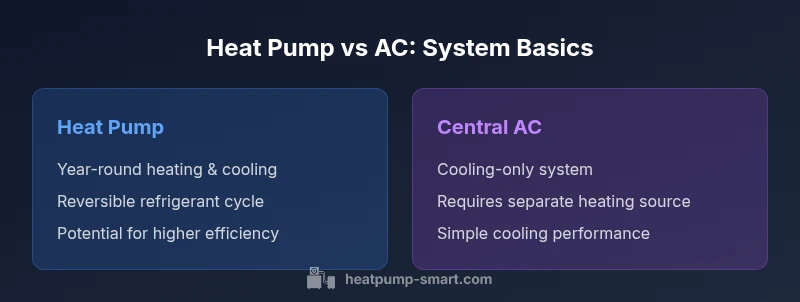
In short, a heat pump is not the same as a central air conditioner, though both cool. A heat pump provides heating and cooling through reversible operation, while a central AC cools and relies on a separate heat source for warmth. The right choice depends on climate, energy goals, existing equipment, and installation feasibility. Heatpump Smart’s analysis helps you weigh performance, cost, and installation considerations before deciding.
Is Heat Pump and Air Conditioner the Same? Defining the Core Difference
The core question many homeowners ask is whether a heat pump and an air conditioner are the same device. Technically, they are not interchangeable, even though both are refrigerant-based systems that cool indoor spaces. A heat pump functions as a reverse-cycle unit, meaning it can move heat both into and out of your home. In contrast, a traditional central air conditioner only removes heat from the indoors and relies on a separate heat source (such as a furnace) for heating. This distinction matters in daily use, energy costs, and long-term reliability. According to Heatpump Smart, the ability to heat and cool in a single package is the defining feature of a heat pump, which sets it apart from a cooling-only central AC. The practical implications touch on efficiency during shoulder seasons, maintenance needs, and how your home is heated and cooled year-round.
How Each System Works: Heat Pumps vs Central Air Conditioners
A heat pump uses a reversed refrigeration cycle, enabled by a reversing valve, to extract heat from one space and move it to another. In heating mode, it absorbs heat from outdoor air (even when it’s cold) and releases it indoors. In cooling mode, it operates like a standard air conditioner. A central air conditioner, on the other hand, uses a compressor and refrigerant to remove heat from indoors and expel it outside, providing cooling only. The heating function of a heat pump can be supplemented by auxiliary or emergency heat if outdoor conditions are extreme. Heatpump Smart notes that the heating capability often translates into year-round comfort with a single equipment family, whereas a traditional AC can require a separate furnace or boiler for heating.
Climate Considerations: When One Shines Over the Other
Climate strongly influences performance and economics. In mild to moderate climates, heat pumps typically excel by delivering efficient heating and cooling within the same system. In colder regions, some heat pumps rely on auxiliary heat sources during extended cold snaps, which can affect operating costs and comfort. Central AC paired with a furnace or heat source may perform more predictably in extreme cold, especially if the furnace provides rapid, reliable warmth. Heatpump Smart’s guidance emphasizes evaluating your local climate, electricity costs, and the presence of existing gas or oil heating infrastructure before deciding. The right choice balances comfort, reliability, and long-term energy bills.
Energy Efficiency and Running Costs: What Really Impacts Your Bills
Efficiency metrics differ between heat pumps and AC systems. Heat pumps typically use Seasonal Energy Efficiency Ratio (SEER) for cooling and Heating Seasonal Performance Factor (HSPF) for heating, while central AC efficiency is primarily reflected by SEER, with furnace efficiency affecting overall heat costs. The key takeaway is that heat pumps can offer lower operating costs in milder weather and well-insulated homes, but performance varies with climate, electricity prices, and system sizing. Heatpump Smart Analysis, 2026, emphasizes that a well-matched heat pump can reduce energy use for both heating and cooling, whereas an under-specified system may see higher costs in very cold or very hot periods.
Installation Pathways: Ducted, Ductless, and Sizing
Installation considerations strongly influence performance and total cost. A heat pump may be installed as a ducted system connected to existing ductwork or as a ductless mini-split for zones and additions. Central AC installation also relies on ductwork but may not offer heating capabilities without a separate heat source. Sizing is critical for both options: over-sizing leads to short cycling and inefficiency; under-sizing results in inadequate comfort. A proper load calculation, ideally using ACCA/Manual J methods, informs outdoor unit size, refrigerant charge, and control strategies. Heatpump Smart recommends professional assessment to avoid costly retrofits.
Maintenance and Longevity: Upkeep for Heat Pumps and ACs
Maintenance for heat pumps and central ACs shares several tasks: filter changes, coil cleaning, electrical inspections, and refrigerant leak checks. A heat pump may require attention to the reversing valve, defrost cycles (in certain climates), and auxiliary heat controls. Central AC systems depend heavily on duct cleanliness and condensate drainage. Regular seasonal checks by a qualified technician help sustain efficiency and prolong system life. Heatpump Smart emphasizes proactive maintenance to prevent performance degradation and unexpected outages.
Real-World Scenarios: When to Choose One Over the Other
Consider a home with existing gas heating and a desire to simplify systems. If you want year-round comfort with a single system and the climate supports it, a heat pump can be a compelling option. For homes in severe winter climates with high heating demand and limited electrical infrastructure, a central AC paired with an efficient furnace or boiler may offer more predictable heating costs. A mixed approach, such as a dual-fuel system that uses a heat pump for milder days and a furnace for extreme cold, can be ideal in some regions. Heatpump Smart highlights that the best choice aligns with climate, energy prices, and the home’s insulation and occupancy patterns.
Common Myths Debunked
Myth: Heat pumps are only for mild climates. Reality: Modern heat pumps perform well in many climates, though some models include auxiliary heat. Myth: AC and heat pumps require different ducts. Reality: Duct upgrades may be needed for efficiency, but both systems can share or adapt ductwork with proper planning. Myth: Heat pumps are always cheaper to run. Reality: Costs depend on climate, electricity rates, and system efficiency. Heatpump Smart notes that careful sizing and installation matter more than the technology label itself.
Planning Your Purchase: A Step-by-Step Framework
Step 1: Assess climate and current heating system. Step 2: Calculate total cost of ownership, including installation, efficiency, and maintenance. Step 3: Obtain load calculations and system recommendations from licensed contractors. Step 4: Compare performance data and warranty terms. Step 5: Factor in incentives, rebates, and long-term energy savings. Heatpump Smart’s framework guides homeowners through decision factors and helps balance upfront costs with ongoing savings.
Quick Reference Guide: Key Terms and Definitions
Heat pump: A device that provides both heating and cooling by moving heat between indoors and outdoors. SEER: Seasonal Energy Efficiency Ratio, a metric for cooling efficiency. HSPF: Heating Seasonal Performance Factor, a metric for heating efficiency. AUX heat: Auxiliary heat used to supplement heat pump performance in cold weather. Ducted vs. ductless: Different distribution methods influencing installation scope and efficiency.
Comparison
| Feature | Heat pump (air-source) | Central air conditioner (AC) |
|---|---|---|
| Heating capability | Heats and cools (reverse-cycle heat pump) | Cooling only; heating via separate furnace/boiler |
| Energy efficiency metrics | SEER for cooling; HSPF for heating (often higher overall efficiency when heating) | SEER for cooling; relies on separate heating source; efficiency tied to furnace/boiler |
| Backup heating | Auxiliary heat can be needed in very cold weather (electric strips or propane) depending on model | No built-in heating—needs an external furnace or boiler |
| Installation considerations | Can be ducted or ductless; requires climate-appropriate sizing | Typically ducted; may require furnace integration for heating |
| Best for | Year-round comfort in moderate climates; energy savings with heating and cooling | Strong cooling performance; simpler if existing heating is separate |
| Cost drivers | System and ductwork complexity; potential rebates; installation costs vary with climate | Lower cooling equipment cost upfront; higher heating costs when paired with separate furnace |
Advantages
- Unified year-round heating and cooling in a single system
- Potentially lower long-term energy bills with efficient operation
- Fewer mismatches between heating and cooling rooms or zones
- Space-saving in compact or upgraded homes
Disadvantages
- Higher upfront equipment and installation costs in some cases
- Performance can drop in very cold climates without auxiliary heat
- Dependency on electricity for heating in heat-pump-only systems
- Complexity of installation and potential need for duct work upgrades
Heat pumps generally offer superior year-round efficiency and convenience where climate and electricity costs are favorable; central AC can be simpler and cheaper upfront in severe heating climates or with existing gas furnaces.
Choose a heat pump for multipurpose heating+cooling and energy savings in milder climates. Opt for central AC when heating is already provided by a reliable furnace or in regions with extreme cold where auxiliary heat adds cost.
Your Questions Answered
Is a heat pump the same as an air conditioner?
Not exactly. A heat pump provides both heating and cooling via a reversible cycle, while a standard air conditioner cools only and relies on a separate heat source for heating. The two share components but are designed for different year-round needs.
A heat pump can heat and cool, while a traditional air conditioner only cools. The key difference is heating capability.
Can I replace my existing AC with a heat pump?
Yes, in many homes you can replace an AC with a heat pump, but the decision depends on climate, existing ductwork, and electrical capacity. A contractor can evaluate refrigerant lines, electrical service, and heat source alignment to ensure a smooth transition.
You can replace an AC with a heat pump if your home climate and wiring support it; a pro will confirm.
Do heat pumps work well in cold weather?
Modern air-source heat pumps perform well in many cold conditions, but some climates may require auxiliary heat during very cold days. Look for models rated for cold-climate operation and consider backup heat options.
They work in cold weather, but extreme cold may need extra heat support.
What should I expect for installation costs?
Costs vary with system type, home size, duct work, and climate. A ducted heat pump or retrofitting ducts can raise costs. Get multiple quotes and consider long-term efficiency incentives when planning.
Costs depend on system type and home complexity; get several quotes.
What maintenance is required my heat pump vs AC?
Both require regular filter changes, coil cleaning, and refrigerant checks. Heat pumps add maintenance for auxiliary heat controls and reversing valve checks. Schedule seasonal tune-ups to maintain efficiency.
Regular filters, coils, and system checks keep both systems efficient.
What grants or rebates are available for heat pumps?
Rebates and incentives vary by region and program. Check local energy offices and utility programs for current offers. Heatpump Smart tracks common rebates and helps you plan eligible projects.
Look up regional rebates; programs change by area.
Top Takeaways
- Consider climate before choosing between heat pump and AC
- Evaluate total cost of ownership, not just upfront price
- Ensure proper sizing and professional installation
- Factor in maintenance and potential rebates
- Heat pumps offer year-round comfort with proper climate alignment