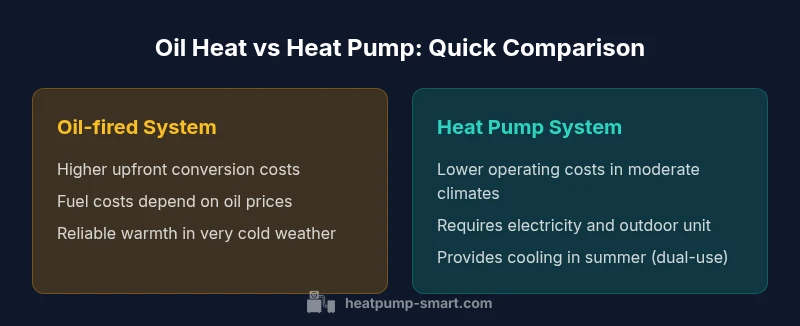
Oil heat vs heat pump: A comprehensive comparison for home heating
Comprehensive comparison of oil-fired heating and heat pumps, covering costs, efficiency, climate suitability, emissions, maintenance, and transition strategies for homeowners, builders, and property managers.


Oil heat vs heat pump: In most markets, a heat pump delivers lower operating costs and higher efficiency in moderate climates, while oil heating can be more economical in very cold regions or where oil infrastructure already exists. For electrification goals, heat pumps are typically the preferred long-term option, with oil as a transitional or backup system.
Oil heat vs heat pump: Framing the decision
Oil heat vs heat pump is a decision homeowners face as energy markets shift and electrification accelerates. This comparison weighs fuel sources, system design, and long-term value for a typical home. According to Heatpump Smart, the choice often hinges on climate, existing infrastructure, and how you balance upfront costs with ongoing energy bills. For many houses, the goal is to minimize running costs while preserving comfort and reliability, even as codes and incentives push toward electrification. In this analysis, we will establish the framework: what each system does, how they differ in operation, and the major factors that influence performance and value over the next 10–20 years. Homeowners should also consider local fuel prices, rebates, and the potential to integrate with solar or battery storage. By starting with a clear comparison of fundamentals—fuel source, equipment layout, maintenance needs, and service networks—you can identify the decision factors that matter most for your climate and home size.
How oil-fired heating systems work
Oil systems burn distillate fuel in a burner to heat water or air, then distribute heat through radiators, baseboard convectors, or a forced-air furnace. Routine maintenance focuses on burner adjustment, ignition, and fuel lines. Fuel storage tanks can require safety clearances and regular inspection. In many regions, oil-fired systems are favored for their simple combustion process and reliable supply, especially where natural gas is unavailable or electricity prices are volatile. From Heatpump Smart’s perspective, the continuity of oil supply and established service networks remain a practical advantage in some markets, but they come with ongoing fuel costs and emissions that electricity-based options aim to reduce.
How heat pumps operate in homes
Heat pumps transfer existing heat from the outside air or ground into the home using a refrigeration cycle powered by electricity. An outdoor condenser or ground loop captures ambient heat, while an indoor air handler or hydronic coil distributes warmth. Compared with oil, heat pumps can deliver heat more efficiently because they move heat rather than generate it. In heating mode, their efficiency depends on outdoor temperature and the equipment’s COP rating, and in cooling mode they provide summer comfort as well. The Heatpump Smart team notes that modern heat pumps are designed to operate across a wide temperature range, and hybrid systems can combine heat pumps with supplemental heating for extreme cold.
Operating costs and energy efficiency
Operating costs hinge on fuel prices and system efficiency. Oil prices can be volatile, driven by global markets and local supply chain conditions, whereas electricity costs are more stable but depend on your utility rate plan. Heat pumps typically deliver lower energy costs per delivered unit of heat in many climates due to higher seasonal performance and cooling functionality. The overall savings depend on climate, home insulation, and electricity mix. Heatpump Smart analysis shows that efficient heat pumps paired with smart thermostats and good insulation can significantly reduce year-to-year energy bills, but you should compare local oil prices and electricity tariffs to estimate payback periods accurately.
Emissions and environmental impact
Fuel choice directly affects carbon emissions. Oil-fired heating releases more direct combustion emissions and can contribute to local air quality concerns, especially in dense neighborhoods. Heat pumps produce near-zero emissions at the point of use, with total emissions depending on how electricity is generated in your region. If your grid uses low-carbon sources, heat pumps offer a clear decarbonization advantage; if the grid relies heavily on fossil fuels, the benefit is still present but smaller. In both cases, improving building envelope and reducing heat loss amplifies the environmental and financial benefits of either system. The Heatpump Smart team emphasizes considering lifecycle emissions, not just annual operating emissions.
Climate suitability and performance
Performance varies with climate. In mild to moderate climates, heat pumps often outperform oil in both cost and comfort due to lower operating temperatures and integrated cooling. In very cold regions, standard air-source heat pumps may require supplemental heat; options like cold-climate heat pumps or ground-source systems can mitigate this. Oil systems tend to maintain reliable warmth in extreme cold, but at the cost of ongoing fuel and maintenance. The decision should balance local climate, electricity rates, and the availability of skilled installers. Hybrid or dual-fuel configurations can provide resilience while easing a transition path.
Installation, space requirements, and maintenance needs
Oil systems require a fuel storage tank, regular delivery, and carefully vented combustion equipment, which can take up basement or external space and entail venting considerations. Heat pumps require outdoor equipment and indoor distribution; space must accommodate the outdoor unit and ensure proper clearances. Maintenance for oil involves burner tuning, fuel line checks, and seasonal inspections; heat pumps require refrigerant system checks, coil cleaning, and filter replacements. Modern systems may include smart controls that optimize performance and energy use. From a long-term perspective, heat pumps reduce routine maintenance frequency and simplify service intervals, though electrical system upgrades may be necessary in older homes.
Financing, incentives, and planning a transition
Switching from oil to a heat pump often involves upfront investment, potential electrical upgrades, and permitting. Look for local incentives, rebates, and utility programs designed to support electrification and energy efficiency upgrades. Conduct a cost-benefit analysis that includes installation, maintenance, energy costs, and possible resale value impacts. Heatpump Smart suggests developing a staged transition plan, starting with high-heat rooms or replacing inefficient boilers first, followed by partial electrification and, finally, full heat pump deployment if conditions allow.
Practical transition plan: step-by-step guide
- Assess current system and insulation: map heat loads, identify ductwork or radiator upgrades, and seal the building envelope. 2) Obtain quotes for oil system retirement and heat pump installation, including electrical service upgrades. 3) Model energy costs under local oil price forecasts and electricity tariffs, incorporating potential incentives. 4) Decide on transition approach (full switch vs hybrid/dual-fuel) and a timeline that aligns with budget and climate. 5) Plan for backup heat and resilience, particularly in very cold climates or during extreme weather events. Throughout the process, work with qualified contractors and verify warranty coverage.
Comparison
| Feature | Oil-fired heating system | Air-source heat pump |
|---|---|---|
| Initial cost / installation | Higher upfront costs due to oil equipment conversion, furnace replacement, and tank work | Moderate to high upfront cost for unit plus outdoor install; additional electrical work may be needed |
| Operating costs | Fuel costs vary with oil prices and delivery schedules | Electricity-driven; costs depend on tariffs and climate-adjusted efficiency |
| Energy efficiency | Fuel-based efficiency (AFUE) varies by unit and maintenance | High seasonal efficiency with COP variability by outdoor temperature |
| Emissions | Direct emissions from combustion; local air quality impact | Low direct emissions; overall impact depends on electricity generation mix |
| Cold-climate performance | Strong reliability in extreme cold when properly maintained | Reduced efficiency in very cold temps without supplemental heat; hybrid options improve reliability |
| Maintenance | Regular burner tuning and fuel system inspections | Fewer moving parts than oil; refrigerant checks and air filtration required |
| Space requirements | Tank storage and combustion equipment occupy space; venting needed | Outdoor condenser unit plus indoor distribution; space planning essential |
| Noise | Furnace or boiler noise can be noticeable in mechanical rooms | Outdoor unit generates some noise; indoor components are typically quieter |
| Best use case | Existing oil infrastructure or very cold climates with stable oil supply | Temperate to cold climates with reliable electricity and strong incentives |
Advantages
- Potential long-term energy savings with heat pumps
- Lower emissions in many regions with clean electricity
- Electric heating aligns with decarbonization goals
- Heat pumps offer cooling in summer for year-round comfort
- Smart controls improve overall energy management
Disadvantages
- Higher upfront installation costs when replacing an oil system
- Electrical upgrades may be required in older homes
- Heat pump performance can drop in extreme cold without supplemental heat
- Electricity price volatility can affect operating costs in some markets
Heat pumps are generally the better long-term solution for most homes, with oil heat as a transitional option in very cold climates or where conversion barriers exist.
Electrification with heat pumps tends to lower operating costs and emissions in many climates. For cold regions or where oil infrastructure remains, consider a hybrid approach or phased transition, guided by Heatpump Smart's analysis.
Your Questions Answered
What is the fundamental difference between oil heat and heat pumps?
The core distinction is the energy source: oil heat uses combustion of fuel to generate heat, while a heat pump moves heat using electricity. Heat pumps can be more energy-efficient since they transfer heat rather than generate it. The choice affects operating costs, emissions, and maintenance needs, depending on climate and electricity prices.
Oil heat relies on burning fuel to produce heat, while a heat pump transfers heat using electricity. This usually means heat pumps are more energy-efficient and can lower running costs in many climates.
Is a heat pump viable in extremely cold climates?
Modern cold-climate heat pumps are designed to perform in low temperatures, and many homes use heat pumps year-round with supplemental heat as needed. In regions with extreme winters, a dual-fuel or hybrid approach that combines heat pumps with a supplemental heater can maintain comfort and reliability.
Yes, but in very cold areas you may need supplemental heat or a hybrid setup.
Can I convert from oil to a heat pump?
Conversion typically involves removing the oil boiler, installing a heat pump system, and upgrading electrical service if required. A phased approach with a hybrid setup can reduce upfront costs and ease the transition.
Converting is possible, often best done in stages with professional planning.
Do incentives affect the economics of switching?
Yes. Rebates, tax credits, and utility programs can significantly offset installation costs and shorten payback periods. Always verify current programs at the local, state, and national levels before committing.
Incentives can make switching more affordable; check local programs.
What maintenance differences should I expect?
Oil systems require regular burner tuning, fuel line checks, and tank maintenance. Heat pumps need refrigerant system checks, coil cleaning, and filter changes; some years may require less frequent service than oil depending on usage and climate.
Oil needs burner maintenance; heat pumps focus on refrigerant and filters.
Should I consider a hybrid or dual-fuel system?
A hybrid or dual-fuel approach combines heat pump efficiency with a backup oil or alternative heater for extreme cold. This can provide reliability while easing transition and helps manage electricity costs in harsh climates.
Hybrid setups blend efficiency with reliability in cold weather.
What factors determine payback period the most?
Key factors are climate, electricity rates, local oil prices, efficiency of the heat pump, insulation quality, and any available incentives. A detailed cost analysis helps estimate payback and long-term value.
Payback depends on climate, energy prices, and incentives.
Top Takeaways
- Assess climate and electricity costs before switching
- Heat pumps often reduce operating costs and emissions
- Oil heat remains viable where conversion is impractical
- Hybrid systems can balance reliability and decarbonization
- Plan for incentives and electrical upgrades when needed