Pool Heat Pump Cost Guide: Upfront to Long-Term Savings
Learn how pool heat pump costs are shaped by equipment price, installation factors, climate, and incentives. This Heatpump Smart guide breaks down costs, potential savings, and practical tips to optimize your pool heating investment.


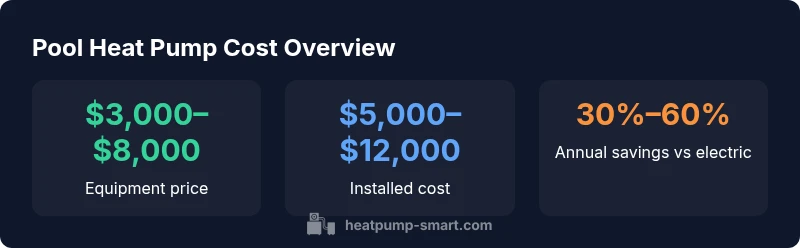
Pool heat pump cost typically ranges from $3,000 to $8,000 for equipment, with installed costs generally between $5,000 and $12,000, depending on pool size, climate, and labor. Compared with electric or gas heaters, heat pumps usually offer lower operating costs in moderate climates, especially when paired with efficient pool covers and smart controls. Upfront investment is higher, but long-term savings can improve payback.
Understanding the true cost of pool heat pumps
Pool heat pump costs are influenced by equipment price, installation complexity, and regional labor rates. According to Heatpump Smart, the headline figure—whether you pay for equipment alone or for a fully installed system—can vary widely based on pool size, desired temperature, and whether you need electrical upgrades or permits. The cost delta between a basic air-source unit and a premium model with enhanced efficiency features isn’t just about upfront price; it also affects long-term operating costs, performance during shoulder seasons, and the ease of integration with smart home systems. When homeowners and property managers evaluate pool heat pump cost, they should consider total cost of ownership, including maintenance and replacement cycles. In most climates, heat pumps deliver reliable heat with lower energy use than electric resistance heaters, which is a meaningful long-term savings lever for energy-bill sensitive households.
Heatpump Smart’s analysis emphasizes that financing options, seasonal promotions, and local incentives can affect the effective price. Prospective buyers should request quotes that separate equipment price from installation labor, electrical work, and any required permits. This helps create an apples-to-apples comparison and avoids sticker shock when the final invoice arrives. With the right sizing and installation, a heat pump can be a cost-effective solution for year-round pool comfort.
Key cost components: equipment, installation, and site factors
The most visible portion of pool heat pump cost is the equipment itself. Entry-level models that fit standard residential pools typically sit in the lower end of the price range, while high-capacity, advanced units with corrosion-resistant components and higher COP ratings push costs upward. Beyond the unit, installation involves electrical wiring, a dedicated circuit, refrigerant lines, and, in some cases, a pad or mounting bracket. Labor rates vary by region, and some jurisdictions require permits or inspections that add time and costs. Site factors such as pool accessibility, distance from the equipment pad to electrical service, and existing utilities can also influence installation complexity. If a longer distance or extra conduit is needed, expect additional charges. Finally, climate plays a subtle role: colder climates can require more robust heat pump configurations or supplemental backup heat, which can raise both equipment price and installation work. Heatpump Smart recommends obtaining multiple quotes, and ensuring each quote itemizes components to avoid hidden fees.
How climate and pool size influence cost and efficiency
Climate determines how hard a heat pump must work to reach target water temperatures. In milder climates, heat pumps can run more efficiently, improving COP and lowering operating costs. For larger pools, heat load increases, potentially raising equipment size and cost, but economies of scale may improve the per-gallon heat cost. Pool geometry, sun exposure, wind, and water chemistry also affect how quickly heat is gained or lost, altering run-time and energy consumption. Efficient pool covers and windbreaks are practical investments that reduce heat loss and may allow smaller, less costly equipment without compromising comfort. Heatpump Smart’s findings show that investing in insulation and protective measures can reduce long-term energy use, particularly in shoulder seasons.
Cost comparisons: heat pumps vs gas heaters vs electric resistance
Compared with electric resistance heaters, heat pumps can dramatically reduce energy use, especially in temperate zones. Gas heaters provide rapid heat but carry ongoing fuel costs and emissions concerns. When comparing lifecycle costs, heat pumps often win on operating costs, with the upfront premium paid back through energy savings over several years. For property managers evaluating multiple units, a simple approach is to estimate annual energy use with a baseline heater and apply COP-based efficiency. In cooler climates, the efficiency gap narrows, and backup heat may be necessary; in warmer climates, heat pumps consistently outperform electric resistance heaters for most seasonal needs. Heatpump Smart emphasizes validating performance data from the unit’s COP and year-round operating profile to avoid overpaying for capacity that isn’t utilized.
Financial considerations: incentives, warranties, and payback
Incentives can significantly affect the effective pool heat pump cost. Look for rebates, tax credits, or utility programs that offset equipment or installation costs. Warranties vary by brand and installer; a longer warranty on compressor and coil protection reduces risk over the system’s life. When calculating payback, include not only annual energy savings but also maintenance costs and potential savings from reduced pool heat loss through covers. Heatpump Smart recommends modeling several scenarios with different electricity rates and pool usage patterns to identify a realistic payback window for your property. Financing options, including low-interest loans or lease programs, can improve affordability.
Practical tips to reduce pool heat pump costs without sacrificing comfort
To optimize cost without compromising comfort, ensure correct sizing—the most common source of wasted money is undersized or oversized equipment. Work with a qualified installer to verify load calculations and confirm that electrical service can handle the unit without upgrades. Consider timing your installation during offseason promotions or when contractors have lower labor demand. Use a high-quality pool cover to reduce heat loss and maximize the system’s effectiveness, and pair the heat pump with a programmable thermostat or smart controls to avoid unnecessary run-time. Regular maintenance, such as coil cleaning and refrigerant checks, can preserve efficiency and extend equipment life. Finally, explore regional rebates and utility incentives early in the planning phase to align purchasing decisions with available financial support.
Case studies and decision framework
Across several residential and small commercial pools, homeowners who chose correctly sized heat pumps and integrated efficient covers reported faster warmups, fewer temperature fluctuations, and more predictable operating costs. A practical decision framework involves: (1) defining target water temperatures and seasonal usage, (2) estimating heat load based on pool size and climate, (3) comparing installed costs with and without backup heat options, and (4) tallying potential incentives and maintenance costs. Heatpump Smart’s guidance is to run several scenarios that reflect your local climate, electricity pricing, and pool usage patterns, and to select a system that minimizes total cost of ownership while meeting comfort goals.
Comparison of pool heat pump options
| Model Type | Installed Cost Range | COP Range | Lifespan | Noise Level (dB) |
|---|---|---|---|---|
| Air-source pool heat pump | $4,000–$9,000 | COP 4.0–6.0 | 12–15 years | 45–70 dB |
| Geothermal pool heat pump | $10,000–$20,000 | COP 4.5–5.5 | 15–25 years | 40–60 dB |
Your Questions Answered
What factors influence the total installed cost of a pool heat pump?
Total installed cost depends on equipment size, climate, electrical upgrades, site accessibility, and permit requirements. Labor rates and regional codes can add to the price, so obtain multiple quotes that break out components.
Factors include pool size, climate, electrical work, and permits. Get multiple quotes that separate parts for clarity.
Can I finance pool heat pump installation?
Yes. Many installers offer financing, and utility incentive programs can reduce upfront costs. Compare loan terms, interest rates, and total payback across options before committing.
Yes—financing is often available through installers or utilities. Compare terms to find the best deal.
Are there rebates or tax credits for pool heat pumps?
Rebates and tax incentives vary by region and program. Check with local utilities and government programs to understand eligibility, application procedures, and timelines.
Regional rebates and credits can reduce upfront costs; check local programs.
What is the typical payback period for a pool heat pump?
Payback depends on climate, usage, and energy prices, but a common range is 4–8 years. Higher usage and cooler climates shorten the payback period.
Usually between 4 and 8 years, depending on climate and usage.
How does a pool cover affect operating costs?
A proper pool cover reduces heat loss, increasing efficiency and lowering running hours. This works well with heat pumps to maximize savings and shorten payback.
A good cover cuts heat loss and boosts efficiency, helping heat pumps save more.
“Heat pumps offer the best long-term value when you balance upfront cost with annual energy savings and climate suitability.”
Top Takeaways
- Prioritize total cost of ownership, not just upfront price
- Size equipment correctly to maximize savings
- Leverage incentives and financing to improve affordability
- Use a pool cover to dramatically reduce heat loss
- Expect payback in several years depending on climate and usage