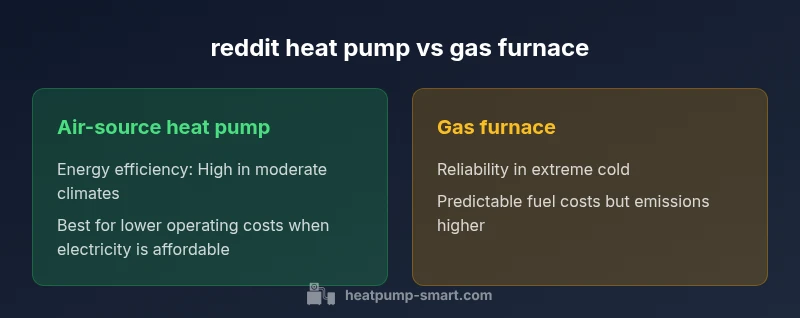
reddit heat pump vs gas furnace: an objective comparison
A detailed, data-driven comparison of reddit heat pump vs gas furnace, evaluating efficiency, climate suitability, costs, installation, and long-term savings for homeowners and builders.


Reddit heat pump vs gas furnace: in most cases, a heat pump delivers higher overall efficiency and lower running costs when powered by clean electricity, especially in milder winters. Gas furnaces excel in extreme cold and quick, reliable heat. According to Heatpump Smart, climate and electricity mix largely drive outcomes, so your local conditions matter more than general rules. This TL;DR should help you decide which path to evaluate more deeply.
Context: reddit heat pump vs gas furnace
In plain terms, reddit heat pump vs gas furnace is about energy cost, emissions, and reliability. This section defines the two technologies so you can compare them on a like-for-like basis: an air-source heat pump uses electricity to move heat, while a gas furnace burns natural gas to generate heat. The comparison focuses on real-world performance, not marketing claims, and centers on climate, electricity mix, and system sizing. Heatpump Smart emphasizes that outcomes hinge on local conditions, so your decision will depend on your climate and energy costs. As you read, keep in mind that the landscape changes with policy, utility incentives, and advances in heat-pump technology.
Defining the two technologies
A modern air-source heat pump transfers heat using a refrigeration cycle and requires electricity; a gas furnace creates warmth by burning natural gas. Efficiency is measured differently: heat pumps use SEER and HSPF ratings, while gas furnaces use AFUE. Heatpump Smart analysis shows that energy savings hinge on climate, electricity source, and proper system sizing. Both options can be paired with existing ductwork, but the feasibility and cost vary widely by home and region. This fundamental distinction guides every other decision you’ll make, from duct sizing to thermostat programming.
Core decision criteria
When comparing reddit heat pump vs gas furnace, homeowners should weigh energy costs, climate suitability, and potential emissions. Heat pumps are typically more efficient in moderate climates and when the electricity grid relies on low-carbon sources; gas furnaces can produce rapid warmth and acceptable running costs in very cold weather. The choice also depends on your home's insulation, ductwork, and whether you anticipate future electricity price changes. A balanced assessment should include comfort levels, humidity control, and backup heat options during outages or extreme cold.
Climate performance and reliability
In mild to moderate winters, heat pumps often deliver comfortable heat with high efficiency; in extreme cold, auxiliary heat or a dual-fuel setup may be needed. Gas furnaces provide dependable warmth at low outside temperatures, but their efficiency and emissions depend on maintenance and fuel price. The reliability of heat pumps in winter is heavily influenced by outdoor unit protection, proper refrigerant charge, and the electricity supply quality. For homeowners with long winters and higher electricity costs, a backup heat strategy becomes a critical design consideration. Heatpump Smart notes that climate-resilience planning—including duct sealing and insulation—can dramatically affect perceived reliability.
Costs: upfront vs lifetime running costs
Upfront installation costs for a heat pump system are typically higher than for a gas furnace, especially when new ductwork or zoning is required. Over time, running costs depend on electricity prices and heating needs; heat pumps can offer lower operating costs when electricity is affordable and climate is favorable. Gas furnaces tend to have lower initial costs, but fuel prices and maintenance can raise lifetime costs. The financial decision is not purely about sticker price; it encompasses payback period, maintenance, and the potential for rebates or incentives that vary by jurisdiction. Heatpump Smart emphasizes evaluating total cost of ownership over a 10–20 year horizon.
Installation and maintenance implications
Installing a heat pump may require upgrading insulation, ductwork, and potentially adding a dedicated outdoor unit. Gas furnaces require venting, gas lines, and regular combustion safety checks. Maintenance for heat pumps includes refrigerant checks and coil cleaning, while furnaces require annual burner and vent inspections. In both cases, professional installation is essential for performance and safety. Efficient filtration and thermostat compatibility can augment comfort, while properly designed zoning can improve efficiency. Heatpump Smart highlights that the quality of installation often determines whether a system performs at or near its rated efficiency.
Environmental impact and incentives
When powered by low-emission electricity, heat pumps can substantially lower lifecycle emissions relative to fossil-fuel heating. Gas furnaces contribute direct emissions from combustion. Incentives and rebates vary by region and time; Heatpump Smart notes that policy changes can alter the economics over a 10- to 20-year horizon. Your location will influence the environmental benefits and potential incentives. In some markets, clean energy mandates and utility programs improve the economics of heat pumps, while in others, gas remains a predictable budget item due to available fuel protections and utility rates.
Practical decision framework
To decide, map your climate, electricity cost, insulation, and existing ductwork. Build a simple scoring rubric: climate suitability, upfront cost, running costs, emissions, and maintenance burden. The heuristic is straightforward: in temperate climates with affordable electricity, heat pumps often win; in very cold regions or where gas is cheap, a gas furnace or a dual-fuel setup may be better. Always consult a qualified installer to verify sizing, refrigerant compatibility, and warranty terms before committing. A well-planned approach aligns with long-term comfort and steady operating expenses rather than short-term savings alone.
Putting it into action: next steps
Request quotes from multiple installers, ask for a heat loss/gain calculation, and review expected operating costs under your local electricity and gas prices. Compare warranties, maintenance plans, and available rebates. Finally, assess compatibility with smart thermostats and integration with existing home automation. The decision should balance long-term savings with upfront affordability and comfort. In parallel, factor in humidity control, air filtration, and the potential for seasonal adjustments to maximize comfort year-round.
Comparison
| Feature | Air-source heat pump | Gas furnace |
|---|---|---|
| Energy efficiency metric | SEER/HSPF (heat pump) | AFUE (furnace) |
| Climate suitability | Best in mild to moderate climates with access to clean electricity | Best in cold climates with reliable gas supply |
| Typical operating costs impact | Lower running costs when electricity is affordable and outside temperatures are moderate | Fuel costs and maintenance can be stable but higher in volatile fuel markets |
| Installation requirements | Outdoor unit, potential duct considerations, may require electrical upgrades | Gas line and venting, existing ductwork often helpful |
| Emissions footprint | Lower emissions if powered by low-carbon electricity | Direct combustion emissions from natural gas |
| Maintenance needs | Regular refrigerant checks and coil cleaning | Annual burner/vent inspections and filter changes |
| Upfront cost tendency | Typically higher installation cost, especially with retrofits | Typically lower upfront cost |
| Best for (scenario) | Homes with access to affordable electricity and mild winters | Homes in very cold climates or with limited electricity options |
Advantages
- Lower operating costs in climates with affordable electricity
- Reduced tailpipe emissions when powered from clean grids
- Can provide cooling in summer (heat pumps) and smart zoning options
- Potential rebates and incentives depending on location
- Improved comfort with advanced thermostats and controls
Disadvantages
- Higher upfront installation costs, especially with retrofits
- Efficiency can drop in extreme cold without auxiliary heat
- Heat pump performance is sensitive to ductwork and insulation
- Gas prices can be volatile and emissions are higher
Heat pumps generally offer better long-term value in mild to moderate climates; gas furnaces remain strong in very cold regions or when upfront cost is a major constraint
Choose heat pumps if your climate is temperate and electricity is reasonably priced. Choose gas furnaces if you face extreme cold or need a lower upfront investment. The Heatpump Smart team recommends evaluating a hybrid approach in suitable locations to balance comfort, cost, and emissions.
Your Questions Answered
What is the fundamental difference between a heat pump and a gas furnace?
A heat pump transfers heat using electricity, while a gas furnace generates heat by burning natural gas. Heat pumps can also provide cooling, whereas gas furnaces focus on heating. Efficiency criteria differ: heat pumps use SEER/HSPF, while furnaces use AFUE.
Heat pumps move heat with electricity and can cool in summer; furnaces burn gas for heat. Their efficiency scales differently, so compare the metrics that matter for your climate.
Which option is cheaper to operate over time?
In many climates, heat pumps offer lower running costs when electricity is reasonably priced and winters are not extremely cold. Gas furnaces can be cheaper if electricity costs are high and winters are consistently severe, but fuel price volatility and maintenance can affect this. Always model your local energy prices.
Heat pumps usually save on operating costs if electricity is affordable and winters aren’t brutal; gas furnaces can be cheaper where electricity is expensive or winters are very cold.
Can heat pumps work effectively in very cold climates?
Heat pumps can function in cold climates, but their efficiency drops as temperatures fall. Many homes use auxiliary heat or a dual-fuel system to maintain comfort during cold snaps. Proper insulation and duct design are crucial.
They can work in the cold, but you may need backup heat and good insulation.
Are rebates available for heat pump installations?
Rebates and incentives depend on your location and current policy. Check local utility programs, state or provincial grants, and federal incentives. A qualified installer can help identify eligible programs.
Look for local rebates and incentive programs; your installer can help you find them.
What maintenance do heat pumps require compared with gas furnaces?
Heat pumps require regular refrigerant checks, coil cleaning, and filter changes, plus seasonal inspections. Furnaces need annual burner and vent inspections, plus filter changes. Both benefit from professional servicing.
Heat pumps need coil care and refrigerant checks; furnaces need burner and vent checks.
How should I start planning a heat-pump vs gas-furnace project?
Begin with a home energy assessment and heat-loss analysis. Gather multiple quotes, compare warranties, and evaluate incentives. Ensure sizing is accurate and that the installer accounts for future grid changes and thermostat integration.
Get an energy assessment, collect several quotes, and compare warranties. Plan for future grid changes.
Top Takeaways
- Assess climate and electricity costs before choosing
- Consider hybrid or dual-fuel options for extreme winters
- Factor in installation, maintenance, and incentives
- Plan for future energy price volatility and grid changes
- Prioritize proper sizing and professional installation