Heat Pump Compared to Gas Furnace: An Objective Guide
Explore a rigorous comparison of heat pumps and gas furnaces, including efficiency, costs, climate performance, and installation considerations to help homeowners and builders choose the best heating solution.


For homeowners comparing heat pump vs gas furnace, a heat pump typically delivers lower operating costs and higher efficiency in moderate climates, while gas furnaces can offer lower upfront costs and reliable performance in very cold conditions when paired with auxiliary heat. Your best choice depends on climate, electricity prices, insulation quality, and available rebates or incentives in your area.
Context: Heat Pump vs Gas Furnace — Key Concepts
In the ongoing discussion about the best heating system for residential properties, homeowners and builders weigh long-term energy cost, reliability, and environmental impact. When evaluating heat pump compared to gas furnace options, several core ideas come up: climate suitability, system efficiency, upfront investment, and the ability to deliver both heating and cooling where needed. According to Heatpump Smart, climate and electricity pricing shape the relative benefits of heat pumps. This analytic frame helps you compare not only operating costs but also maintenance, installation complexity, and compatibility with existing ductwork and smart controls. The takeaway is that there isn’t a one-size-fits-all answer; the best choice depends on the local climate, energy mix, and how you use your home. For many homes in temperate regions, heat pumps frequently deliver superior comfort and long-term savings, particularly when paired with a high-efficiency air source or groundwater source setup. In colder regions, gas furnaces may still be attractive or necessary, or a hybrid approach could optimize both cost and reliability. This guide breaks down the trade-offs, documents practical considerations, and offers decision criteria that align with climate, budget, and comfort priorities.
How They Work: Heat Pumps and Gas Furnaces
A heat pump transfers heat rather than generates it by burning fuel. In heating mode, an outdoor coil extracts heat from the air (or ground/water) and a refrigerant cycle concentrates it indoors. In cooling mode, the process reverses, moving heat from inside to outside. A gas furnace, by contrast, creates heat through combustion, using a burner to heat air that is then distributed through the home. Thermostats regulate both systems, and many installations tie into existing ductwork and smart controls. The practical difference is that heat pumps rely on electricity to move heat, while furnaces rely on burning natural gas or propane. Efficiency metrics differ in meaningful ways: heat pumps emphasize seasonal performance and COP (coefficient of performance), while furnaces emphasize AFUE (fuel utilization efficiency). The upshot is that performance is not only about the equipment but also about climate, insulation, and how heat is distributed inside the home. Heatpump Smart’s analysis shows how electricity prices and climate zones tilt the balance in favor of one technology or the other, reinforcing the need for a holistic, site-specific assessment.
Climate Considerations: Where Each Performs Best
Climate is a major determinant in the heat pump vs gas furnace decision. Heat pumps excel in temperate and cool climates where electricity is affordable and outdoor temperatures don’t plunge far below freezing for extended periods. In these settings, heat pumps can deliver comfortable warmth with lower energy consumption and the benefit of cooling in summer. In very cold climates, performance can drop unless the system is paired with auxiliary heat or a dedicated furnace. Gas furnaces maintain strong heating performance even on the coldest days when fuel is readily available and electricity is challenged by outages. A hybrid approach, where a heat pump handles most of the heating and a furnace provides backup during extreme cold spells, can deliver a balanced solution. Homeowners should evaluate local climate data, utility rates, and typical winter temperature ranges when deciding which system best fits their property and budget. Heatpump Smart notes that in regions with harsh winters and high electricity rates, a hybrid strategy often gives the best combination of comfort and cost efficiency.
Energy Efficiency and Operating Costs: The Core Equation
Efficiency for heat pumps is framed through COP and seasonal performance, which factor in electricity cost and climate. When the outside temperature is favorable, heat pumps move heat efficiently and can significantly reduce operating expenses compared with fossil-fuel systems. Gas furnaces rely on AFUE ratings to express how much of the fuel energy becomes usable heat; better AFUE means less fuel wasted, but costs fluctuate with fuel prices. The cost story becomes nuanced when you add electricity rates, seasonal heating needs, and the home’s insulation quality. In moderate climates with reliable electricity, a heat pump often yields lower lifetime energy costs even when considering defrost cycles and occasional supplemental heat. In colder climates, the economics depend on whether backup heat is employed and how often. Heatpump Smart’s framework encourages homeowners to calculate a payback scenario that accounts for climate, utility rates, and the home’s thermal envelope to determine whether the heat pump or gas furnace delivers the best value over time.
Upfront Costs, Rebates, and Payback
Initial installation costs reflect equipment, ductwork adjustments, and, in some cases, outdoor unit placement or trenching for ground-source systems. Heat pumps generally require a higher upfront investment than gas furnaces, due to the equipment cost and sometimes more complex installation. Gas furnaces typically present a lower initial price tag, but fuel costs and maintenance need to be considered over the system’s life. Rebates, tax credits, and utility incentives can materially reduce net cost for heat pump installations, especially when paired with energy efficiency programs. A careful comparison should model not only purchase price but also the expected energy savings, maintenance expenses, potential rebates, and the system’s expected lifespan. Heatpump Smart’s guidance emphasizes using a lifecycle cost approach to assess payback periods under local utility pricing, climate patterns, and available incentives. This way, the decision is anchored in long-term value rather than upfront cost alone.
Reliability, Maintenance, and Longevity
Both heat pumps and gas furnaces require regular maintenance, though the nature of service differs. Heat pumps need refrigerant checks, coil cleaning, and periodic refrigerant integrity testing, with outdoor components potentially affected by weather and defrost cycles. Gas furnaces require annual combustion safety checks, burner and heat exchanger inspection, and venting maintenance to prevent backdrafts. In terms of longevity, most modern systems are designed for 15–25 years of service, with proper maintenance extending reliability. Availability of parts, local climate stressors, and the quality of installation influence longevity and performance. Homeowners should plan for annual inspections either through a service contract or a trusted technician. Heatpump Smart’s experience underscores the value of regular maintenance to protect efficiency, ensure safety, and maximize the return on investment for either technology.
The Role of Hybrid and Backup Heating
Hybrid systems, sometimes called dual-fuel solutions, blend a heat pump with a gas furnace to balance efficiency and reliability. In moderate weather, the heat pump handles most of the heating load; on the coldest days, the gas furnace can take over to provide rapid warmth and reduce the strain on the heat pump. Hybrid configurations require careful system design, control strategies, and professional sizing to avoid heat pump overuse or short cycling. For homes in regions with variable winter temperatures, a hybrid approach can offer a practical compromise between energy savings and dependable performance. Evaluate your climate data, electricity and gas prices, and your comfort expectations to determine whether a hybrid setup is appropriate for your property.
Real-World Scenarios and Decision Factors
Consider a few practical scenarios to guide your choice. In a midsize, well-insulated home in a temperate climate with moderate electricity costs, a heat pump is often the better long-term value, providing both heating and cooling with high comfort. In a rural area with high winter temperatures and elevated gas prices, a gas furnace may deliver lower operating costs and straightforward maintenance. For homes with extreme cold exposure, a hybrid system could combine the strengths of both technologies to maintain warmth while controlling energy use. Always factor in ductwork efficiency, thermostat integration, and potential upgrades to insulation and sealing to maximize system performance. A well-designed heat pump or furnace plan should include a realistic maintenance schedule, warranty terms, and a clear plan for seasonal adjustments to optimize comfort and efficiency.
Environmental Impact and Grid Considerations
The environmental footprint of heating systems depends on fuel choice and electricity generation mix. Heat pumps powered by a clean electricity grid can significantly lower direct emissions and improve indoor air quality, particularly when paired with era-appropriate refrigerants and well-insulated homes. Gas furnaces emit carbon dioxide and other pollutants during combustion, contributing to a higher direct emission profile unless offset by carbon capture or cleaner fuel choices. Grid considerations, such as demand management and electricity reliability, become part of the conversation as households shift toward electrification. Heatpump Smart emphasizes evaluating local energy policies, renewable procurement options, and potential grid incentives when weighing climate impact and system planning.
Sizing, Installation, and Professional Guidance
Accurate sizing—often through a professional load calculation—is essential for both heat pumps and gas furnaces. Oversized systems can lead to short cycling, humidity issues, and reduced comfort, while undersized units struggle to meet peak loads. Installation quality influences efficiency more than we often realize; proper duct sealing, refrigerant charge, and outdoor unit placement can dramatically affect performance. It’s wise to obtain multiple quotes, review equipment efficiency ratings, and confirm that installers can integrate with existing controls and smart-home platforms. Heatpump Smart recommends focusing on climate-appropriate equipment, correct refrigerant handling, and a thorough commissioning process to ensure the system meets the homeowner’s comfort and energy goals.
Comparison
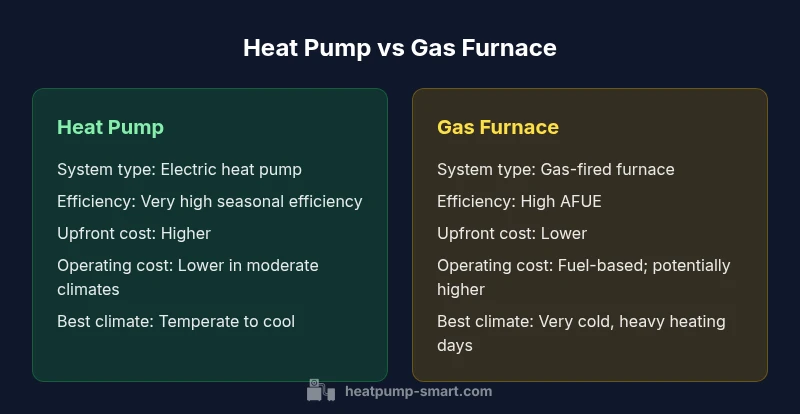
| Feature | Heat pump | Gas furnace |
|---|---|---|
| System type | Electric heat pump (air-source) | Gas-fired furnace |
| Efficiency | Very high seasonal efficiency (COP-dependent) | High AFUE efficiency |
| Upfront cost | Higher upfront cost (equipment + install) | Lower upfront cost |
| Operating costs | Lower in moderate climates; may rise with cold snaps | Typically higher fuel costs; stable once installed |
| Climate performance | Best in temperate to cool climates; needs auxiliary heat in deep cold | Strong heat output in very cold conditions |
| Maintenance | Annual refrigerant checks; defrost cycles; outdoor unit care | Annual furnace service; venting checks |
| Lifespan | Typically 15-20 years | Typically 15-25 years |
| Environmental impact | Lower emissions with clean electricity | Higher emissions; depends on fuel mix |
Advantages
- Lower operating costs in moderate climates
- Dual heating and cooling in one system
- Lower carbon footprint when electricity is clean
- Strong rebates and incentives in many regions
Disadvantages
- Higher upfront costs and installation complexity
- Performance can dip in extreme cold without auxiliary heat
- Dependent on electricity reliability and grid conditions
- Potential refrigerant leak repair needs
Heat pumps generally offer better long-term value in temperate climates; gas furnaces excel in extreme cold or when upfront cost is a priority.
Choose a heat pump if you live in a mild-to-moderate climate with reliable electricity and incentives. Opt for a gas furnace if winters are consistently severe or upfront costs must be minimized. A hybrid system can blend both strengths where appropriate.
Your Questions Answered
What is the key difference between a heat pump and a gas furnace?
A heat pump moves heat using electricity, offering high efficiency and cooling capability. A gas furnace generates heat through combustion and provides reliable warmth in very cold conditions. Your decision hinges on climate, electricity and fuel costs, and desired comfort features.
Heat pumps move heat with electricity and can cool your home, while gas furnaces burn fuel to heat the air. The choice depends on climate and energy costs.
Is a heat pump suitable for very cold climates?
Heat pumps can operate in cold weather, but efficiency drops as temperatures fall. Many homes use a supplemental heat source or a hybrid system to maintain comfort during extreme cold. In regions with long, harsh winters, a furnace or hybrid approach may be preferable.
Heat pumps work in cold weather but may need backup heat in extreme cold.
Do I need a backup heat source with a heat pump?
If winters are very cold or electricity reliability is a concern, a backup heat source such as a gas furnace or electric resistance heat can ensure continuous warmth. Hybrid systems are a common solution to balance efficiency with reliability.
Backup heat is often wise in extreme cold or outages.
Are there rebates for heat pump installations?
Many regions offer rebates or incentives for heat pump installations, especially when paired with energy-efficiency upgrades. Availability depends on local programs, utility incentives, and current policy. Always verify eligibility before purchase.
Check local incentives when considering installation.
How do I estimate payback period for the system?
Payback depends on climate, energy prices, installation costs, and efficiency. A simple approach is to compare annual energy costs with a lifecycle cost model that includes rebates and maintenance. A professional analysis can provide a precise, location-specific estimate.
Calculate lifecycle costs including rebates for accuracy.
What maintenance do these systems require?
Heat pumps require annual refrigerant checks and coil cleaning, plus routine outdoor unit maintenance. Furnaces need yearly combustion safety checks and vent inspections. Both benefit from a preventive maintenance plan to preserve efficiency and safety.
Regular maintenance keeps heat pumps efficient and furnaces safe.
Top Takeaways
- Assess climate, electricity price, and insulation before deciding.
- Model lifecycle costs, not just up-front price.
- Explore rebates and incentives to improve payback.
- Prioritize proper sizing and professional installation.
- Consider hybrids for variable winter performance.