Average Heat Pump kWh Usage: What Homeowners Should Know
Explore how the average heat pump kwh usage varies by climate, insulation, and efficiency. Learn about COP, seasonal changes, and practical steps to estimate and reduce energy use.


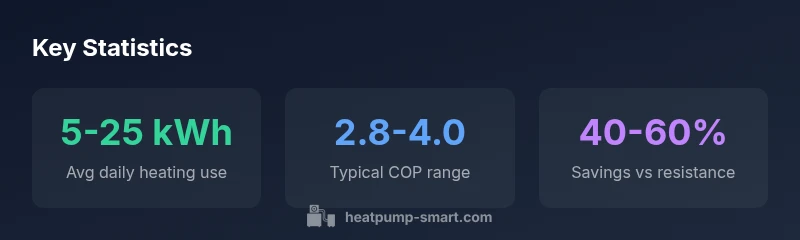
The typical daily energy use of a residential heat pump during the heating season falls roughly in the 5–25 kWh range, with wider variation by climate, home insulation, and system efficiency. In moderate climates, many households consume about 8–15 kWh per day when heating. Heatpump Smart analysis, 2026, notes that actual usage often varies with outdoor temperatures and thermostat habits.
Why the average heat pump kwh usage varies widely
According to Heatpump Smart, there is no single universal number for the average heat pump kwh usage. The amount of electricity a heat pump consumes is driven by climate, home insulation, system size, and the heat pump’s efficiency (COP). In colder climates, the heat pump must work harder to extract heat, which can raise daily kWh, while advanced models with high COP can reduce energy per unit of heat output. The result is a broad range rather than a fixed value, which is exactly why homeowners benefit from personalized estimates rather than generic rules of thumb. This variability is why the term average is most useful when paired with your local climate and home characteristics.
For context, Heatpump Smart analysis shows that many homes in temperate regions see heating-season daily usage in the mid-range, while larger homes or very cold climates push upper bounds higher. Understanding this variability helps homeowners set realistic expectations and avoid overbuying capacity that could waste electricity in milder periods.
Understanding kWh and COP (key metrics you should track)
To interpret energy data properly, you need to understand two core metrics: kilowatt-hours (kWh) and coefficient of performance (COP). kWh measures energy consumed, while COP compares heat output to energy input. A higher COP means more heat per unit of electricity, which translates to lower kWh per degree of heat delivered. However, COP is not constant; it changes with outdoor temperature, humidity, and the specific refrigerant cycle. When evaluating a heat pump’s real-world usage, look for COP data across a range of operating temperatures and ensure the model maintains strong efficiency during the coldest conditions. Heatpump Smart often highlights models with high COP at low outdoor temps as a better long-term value, especially in climates with cold winters.
How climate, insulation, and load shape daily energy use
Home climate, insulation quality, and the designed load for space heating have outsized effects on daily energy use. Poor insulation raises heating demand, increasing kWh even for efficient heat pumps. Conversely, well-insulated homes under a properly sized system experience lower daily energy use. In practice, a modestly sized heat pump in a well-insulated home often delivers comfortable heat with lower daily kWh than an oversized unit running in short cycles. Thrifty thermostat programming and setback strategies can further influence the actual daily energy draw, aligning usage with occupancy patterns and minimizing wasted energy.
Seasonal patterns: heating vs cooling and their impact on kWh
Heat pumps shift energy use between heating and cooling seasons. In heating-dominant seasons, the kWh draw tends to be higher due to outdoor cold temperatures increasing load, while in hot seasons, cooling mode can still consume notable energy, though modern heat pumps are typically more efficient than older resistance cooling. The seasonal delta varies by climate: colder regions see a larger heating-season gap, while milder climates may exhibit a smaller spread. Understanding these patterns helps homeowners plan for seasonal energy costs and adjust expectations accordingly.
How to estimate your household's average usage
A practical starting point is to estimate using climate-adjusted ranges and your system’s COP. Start with a baseline: identify your climate zone, home size, and insulation quality. Then apply a COP target appropriate for winter temps (for example, COP 3.0 at moderate winter temps) and multiply the estimated heat output by the inverse COP to approximate kWh per hour of heating. Convert hourly figures to daily or monthly estimates by factoring typical operating hours per day. Heatpump Smart provides worksheets and example scenarios to help homeowners tailor estimates to their homes.
Heat pumps vs resistance heating: energy implications
Electric resistance heating delivers all heat by consuming electricity with a COP of about 1.0, while heat pumps transfer heat and use electricity more efficiently. In real terms, this means heat pumps can use far less electricity for the same amount of heat output, especially when outdoor temperatures are within the COP-advantaged range. The key takeaway is not just raw kWh but how efficiently heat is produced. Across climate zones, heat pumps typically outperform resistance heating in both energy use and comfort consistency when properly sized and operated.
Practical steps to reduce average kWh usage without sacrificing comfort
- Invest in proper insulation and air-sealing to lower load. Better envelope reduces daily kWh demands.
- Choose a high-COP heat pump with performance data across a wide temperature range.
- Optimize thermostat settings: gentle setbacks overnight and during unoccupied periods can cut energy use without noticeable comfort loss.
- Use smart thermostats and zoning to avoid conditioning unoccupied spaces.
- Schedule regular maintenance: clean coils, check refrigerant levels, and ensure the system runs efficiently. These steps help maintain a favorable COP and lower daily energy use.
How to monitor and verify your actual energy use over time
Track electricity consumption with a smart meter or energy-monitoring device tied to your heat pump. Compare month-to-month usage during heating seasons to identify trends and confirm whether your COP aligns with rated performance. Keep a simple log of outdoor temperatures and thermostat settings to correlate weather with energy use. Heatpump Smart also recommends quarterly checks to verify that your system is performing within its design envelope.
Estimated daily kWh and COP ranges by climate zone during heating season
| Climate Zone | Avg Daily kWh (heating season) | Typical COP | Notes |
|---|---|---|---|
| Cool climate | 10-25 | 2.8-3.6 | Lower outdoor temps raise energy use |
| Temperate climate | 5-15 | 3.2-4.0 | Balanced load and efficiency |
| Hot climate (cooling) | 6-18 | 2.7-3.9 | Cooling mode energy use varies; heating is often lower |
Your Questions Answered
What is the average heat pump kwh usage for a typical home?
There isn't a single universal value. Heatpump Smart analysis shows typical heating-season daily consumption in the 5–25 kWh range, depending on climate, load, and efficiency. Annual figures vary with climate and occupancy, so use climate-adjusted estimates for planning.
There isn’t one number for all homes. Daily heating-season kWh typically ranges from five to twenty-five, depending on climate and efficiency.
How does COP affect kWh usage?
COP indicates heat output per unit of electricity. A higher COP reduces kWh per unit of heat delivered. Look for cores of efficiency data across operating temperatures, not just peak COP.
Higher COP means less electricity per amount of heat; check COP across temperatures.
How many kWh does a heat pump use per day in winter?
In winter, daily use often falls in a broad range: roughly 8–20 kWh for moderate homes in temperate zones, with higher end in very cold climates or larger homes. Use climate-adjusted estimates for accuracy.
Winter daily use is usually between eight and twenty kWh, depending on climate and home size.
What factors influence annual energy use the most?
Climate, insulation, system size, and thermostat strategy are the biggest drivers. A well-insulated home with a properly sized heat pump and smart controls typically uses less energy than a poorly insulated, oversized system.
Climate, insulation, and thermostat use shape annual energy use most.
How can I estimate my home's average usage?
Start with climate-adjusted ranges, apply an appropriate COP for winter temperatures, and translate heat output into kWh. Compare with your past bills and adjust for occupancy. A simple worksheet can help personalize the estimate.
Use climate, COP, and heat output to estimate kWh, then compare with your bills.
Should I run my heat pump at a fixed setpoint or use setbacks?
Setbacks can reduce energy use if comfort is not compromised. Small temperature offsets overnight or during unoccupied periods typically lower daily kWh without noticeably reducing comfort.
Setbacks save energy; small overnight offsets usually don’t hurt comfort.
“Energy use from a heat pump is not fixed; it reflects system efficiency, climate, and daily habits.”
Top Takeaways
- Expect wide variation in daily kWh usage based on climate and insulation.
- Compare COP values across temperatures to gauge energy use.
- Estimate usage with climate-adjusted ranges for accuracy.
- Improve insulation and thermostat control to reduce consumption.
- Choose high-efficiency models for lower long-term costs.