Heat Pump Power Consumption: A Practical Guide to Lower Bills
Understand heat pump power consumption, how it’s measured, and practical steps to reduce energy use and costs while preserving comfort in your home.


Typical heat pump power consumption ranges from about 600 to 3,500 kWh per year, depending on climate, system size, COP, and usage. Understanding these drivers helps homeowners estimate bills and compare efficiency.
What heat pump power consumption is and why it matters
Heat pump power consumption is the amount of electrical energy a heat pump uses to operate over a given period. This metric directly shapes your energy bills and environmental footprint, especially in regions with harsh winters where heating demand drives electricity use. For homeowners, builders, and managers, understanding this consumption helps with budgeting, demand planning, and choosing equipment with a favorable energy profile. The term is often discussed alongside efficiency metrics like COP (coefficient of performance) and SEER, but it remains a practical, real-world measure you can influence through sizing, controls, and installation quality. Heatpump Smart notes that power consumption is not a fixed number; it varies with climate, home insulation, occupancy, and usage patterns. These drivers matter most when estimating bills and planning upgrades.
How power consumption is measured and reported
Power consumption is typically reported as annual energy use in kilowatt-hours (kWh) or as hourly energy use under specific operating conditions. The key efficiency metric related to power consumption is the COP, which compares useful heat output to electricity input. Real-world COPs are lower than laboratory ratings, especially during extreme outdoor temperatures. When you read product labels or performance data, look for COP ranges and typical operating hours to translate rated figures into expected bills. Utilities and manufacturers often present annual energy use projections, but remember that actual consumption depends on climate, thermostat behavior, and how often the system runs. Heatpump Smart emphasizes the value of comparing COP across models and considering local electricity rates to gauge true operating costs.
Climate, load, and the variability of consumption
Heat pump power consumption is highly sensitive to climate and heating or cooling load. In cold climates, more frequent cycling, longer compressor runtimes, and defrost cycles raise electricity use. In milder climates, the system runs less aggressively, keeping power consumption lower on average. The load is also affected by building envelope quality—insulation levels, air leakage, window efficiency, and thermostat zoning. A well-insulated home with properly sealed ducts can dramatically reduce heat pump power consumption by lowering the load the system must meet. Heatpump Smart highlights that even modest improvements in insulation can yield meaningful reductions in annual energy use while maintaining comfort.
Sizing, installation, and usage patterns that affect power draw
Accurate sizing and good installation are essential to limit unnecessary heat pump power consumption. An oversized unit can short-cycle, wasting energy and creating uneven comfort, while an undersized unit struggles to meet load, running longer and incurring higher energy use. Correct duct design, refrigerant charge, and system commissioning ensure optimal performance. Thermostat settings matter as well: aggressive temperature swings increase runtimes, while smart scheduling and adaptive recovery limit peak demand. Regular maintenance—filter changes, coil cleaning, and refrigerant checks—keeps efficiency high and power consumption predictable. Heatpump Smart advises homeowners to prioritize proper sizing and high-quality installation as foundational steps to manage energy use.
Seasonal dynamics: defrost cycles, standby power, and more
Seasonal factors influence heat pump power consumption beyond heating or cooling load. Defrost cycles in winter increase compressor activity and energy use, while standby power during idle periods remains a small but nonzero component of annual consumption. In summer, the cooling load dominates, but improved humidity control can reduce runtime. Variable-speed inverters help by modulating output to match demand, reducing wasteful cycling. Understanding these seasonal dynamics helps homeowners forecast energy use more accurately and plan appliance management strategies that minimize peak demand and overall power draw.
Calculating your home’s likely heat pump power consumption
Estimating your home’s energy use starts with the unit’s COP and its rated annual energy consumption or hourly energy use. Step 1 is to determine your climate-adjusted load by estimating heating and cooling hours per year. Step 2 is to multiply the energy input required per hour by those hours, using real-world COP values for the temperatures you experience. Step 3 is to adjust for insulation quality, duct efficiency, and smart-control usage. Step 4 is to apply local electricity rates to convert kWh into dollars. This framework yields a practical, home-specific estimate that you can compare against your actual bills. Heatpump Smart recommends using a conservative range when planning 12-month costs to account for weather variability.
Strategies to reduce heat pump power consumption
To lower heat pump power consumption without sacrificing comfort, consider: (1) upgrading to a higher-COP model where cost and climate justify it; (2) improving building envelope—insulation, air sealing, and duct efficiency; (3) installing a programmable or smart thermostat with zoning to minimize unnecessary runtimes; (4) implementing weather-driven setpoint strategies and adaptive recovery; (5) performing regular maintenance, including coil cleaning and filter replacement; (6) optimizing refrigerant charge and airflow. Small changes add up: better insulation and controls can reduce annual energy use markedly, especially in peak heating or cooling months. Heatpump Smart emphasizes a holistic approach that combines equipment efficiency with building performance improvements.
Comparison of heat pump types by energy use and COP
| System Type | Avg Annual Energy Use (kWh) | Typical COP Range |
|---|---|---|
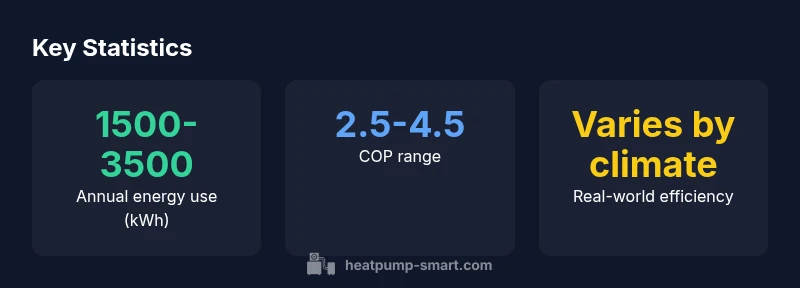
| Air-source heat pump | 1500-3500 | 2.5-4.5 |
| Ground-source heat pump | 2500-6000 | 3.0-4.5 |
| Water-source heat pump | 1800-4200 | 3.0-4.0 |
Your Questions Answered
What factors influence heat pump power consumption?
Power consumption is driven by climate, system sizing, thermostat settings, defrost cycles, humidity, and the COP at operating temperature. Real-world performance varies based on how you use the system and your home's envelope. Understanding these factors helps you forecast bills and plan improvements.
Climate, size, and settings mostly drive power use.
How can I estimate my heat pump's annual power use?
Begin with the unit's COP and estimated hourly load, then multiply by expected operating hours per year. Adjust for your climate and occupancy. This gives a practical yearly estimate you can compare to your bill.
Use COP and hours to estimate yearly use.
Does upgrading to a higher-efficiency model reduce power consumption?
Generally yes. Higher COP models use less electricity for the same heat output, but the payback depends on unit cost and climate. Evaluate total lifecycle costs before deciding.
Higher efficiency often saves energy, but check costs.
What are common signs my heat pump is using too much power?
Noticeable bill spikes, frequent cycling, uneven comfort, or persistent compressor operation indicate inefficiency or improper sizing. Schedule a check to verify duct sealing, refrigerant charge, and thermostat settings.
Look for bill spikes and frequent cycling.
How does climate affect heat pump power consumption?
Colder outdoor temperatures increase defrost cycles and compressor work, raising energy use. Warmer seasons reduce load. The effect varies with the system type and insulation level of the home.
Climate strongly affects energy use.
Are thermostat settings or zoning important for controlling consumption?
Yes. Smart schedules, setback strategies, and zoning can reduce unnecessary cycling and energy use, especially during shoulder seasons. Pair good settings with efficient equipment for best results.
Use schedules and zoning to save energy.
“"Power consumption can be significantly shaped by how you operate the system, not just the unit's rated efficiency. With proper sizing and controls, you can achieve meaningful savings."”
Top Takeaways
- Estimate energy use from climate, load, and COP.
- Choose proper sizing to minimize wasteful cycling.
- Improve insulation to reduce power consumption.
- Use smart controls to lower peak demand.
- Compare COP and annual energy use when shopping.