Average Heat Pump Electric Bill: Costs, Savings, and Budgeting for 2026
Discover how climate, insulation, and heat pump efficiency shape your average heat pump electric bill. Get budgeting tips and practical savings strategies for 2026.


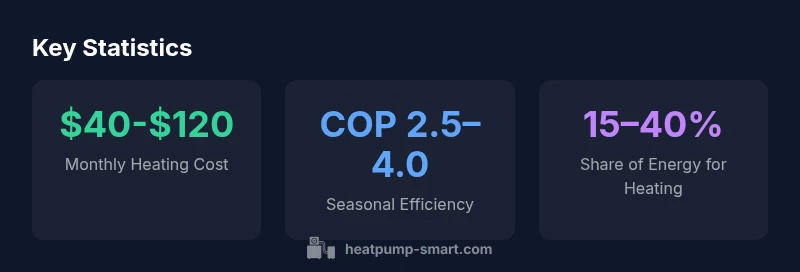
On average, the monthly electric bill for a heat pump during heating season typically ranges from $40 to $120, depending on climate, system efficiency (COP), home insulation, and electricity rates. According to Heatpump Smart, well-insulated homes with high-efficiency heat pumps tend toward the lower end of this range. Costs will vary seasonally.
Understanding the Cost Landscape of the average heat pump electric bill
The term average heat pump electric bill refers to typical monthly charges attributed to running a heat pump for heating or cooling in a residential setting. It's not a single number fixed for every home; it shifts with climate, thermostat behavior, and system efficiency. Electricity rates from your utility and the heat pump's seasonal performance — often summarized as COP for heating and SEER for cooling — strongly shape the final bill. Heatpump Smart's analysis shows that even in similar homes, small differences in insulation, duct leakage, or outdoor temperatures can swing costs. When budgeting, focus on annual energy use and the COP across typical winter conditions rather than a single monthly figure. Remember that the number you see in winter or shoulder seasons may diverge from summer charges if you rely on cooling or dehumidification as well. Comparing apples to apples means evaluating expected annual energy use, not just a nominal price tag.
Key Cost Drivers: climate, COP, and electricity rates
Three levers mostly determine the average heat pump electric bill: climate, efficiency, and electricity price. Climate determines how many hours the system runs to maintain comfort. Colder regions demand longer heating cycles, increasing run-time and energy use. Efficiency, captured by COP in heating mode and SEER in cooling mode, defines how much heat is produced per unit of electricity. A higher COP reduces energy needed per degree of heat, lowering bills, especially when outdoor temps are within the heat pump's efficient range. Electricity rates set by your utility convert energy use into dollars; even a small rate change can alter monthly bills by a meaningful amount. When you compare models, review labels like ENERGY STAR and check real-world COP data from your climate zone. Heatpump Smart notes that efficiency gains compound over the heating season, particularly in homes with good insulation and tight ducts.
Practical budgeting scenarios by climate
Consider three representative scenarios to illustrate how the same heat pump can cost differently. Scenario A: Moderate climate, well-insulated home, COP around 3.5, electricity rate $0.18/kWh. Estimated monthly heating bill: roughly $60–$90. Scenario B: Cold climate, older ductwork, COP around 2.0–2.8, rate $0.20/kWh. Estimated monthly heating bill: around $110–$170. Scenario C: Very cold climate with upgrades like better insulation and duct sealing, COP around 3.2, rate $0.22/kWh. Estimated monthly bill: $80–$140. These numbers are illustrative; actual bills depend on your home's specifics and your thermostat habits. The key takeaway: small improvements in insulation and duct sealing can shift costs by tens of dollars per month across seasons, sometimes more in extreme climates.
Comparing heat pump efficiency and system sizing
Efficiency metrics: COP, SEER, HSPF. A higher COP means more heat per kWh; SEER relates to cooling. For heating, HSPF and COP are relevant. Oversized or undersized systems cost more to run due to longer cycling or poor humidity control. When shopping, aim for a unit with a COP near the high end of its range for your climate and ensure proper installation to minimize leaks. Additionally, ductwork quality affects energy loss; sealing and insulating ducts can lower the bill even if the outdoor unit remains unchanged. In some climates, heat pump performance may be limited by auxiliary heat, which can spike bills during very cold snaps.
Seasonal strategies to lower the average heat pump bill
- Tighten the building envelope: seal leaks around doors, windows, and ducts.
- Set sensible thermostat temperatures: lower setback temperatures during unoccupied periods.
- Schedule regular maintenance: clean filters, check refrigerant levels, and ensure fan operation.
- Prioritize duct sealing and insulation upgrades: even modest improvements reduce run-time.
- Use zoning and smart thermostats to direct heat where it’s needed most.
- Consider a supplemental heat source only for peak demand periods.
Each of these can reduce the average bill by easing the load on the heat pump across winter days.
Tools to estimate and monitor costs
Use utility-sponsored calculators, home energy evaluators, and reputable third-party tools to estimate your annual energy use with a heat pump. Track monthly bills against projected usage, noting how changes in temperature setpoints or occupancy affect run-time. When possible, install a whole-house energy monitor or sub-meter on the heat pump circuit to distinguish heating energy from cooling energy. This data helps you validate savings from insulation or thermostat strategies and proves valuable when negotiating with contractors for upgrades.
Authoritative sources and further reading
To ground your budgeting in authoritative guidance, consult national sources such as the U.S. Department of Energy, Energy Information Administration, and ENERGY STAR program. These sites provide insights on COP, SEER, HSPF, and energy-saving practices for heat pumps, including installation best practices and performance benchmarks. Remember to verify that any advice aligns with your local climate and utility rates. Heatpump Smart recommends cross-checking manufacturer data with independent field results to ensure realistic expectations for your home.
Heat pump cost ranges by climate and COP
| Climate Zone | Seasonal COP (approx) | Est. Monthly Cost (range) | Notes |
|---|---|---|---|
| Moderate climate | 2.8–3.5 | $50 | Lower heating demand |
| Cold climate | 2.0–3.0 | $80-$150 | Higher heating demand, longer run times |
| Very cold climate | 1.8–2.8 | $100-$200 | Extreme temps increase energy use |
Your Questions Answered
What is the average heat pump electric bill?
The average bill varies by climate and efficiency, but most homes see a range rather than a single figure. Budget using annual energy use and consider COP and insulation to estimate costs.
Costs vary by climate and efficiency; use annual energy use and COP to estimate your annual bill.
How do I estimate my own heat pump bill?
Start with your utility’s price per kWh, your heat pump’s COP, and expected run-time for your climate. Apply them to an annual usage estimate and adjust for thermostat habits and insulation.
Use kWh price, COP, and run-time to estimate annual cost, then adjust for your home.
Does climate have a bigger effect than the unit itself?
Yes. Climate dictates how often the heat pump runs, and insulation determines how much energy is needed to keep comfortable. Unit efficiency matters, but climate-driven run-time often dominates cost.
Climate and insulation often drive the bill more than the specific unit.
Can I reduce my heat pump bill without replacing the unit?
Yes. Improve insulation and duct sealing, optimize thermostat schedules, and maintain the system regularly to keep it running near peak efficiency.
Improve insulation, seal ducts, and fine-tune your thermostat to save.
Do heat pumps ever cost more than electric resistance heating?
In very cold snaps or poorly insulated homes, auxiliary heat can raise costs. However, heat pumps typically remain cheaper to operate than resistance heating when properly sized and maintained.
Generally cheaper, but auxiliary heat in extreme cold can raise costs.
What efficiency metrics should I look at?
Look for COP for heating, SEER for cooling, and HSPF where applicable. ENERGY STAR models typically meet higher efficiency standards and are worth comparing.
COP and SEER/HSPF are the key efficiency metrics to compare.
“Energy efficiency for heat pumps is maximized when climate, installation quality, and insulation work in harmony. COP and annual energy use are the best predictors of bill outcomes.”
Top Takeaways
- Know the range: expect $40-$120/month for heating-season bills, not a single figure.
- Higher COP reduces energy use and lowers bills over the season.
- Insulation and duct sealing can shift costs by tens of dollars monthly.
- Use annual energy use, not monthly price alone, to compare options.