Difference Between Heat Pump and HVAC: A Practical Comparison
Explore the difference between heat pump and HVAC systems. This analytical comparison covers operation, efficiency, costs, climate fit, and installation tips to help homeowners, builders, and managers choose the right comfort solution.


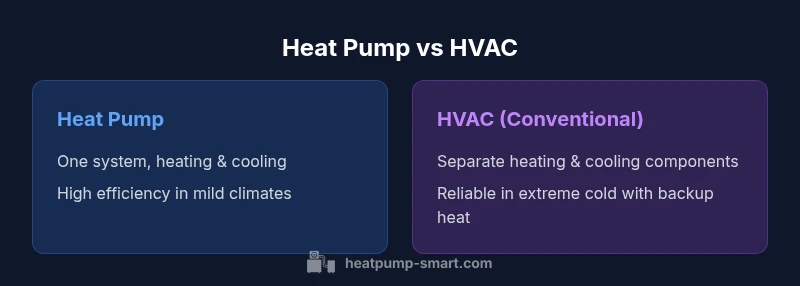
In simple terms, a heat pump is a single device that moves heat between indoor and outdoor spaces, delivering both heating and cooling. HVAC, by contrast, typically combines separate components for heating (furnace or boiler) and cooling (air conditioner). The difference between heat pump and HVAC affects efficiency, climate suitability, upfront costs, and long-term operating expenses. This comparison helps homeowners, builders, and property managers evaluate which approach matches climate, budget, and comfort goals.
What is HVAC and what is a heat pump?
HVAC stands for heating, ventilation, and air conditioning. It traditionally describes a system built from separate components: a furnace or boiler to produce heat, an air conditioner to cool, and a network of ducts to distribute conditioned air. A heat pump is a single, versatile unit that transfers heat between indoors and outdoors using a refrigerant cycle. In cooling mode, it behaves like an air conditioner; in heating mode, it extracts heat from the outside air (or ground) and moves it indoors. The practical difference for homeowners comes down to how heat is generated, how energy is used, and how comfort is delivered across seasons. According to Heatpump Smart, the distinction is less about brand labels and more about system architecture and performance in your climate. Understanding these basics helps you evaluate performance, cost, and flexibility when selecting a home comfort solution for a new build or retrofit.
What is HVAC and what is a heat pump?
HVAC systems are designed to provide heating and cooling as separate functions, typically with a furnace supplying heat and an air conditioner providing cooling. Heat pumps consolidate heating and cooling into one cycle by moving heat rather than generating it. The heat pump’s refrigerant loop and reversing valve enable indoor comfort with fewer moving parts than a two-system setup. This difference in design leads to distinct implications for efficiency, temperature stability, and long-term maintenance. Heatpump Smart emphasizes that matching system type to climate and building envelope yields the best outcomes for energy use and occupant comfort.
How heat pumps and traditional HVAC generate heat and cool air
Heat pumps operate by extracting heat from a source outside the home (air, earth, or water) and transferring it indoors. In heating mode, they pull heat from the outside air and release it inside; in cooling mode, they reverse the cycle, removing heat from indoors and releasing it outside. Conventional HVAC uses a furnace or boiler to generate heat and an air conditioner to remove indoor heat. The two systems rely on different physical processes: a refrigerant cycle in heat pumps versus combustion or resistance heating in furnaces along with refrigerant-based cooling in AC units. Modern heat pumps use a reversing valve to switch between heating and cooling without needing separate devices, though some climate conditions may require auxiliary heat. Heatpump Smart notes that performance hinges on climate, system sizing, and duct design, which collectively determine comfort and energy use.
Energy efficiency and performance across climates
Efficiency for heat pumps is often discussed in terms of coefficient of performance (COP) and seasonal efficiency metrics, while conventional HVAC efficiency uses SEER for cooling and AFUE for heating. In milder or moderate climates, heat pumps can deliver high energy efficiency because they move heat rather than burn fuel. In colder climates, their efficiency can decline unless paired with auxiliary heat sources or using cold-climate models designed for low outdoor temperatures. The Heatpump Smart analysis shows that proper sizing, climate matching, and installation quality are critical to achieving the anticipated energy savings. For many homes, achieving good performance depends on envelope efficiency (insulation, air sealing) and thermostat strategy, not solely on the heating or cooling unit itself.
Upfront costs, operating costs, and payback
Initial costs for heat pumps are typically higher than a traditional furnace plus separate AC系统, largely due to the single, integrated heat exchange technology and the outdoor unit’s complexity. Operating costs can be lower with a heat pump in climates where heating is primarily electricity-driven and the system runs in its efficient range. In cold snaps, auxiliary heat may raise operating costs temporarily. Incentives, rebates, and utility programs can significantly offset upfront costs. Heatpump Smart emphasizes evaluating total cost of ownership over the system’s life, including maintenance, energy prices, and potential rebates when comparing options.
Climate suitability and comfort expectations
Climate determines whether a heat pump or a traditional HVAC system is best. Heat pumps excel in moderate climates with milder winters and can comfortably heat and cool homes with modern weatherization and air sealing. In very cold climates, heat pumps may rely on auxiliary heat, increasing energy use and reducing comfort consistency during extreme cold. HVAC systems with a furnace and a dedicated AC unit can deliver reliable heating in cold temperatures without auxiliary heating, though at usually higher energy consumption during winter months. When choosing, weigh climate trends, typical winter temperatures, and humidity control needs.
Installation considerations and space requirements
Heat pumps require space for the outdoor unit and, if ducted, a reliable duct network connected to an indoor air handler or furnace-like plenum. For homes without existing ducts, a ductless or mini-split heat pump can be more cost-effective and less invasive. Conventional HVAC installations involve separate furnace and AC equipment with ductwork. Duct design quality, refrigerant lines, and electrical service capacity influence both options. Properly sized systems and professional installation are essential to realize the promised efficiency and thermal comfort, particularly in retrofit scenarios where existing ductwork may be insufficient or leaky.
Maintenance, reliability, and common failure points
All comfort systems require regular maintenance, but heat pumps have unique maintenance needs related to the refrigerant cycle, reversing valve, and outdoor unit exposure. Routine service includes refrigerant checks, coil cleaning, and electrical controls inspection. Furnace and AC units in a traditional HVAC system add separate maintenance tasks for each component, which can complicate schedules but some homeowners prefer a familiar, modular approach. Common failure points include refrigerant leaks, compressor issues, and duct leaks. Proactive maintenance, proper system sizing, and clean air filtration help sustain performance and reliability in both setups.
Real-world decision frameworks: when to choose heat pump vs HVAC
The decision often comes down to climate, energy costs, building envelope, and occupant comfort priorities. If you live in a warm or moderate climate with good insulation and air sealing, a heat pump can deliver strong year-round performance and reduce energy use. In harsher winter climates, a furnace-based HVAC with a dedicated air conditioner may provide more predictable heating, especially if electricity costs are high or incentives favor conventional systems. A practical framework includes a climate-specific energy analysis, a heat-load calculation, and a consideration of future goals like electrification or integration with solar.
Design integration: thermostats, zoning, and future-proofing
Smart thermostats, zoning, and advanced controls unlock the full potential of either system. Heat pumps pair well with modern thermostats that optimize cycling, humidity control, and indoor air quality. Zoning can improve comfort in larger homes by directing conditioned air only where needed. The choice between heat pump and HVAC should align with your home’s insulation quality, ventilation needs, and the potential for future upgrades, such as solar panels or energy storage. Planning early with a qualified installer helps ensure the system works harmoniously with windows, doors, and shading to maximize efficiency.
Comparison
| Feature | Heat pump | HVAC (conventional) |
|---|---|---|
| Upfront Cost | Moderate to high | Lower upfront depending on components and installation |
| Energy Efficiency | High efficiency in suitable climates | Efficiency varies by furnace and air conditioner combination |
| Climate Suitability | Strong in mild to moderate winters; may require auxiliary heat in cold climates | Reliable in a wide range of climates with proper sizing |
| Maintenance Needs | Regular heat pump service and refrigerant checks | Separate maintenance for furnace and AC units |
| Space and Ducting | Outdoor unit plus indoor coil or air handler; can be ducted or ductless | Furnace, AC condenser, and duct network; may require more space |
| Lifespan and Reliability | Good longevity with regular service | Depends on components; can be very reliable with proper care |
| Operating Costs | Typically lower energy costs in compatible climates | Operating costs depend on fuel prices and usage |
Advantages
- Potentially lower energy bills in suitable climates
- One integrated system for heating and cooling
- Quiet operation and modern controls
- Eligibility for rebates and incentives in many regions
- Flexible installation options (ducted or ductless)
Disadvantages
- Higher upfront purchase and installation costs
- Performance can drop in extreme cold without auxiliary heat
- Complex installation and potential for higher planning costs
- Refrigerant handling requires licensed technicians
Heat pumps generally offer better long-term value in moderate climates; traditional HVAC remains a practical choice for very cold climates or retrofit projects.
Choose a heat pump if your climate is moderate and you want to minimize operating costs. Consider traditional HVAC if you face consistently very cold winters or need the simplest retrofit with lower upfront costs.
Your Questions Answered
What is the main difference between a heat pump and HVAC?
A heat pump moves heat between indoors and outdoors to provide heating and cooling, while HVAC typically combines a furnace or boiler for heating with a separate air conditioner for cooling. The key distinction is the heat generation method and the system’s architecture, which influences efficiency and climate suitability.
A heat pump moves heat instead of generating it, offering heating and cooling in one system. An HVAC setup uses separate heating and cooling pieces, like a furnace and an air conditioner.
Do heat pumps work well in cold climates?
Modern heat pumps perform well in many cold climates, especially with cold-climate models and proper auxiliary heat. In the coldest conditions, reliability can depend on system sizing and backup heat options. It’s important to evaluate local winter temperatures and energy costs when choosing.
Cold-climate heat pumps exist, but in very cold areas you may need backup heat. Size and installation matter a lot.
Is there a significant upfront cost difference?
Heat pumps typically have higher upfront costs due to the integrated technology and installation demands. A conventional furnace plus air conditioner can be cheaper to install, but ongoing operating costs may be higher in certain climates. Consider incentives and long-term savings to gauge value.
Heat pumps cost more upfront, but can save more over time with lower energy bills.
Can I retrofit my home to use a heat pump?
Retrofitting to a heat pump is common, but it depends on existing ductwork, electrical capacity, and space for outdoor units. Ductless mini-split options can simplify retrofits where ducts are not available or expensive to install. A professional assessment will confirm feasibility and cost.
Yes, often, but it depends on ducts and space. A pro can tell you which option fits best.
What maintenance is required for these systems?
Heat pumps require regular refrigerant checks, coil cleaning, and thermostat control checks alongside standard filters. Furnaces and AC units in HVAC setups need periodic maintenance for the furnace, blower, and condenser. Routine service keeps efficiency high and reduces risk of leaks or failures.
Keep filters clean and schedule regular professional service for both the heat pump and separate HVAC components.
How do I decide which system to install?
Start with climate, electricity and fuel costs, existing ductwork, and long-term goals like electrification or rebates. Use a professional sizing analysis and a cost-of-ownership view to compare options. The right choice balances comfort, reliability, and total energy costs.
Think climate, costs, existing ducts, and future plans. Get a professional assessment to compare options.
Top Takeaways
- Assess climate first: heat pumps excel in milder winters
- Consider whole-house envelope and insulation to maximize efficiency
- Factor in upfront costs, incentives, and long-term energy savings
- Plan for proper installation and zoning to maximize comfort
- Evaluate future needs like electrification or solar integration