Difference heat pump vs condenser dryer: which to choose
A detailed, objective comparison of heat pump and condenser dryers, covering energy efficiency, running costs, performance, installation considerations, and guidance for homeowners, builders, and managers.


Heat pump and condenser dryers differ mainly in how they handle moisture and heat. Heat pump models recycle heat, using less energy, while condenser dryers vent heat without recapture, using more energy. For ongoing running costs, heat pumps are typically cheaper, but upfront costs and drying speeds may vary. This guide outlines when each type makes sense.
Understanding the basics of heat pump and condenser dryers
Dryers come in several technologies, but the two most relevant for modern homes are heat pump dryers and condenser dryers. According to Heatpump Smart, the difference between heat pump and condenser dryer is most pronounced in energy use over time and how they manage heat within the drum. A heat pump dryer uses a sealed refrigerant loop to extract moisture, reusing the heat to speed up the cycle, while a condenser dryer collects moisture and condenses it inside a reservoir or drain. This fundamental distinction drives differences in running costs, space requirements, and maintenance. For homeowners and builders evaluating options, it’s important to separate what happens during a cycle from what happens in the long term. In practice, the technology choice influences not just electricity bills, but also where the unit fits in a home’s energy system, how quiet it is, and what kind of installation work is needed. The Heatpump Smart team found that understanding the core mechanics helps if you plan to pair the dryer with a solar array or a heat pump water heater.
How heat pump drying works and why energy is saved
Heat pump dryers operate using a closed refrigerant loop that extracts moisture from the clothes and transfers heat back into the drum. The process minimizes heat loss by reusing most of the energy that would otherwise escape in a conventional dryer. In practice, fewer kilowatt-hours are required per cycle, which translates into lower running costs over the unit’s life. The system’s efficiency hinges on the effectiveness of the heat exchanger, the thermodynamic cycle, and a well-sealed cabinet. From a design perspective, manufacturers balance heat recovery with drying speed, and modern units often include sensors that optimize the cycle for fabric types and load size. Heatpump Smart analysis emphasizes that energy efficiency is the central factor affecting long-term costs and comfort, especially for households that dry frequently.
How condenser dryers work and where energy is lost
Condenser dryers take in humid air from the drum and remove moisture by condensing it into a reservoir or drain, while the air that circulates inside the drum is heated by an electric element or similar heat source. Since there is no heat-recovery loop, a larger portion of energy is lost to the surrounding space during each cycle. These models can dry clothes quickly and with fewer specialized components, which often reduces upfront costs. However, the lack of heat recapture means higher energy use per cycle compared with heat pump designs. Maintenance typically centers on keeping the condenser plates clean and free of lint, a task that can influence efficiency if neglected. Condenser dryers offer a straightforward user experience and can be attractive for tight budgets or smaller projects where upfront cost is a deciding factor.
Energy efficiency and running costs: a lifecycle view
Over the lifetime of a clothes dryer, energy consumption is a major driver of total cost. Heat pump models minimize energy use by reusing heat, which lowers electricity consumption in typical family households. Condenser dryers, while potentially cheaper to buy, tend to incur higher operating costs due to heat losses and ventilation needs. Beyond electricity, consider the environmental impact of refrigerant use and the lifecycle energy required to manufacture and dispose of components. Heatpump Smart analysis indicates that, for most homes, energy efficiency translates into meaningful savings over time, especially for households that perform frequent dry cycles or have limited outdoor space for venting. When selecting a unit, balance upfront price with predicted running costs and the readiness of the home’s electrical system to support either technology.
Drying performance, cycle times, and user experience
Drying speed and fabric care are practical factors many buyers weigh against energy efficiency. Heat pump dryers generally offer excellent fabric protection due to gentler airflow and lower temperatures, but cycles can take longer than condenser models, particularly for large loads or bulky textiles. Condenser dryers may complete cycles more quickly, a feature that appeals to busy households and rental properties. Noise, vibration, and the presence of a ventless design can influence where a unit is installed in a home. It is essential to compare sensor-driven options and the control interfaces across models, as these determine ease of use and the likelihood of over-drying or energy waste. The Heatpump Smart team notes that the best choice depends on how you balance speed, care, and cost per cycle.
Installation, space, maintenance, and reliability considerations
Space constraints and installation complexity vary between technologies. Heat pump dryers require sufficient clearance for heat exchange surfaces and a stable electrical supply; many models are compact enough for tight laundry nooks and utility closets, yet installation should consider potential heat dissipation and air quality. Condenser dryers typically demand less intricate service, but regular condenser cleaning and lint removal are important to maintain efficiency. Both technologies benefit from routine maintenance: clean lint filters, verify door seals, and periodically check hoses or reservoirs if applicable. Reliability often depends on build quality, frequency of use, and compliance with manufacturer maintenance schedules. In well-maintained homes, either option can serve reliably for many years, with energy efficiency becoming a key differentiator over time.
Environmental impact and lifecycle costs
Environmentally minded buyers weigh refrigerant choices and material use alongside energy efficiency. Heat pump dryers use a closed-loop refrigerant system, which requires careful handling at end-of-life; condenser dryers rely on separate condensers and fans, which may involve different disposal considerations. From a lifecycle cost perspective, heat pumps tend to offer lower operating costs, which can translate into greener energy usage and reduced carbon footprint for households with frequent drying. However, the overall environmental impact depends on the energy mix of the electricity grid and the unit’s service life. When evaluating, consider the brand, warranty, and service availability in your region, as these contribute to the total sustainability of the appliance.
Scenario-based guidance: which option fits your home or project
For energy-conscious homeowners with robust electrical service and flexible budget, a heat pump dryer often provides superior long-term value due to reduced running costs and quieter operation. For renters, smaller households, or projects with tight upfront budgets, a condenser dryer can deliver faster cycles at a lower initial price, though ongoing energy costs will typically be higher. Builders incorporating energy-efficiency targets may favor heat pumps to meet performance criteria and potential rebates. In any case, verify a model’s energy label, maintenance requirements, and compatibility with other home systems such as solar or heat-pump water heating. This decision is not only about price, but about how you plan to use the appliance over its lifetime.
Authority sources and further reading
For additional context and official guidance, consult these resources:
- https://www.energy.gov/energysaver/clothes-dryers
- https://www.energy.gov/energysaver/articles/heat-pump-clothes-dryers
- https://www.energystar.gov/products/clothes-dryers
Comparison
| Feature | Heat pump dryer | Condenser dryer |
|---|---|---|
| Energy efficiency | Higher efficiency due to heat recapture | Lower efficiency, heat is vented |
| Drying speed | Often longer cycles, especially on heavy loads | Typically faster cycles |
| Upfront cost | Higher upfront cost | Lower upfront cost |
| Running costs | Lower running costs over time | Higher running costs over time |
| Heat source / recovery | Recovers and reuses heat | Does not recover heat; heat is expelled |
| Maintenance | Complexer system, but often longer intervals between tune-ups | Condenser requires regular cleaning and descaling |
Advantages
- Significant energy savings over time for most households
- Lower running costs due to heat recovery
- Better for homes aiming to reduce environmental impact
- Quiet operation and compact designs in many models
Disadvantages
- Higher upfront cost for heat pump models
- Slightly longer cycles can affect convenience for busy households
- More complex service if repairs are needed
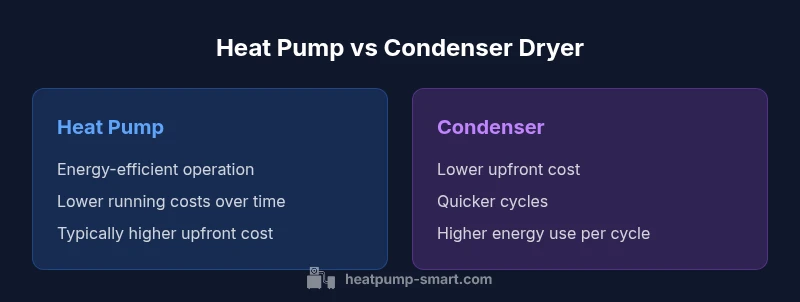
Heat pump dryers generally win on energy efficiency and lifecycle costs; condenser dryers win on upfront cost and cycle speed
Choose heat pump for long-term energy savings and sustainability. Choose condenser if upfront cost and quick cycles matter more in your situation.
Your Questions Answered
What is the main difference between a heat pump dryer and a condenser dryer?
The primary difference is how they manage heat and moisture. A heat pump dryer recycles heat for ongoing cycles, using less energy, while a condenser dryer condenses moisture and expels heat with less energy efficiency. Both resolve moisture from clothes, but the energy path and running costs differ.
The main difference is heat management: heat pumps recycle energy for drying, while condensers vent heat and use more energy per cycle.
Is a heat pump dryer worth the higher upfront cost?
In most homes, the lower running costs over the appliance’s life make heat pumps worth the extra upfront price, especially for frequent dryers. If you dry infrequently, a condenser model may be more economical overall.
Often yes, because long-term energy savings offset the higher initial price, especially with frequent drying.
Can heat pump dryers operate efficiently in cold climates?
Heat pump dryers maintain efficiency across a range of indoor temperatures, but performance can vary with very cold environments and humidity. Choose models rated for your climate and ensure proper ventilation and electrical supply.
They usually work well in typical home climates, but check the model’s climate suitability.
What maintenance do condenser dryers require?
Condenser dryers need regular cleaning of the condenser unit to maintain airflow and drying efficiency. Lint filters should be cleaned after every cycle, and periodic checks help prevent energy waste.
Clean the condenser and lint filters regularly for best performance.
Which is better for a rental property?
Condenser dryers may appeal to rentals for their lower upfront cost and simpler installation, but if long-term energy savings and occupant comfort matter, a heat pump option can reduce energy bills and complaints about drying times.
Condenser models are cheaper upfront; heat pumps save more on energy in the long run.
Are there any universal buying tips for these dryers?
Look for energy labels, check the warranty, and compare lifecycle cost estimates. Consider your load size, usage frequency, and the electrical service in your home. Assess space for heat exchange and drainage or venting requirements.
Check energy labels, warranty, and lifecycle costs; match size to your loads.
Top Takeaways
- Consider lifecycle costs, not just upfront price
- Heat pumps excel in energy efficiency and long-term savings
- Condenser models offer lower initial cost and faster cycles
- Space, installation, and maintenance influence performance
- Review energy labels and maintenance needs before deciding