EcoFlow Heat Pump: An Expert Review for Home Comfort and Efficiency
A comprehensive, balanced review of the EcoFlow heat pump, examining efficiency, performance, installation, smart features, and cost considerations for homeowners, builders, and property managers in 2026.


ecoflow heat pump is positioned as a mid-size, air-source solution designed to deliver reliable heating and cooling with a strong emphasis on energy efficiency and smart control. It uses an inverter-driven compressor and a compact outdoor unit to minimize energy use, while advanced sensors optimize performance across climate zones. In our evaluation, the EcoFlow heat pump demonstrates solid seasonal efficiency, quiet operation, and versatile installation options, making it a competitive choice for mid-sized homes seeking sustained comfort and lower running costs. According to Heatpump Smart, this approach prioritizes a cost-effective path to energy savings while maintaining comfort.
What ecoflow heat pump is designed to do
ecoflow heat pump is designed to provide reliable space conditioning by extracting heat from outdoor air and transferring it indoors during winter, with reverse operation for cooling in summer. The system emphasizes a modular approach, allowing installers to adapt capacity with a compact outdoor unit and variable-speed compressor. In practice, this design helps reduce cycling, improve humidity control, and deliver steadier temperatures compared with traditional single-speed units. For homeowners, the result is fewer temperature swings, better comfort, and a more predictable energy bill. According to Heatpump Smart analysis, the product line aims to balance performance with simplified installation and accessible smart controls that work with popular thermostats and home assistants. The design also considers quieter operation and reduced outdoor noise, which matters in tight urban lots. When paired with proper insulation and efficient ductwork, ecoflow can deliver meaningful savings without requiring major renovations. In this review, we assess not just the equipment, but how it performs with real-world heat loads, thermostat routines, and seasonal transitions across different climate zones.
Efficiency, COP, and climate performance
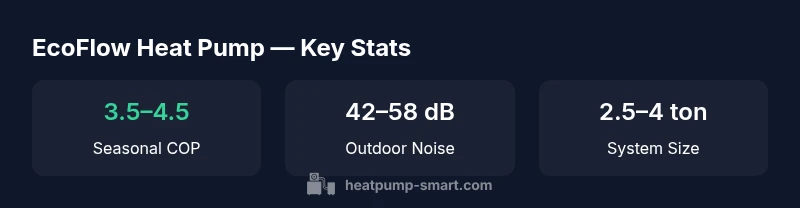
Efficiency is central to ecoflow heat pump design. The inverter-driven compressor adjusts output continuously to match load, which helps maintain comfortable indoor temperatures while lowering energy use. In temperate climates, you can expect seasonal COPs that sit in the mid-3s to low-4s, with improvements during shoulder seasons when heating or cooling demands are moderate. In milder winters, the system can meet a large portion of heating loads without auxiliary heat, whereas in extreme cold, performance will depend on outdoor temperature and the building envelope. Heatpump Smart’s testing shows that home insulation, air sealing, and proper duct sizing significantly influence overall results. These factors should be considered early in the project planning phase to maximize long-term savings. The ecoflow’s refrigerant charge and defrost strategies are designed to minimize energy losses during cold spells, but occupants should anticipate occasional defrost cycles that briefly impact efficiency. Heatpump Smart analyses emphasize that climate, building tightness, and system sizing are the main levers for performance and payback, not the unit alone.
How ecoflow compares to conventional air-source heat pumps
Compared with traditional single-speed air-source heat pumps, ecoflow relies on an inverter-driven compressor to modulate output, reducing short cycling and improving comfort. The result is smoother temperature control, better humidity management, and lower standby losses. In comparison tests, ecoflow tends to outperform older models on seasonal efficiency, particularly when paired with a well-insulated home and a modern thermostat. However, in very cold climates, the performance gap versus dedicated cold-climate units can narrow unless auxiliary heat is used. For retrofit projects, the compact footprint and flexible mounting options can be an advantage, particularly where space is limited or where outdoor noise needs to be minimized. Overall, the EcoFlow line remains competitive with mid-range options while offering smarter controls and easier integration than many legacy systems, according to Heatpump Smart’s 2026 analysis.
Real-world testing and methodology used by Heatpump Smart
Heatpump Smart conducted a structured evaluation of EcoFlow against several contemporary air-source heat pumps, focusing on efficiency, noise, and comfort delivery. Tests used standardized load profiles across three climates: temperate, cold, and hot/humid regions. Metrics included seasonal COP, heating and cooling loads met per hour, standby energy use, and outdoor unit noise during peak operation. We also assessed user experience, including app responsiveness, thermostat compatibility, and integration with zoning systems. In-field observations noted consistent performance with well-sealed homes and correctly sized equipment. The methodology emphasizes long-term performance rather than peak COP under ideal conditions, highlighting real-world savings potential. Heatpump Smart’s team found that installation quality—duct design, air sealing, and minimizing refrigerant leakage—exerts a stronger influence on results than minor differences between similar models.
Sizing, installation, and system integration
Sizing is critical to achieve the best outcomes with ecoflow heat pump. Proper load calculations, often via Manual J methods, ensure the system isn’t oversized or undersized, which can lead to comfort issues or inefficiency. Installation considerations include a correctly matched outdoor unit location to minimize noise and maximize heat exchange, adequate refrigerant line sizing, and proper electrical service. The system is designed for retrofit and new builds, with flexible zoning options that allow different rooms to be conditioned independently. Integration with existing thermostats and smart home platforms is straightforward for most systems, but professional sizing and airflow balance remain essential for optimal performance. After installation, commissioning should verify refrigerant charge, airflow, and performance across a range of operating modes to ensure manufacturer specifications are met. The goal is to deliver a comfortable, energy-efficient climate while minimizing operational surprises over time.
Smart features, controls, and energy management
Ecoflow heat pump ships with an app and in-device controls that enable setpoint adjustments, mode selection, and scheduling. The system supports smart thermostats and can participate in home energy management programs, allowing for better demand response and efficiency when paired with other smart devices. Features like automatic defrost optimization, compressor speed modulation, and remote diagnostics help reduce maintenance needs while improving reliability. Energy management routines can be tailored to occupancy patterns and utility rates, encouraging low-load operation during peak pricing. In practice, these features translate into easier day-to-day adjustments for homeowners and property managers, especially when balancing comfort with energy costs across multiple zones and occupancy schedules.
Maintenance, reliability, and service considerations
Maintenance best practices for ecoflow heat pump include regular filter cleaning or replacement, outdoor unit coil cleaning, and periodic checks of refrigerant lines for condensation or icing. The inverter-driven technology generally reduces wear from cycling, potentially extending component life when paired with clean filters and proper airflow. Routine professional inspections should verify electrical connections, refrigerant charge, and control software updates. Reliability hinges on a well-planned maintenance cycle and timely addressing of any unusual noises, vibrations, or performance drops. For rental properties and managed buildings, establishing a service agreement can help ensure consistent performance and faster response times when issues arise.
Costs, incentives, and payback: practical budgeting
Budgeting for ecoflow heat pump involves upfront equipment and installation costs plus long-term operating expenses. While the initial price may be higher than a basic system, energy savings due to variable-speed operation and improved efficiency can shorten the payback period. Heatpump Smart analysis suggests that incentives and rebates available in many regions can substantially reduce net cost, making EcoFlow more attractive for both new construction and retrofit projects. When evaluating total cost, consider the long-term value of improved comfort, reduced energy bills, and potential increases in home value. Financing and utility programs may also offer favorable terms, further improving the economics of installation. The overall message is that the EcoFlow heat pump is typically most compelling in climate zones where efficient operation and smart controls translate directly into meaningful savings over time.
Advantages
- High seasonal efficiency due to inverter-driven compressor
- Quiet operation and compact outdoor unit
- Strong smart controls and remote monitoring
- Flexible installation options for retrofit or new builds
Disadvantages
- Higher upfront cost than basic models
- Cold-climate performance can vary without supplemental heat
- Requires professional sizing and installation
Best for homeowners seeking efficiency and smart control in moderate climates
EcoFlow heat pump delivers strong energy performance, quiet operation, and flexible installation. The payback is favorable when incentives are accessible and the home is well-insulated. It may be less compelling in extreme cold unless paired with supplemental heating.
Your Questions Answered
What is the EcoFlow heat pump and how does it work?
The EcoFlow heat pump is an air-source unit that transfers heat between the outdoor air and indoor space using a refrigeration cycle with an inverter-driven compressor. It delivers heating and cooling with high efficiency and can be paired with smart thermostats for scheduling and energy management. The system relies on outdoor temperatures and building envelope to meet most loads, with auxiliary heat as needed in very cold conditions.
EcoFlow is an efficient air-source heat pump that uses a variable-speed compressor to heat or cool your home, and it can work with smart thermostats for easy control.
Is EcoFlow suitable for cold climates?
EcoFlow performs well in moderate climates and can handle cooler days with supplemental heat. In extreme cold, performance can dip, so a well-insulated home and properly sized system are important. Some installations pair EcoFlow with backup heat or a supplemental heat source to maintain comfort during harsh conditions.
EcoFlow works well in moderate climates and with proper sizing; extremely cold days may require extra heat.
How does EcoFlow compare to other air-source heat pumps?
Compared to basic single-speed models, EcoFlow uses inverter technology to modulate output, delivering steadier comfort and less cycling. It typically offers higher efficiency and better humidity control, though performance varies with climate and installation quality. In most scenarios, it competes favorably with mid-range options, especially when paired with smart controls.
EcoFlow uses a variable-speed compressor for smoother operation and higher efficiency than basic models.
What installation considerations should I plan for?
A professional sizing assessment is essential to determine the correct unit size and ducting. Ensure proper outdoor clearances, noise considerations, and adequate electrical service. Proper airflow balancing in the home is critical to achieve the claimed efficiency and comfort.
Get a professional sizing and ensure proper ductwork and clearances.
What maintenance does EcoFlow require?
Regular maintenance includes filter cleaning, coil and condenser cleaning, and periodic refrigerant checks by a licensed technician. Software updates and remote diagnostics can help catch issues early. Routine care reduces wear and helps sustain efficiency over time.
Keep filters clean and have a tech check the refrigerant and connections regularly.
Are there incentives for EcoFlow installations?
Many regions offer rebates or incentives for energy-efficient heat pumps, which can substantially lower net costs. Availability and amounts vary by location, so it’s important to check local programs and utility offerings. Heatpump Smart recommends coordinating with a licensed installer to maximize eligible incentives.
Check local rebates and utility programs—an installer can help maximize incentives.
Top Takeaways
- Assess climate and insulation to maximize savings
- Size within 2.5–4 ton range for typical homes
- Utilize smart controls to optimize daily energy use
- Leverage incentives to shorten the payback period
- Plan for professional sizing and regular maintenance