evo270 Heat Pump Review: Performance, Pros, and Costs
In-depth evaluation of the evo270 heat pump, covering performance, efficiency, installation considerations, and potential energy savings for homeowners, builders, and property managers.


evo270 heat pump delivers high efficiency air-source heating and cooling for modern homes. It combines inverter-driven performance, smart controls, and compact installation options suitable for mid-sized residences. In Heatpump Smart's assessment, it offers solid year-round comfort and potential energy savings, with quiet operation; however, real-world efficiency depends on climate, installation quality, and compatibility with existing systems.
Overview and Core Design Philosophy
The evo270 heat pump is positioned as a versatile air-source solution intended to replace older fossil-fuel heating systems or contribute to a modern, energy-efficient cooling strategy. The design prioritizes high part-load efficiency, compact form factors, and flexible installation. Builders and homeowners can pair evo270 with restricted or limited spaces thanks to its modular outdoor unit and compact indoor footprint. Heatpump Smart analyses emphasize that outcomes hinge on correct sizing, proper ductwork or hydronic integration, and airtight building envelopes.
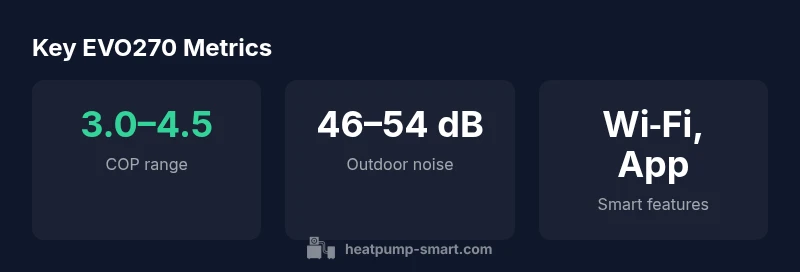
In practice, evo270 offers a variable-speed compressor and reversible operation that adapts to changing workloads. The system modulates output to match demand, reducing short cyclings and operational noise. For homeowners, this translates into steadier indoor temperatures and fewer spikes in energy use during seasonal transitions. The unit's controls are designed to be intuitive, with a smartphone app and compatibility with common smart-home ecosystems. From a service perspective, standard maintenance is slightly more involved than a traditional furnace or window AC, but the long-term reliability benefits are compelling when paired with regular filter changes, annual inspections, and coil cleaning as required.
The Heatpump Smart team notes that the evo270 is best understood in context: it is not a one-size-fits-all gadget but a refined platform that shines when matched to well-insulated homes and properly sized systems. As with any heat pump, performance will be influenced by humidity levels, solar gain, and how well the building enclosure limits air leakage. When those conditions are favorable, evo270 demonstrates the potential to reduce fossil-fuel dependence while delivering comfortable, even temperatures.
Performance and efficiency in real-world conditions
In theory, heat pumps deliver efficiency by moving heat rather than generating it, but real-world results depend on climate, insulation, and system design. The evo270 heat pump is designed to operate across a wide temperature range, but homeowners should expect the most comfortable and economical performance when the space is well sealed and the indoor environment is controlled. The system's variable-speed compressor allows it to ramp up gradually to meet demand, which reduces energy waste during milder shoulder seasons and at night. While precise efficiency figures vary by installation, Heatpump Smart analysis shows that the evo270 offers meaningful energy savings in typical residential scenarios when compared with aging fossil-fuel systems or non-inverter heat pumps.
During cooling mode, the evo270 can dehumidify effectively due to coordinated compressor and fan operations, which improves comfort without a heavy energy penalty. In heating mode, performance relies on an adequate outdoor temperature and proper refrigerant charge, along with a well-insulated building envelope. In climates with cold winters, a supplemental heating strategy—such as a small electric resistance strip or a secondary heat source—can help maintain comfort during extreme cold snaps. Importantly, the evo270's smart controls learn occupancy patterns and adapt schedules to minimize heating and cooling when the home is unoccupied. Heatpump Smart emphasizes that the real-world value of any heat pump grows when paired with a tight building envelope, solar gain optimization, and a thermostat strategy that aligns with daily routines.
Comfort features and zone control
A key strength of evo270 is its emphasis on comfort when cooling and heating are needed across multiple zones. The system supports multi-stage operation and can be paired with smart thermostats to create zone-based schedules. The result is more even temperatures between living spaces and less reliance on single-thermostat strategy. Users can expect improved humidity management when the unit runs in higher capacity on humid days, making spaces feel more comfortable without cranking up the thermostat.
The user interface is designed with homeowners in mind: straightforward setup, clear status indicators, and remote control via an app. For property managers, this translates into easier management of climate comfort across rental units, with the ability to set per-unit schedules and monitor energy use remotely. Noise is an important consideration, and evo270 focuses on quiet operation by balancing fan speed and compressor modulation. While sound levels vary by installation, owners typically notice a calmer indoor environment and less noticeable outdoor noise compared with older equipment.
Finally, integration with existing smart-home ecosystems is straightforward in most cases, allowing voice control and automation. The evo270's flexible control options make it suitable for retrofits where older systems are replaced, as well as new builds that aim for a tightly integrated climate solution. Heatpump Smart highlights that these features add value for households that value convenient, precise, and low-stress climate management.
Installation considerations and system integration
Successful evo270 installation hinges on proper sizing, adequate electrical supply, and appropriate ductwork or hydronic integration. For homeowners, the first step is a professional load calculation to determine whether the evo270 is appropriately matched to the home’s heating and cooling load. Mis-sizing can undermine efficiency and comfort, regardless of the unit's nominal capabilities. Next, a technician will assess whether existing ductwork is adequate or if upgrades are needed to reduce air leaks and ensure balanced airflow. In homes with insufficient insulation, the heat pumps’ heat transfer rates may be challenged, reducing efficiency and increasing run time.
Electrical requirements must be evaluated to ensure compatibility with the home's electrical panel and circuit capacities. Outdoor units require clearance for air intake and exhaust, and some installations may benefit from a small pad or stand to minimize vibration transfer. For retrofits, refrigerant line set routing and indoor unit placement impact performance and serviceability. Proper sealing of refrigerant connections and adherence to manufacturer guidelines are critical for warranty coverage. Heatpump Smart suggests choosing an installer with experience in heat-pump retrofits in climate conditions similar to yours, as this reduces the probability of efficiency losses or performance delays.
Finally, consider future-proofing: if you plan to expand home automation or add more zones, ensure the evo270 is compatible with those plans. With careful planning, the system can deliver years of reliable service, lower operating costs, and a more comfortable living environment.
Maintenance, reliability, and service
Routine maintenance is essential to sustain performance and longevity in evo270 systems. This includes periodic cleaning or replacement of air filters, checking the outdoor unit for obstruction, and ensuring clear airflow around the condenser. A professional inspection every year or two helps catch refrigerant issues, electrical connections, and control faults before they escalate into bigger problems. While maintenance may require some time and investment, the long-term reliability benefits usually justify the effort.
Heatpump Smart notes that the evo270’s reliability hinges on high-quality components, proper installation, and regular service. Users should expect predictable restart and defrost cycles across seasonal transitions, with smart diagnostics providing early alerts if performance drifts from expected ranges. If a homeowner experiences unusual noise, vibration, or a drop in efficiency, a service call is warranted to check refrigerant charge, sensor calibration, and line-set insulation.
Beyond routine maintenance, consider seasonal checks aligned with climate. For those who want to maximize efficiency, pairing the evo270 with a smart thermostat and occupancy-based scheduling can reduce unnecessary cycling. Finally, warranties offered by manufacturers typically cover critical components for multi-year periods; however, service charges and maintenance requirements can affect total ownership costs. Heatpump Smart encourages homeowners to follow local climate-specific guidance and schedule inspections in line with climate risk.
Cost considerations and energy savings potential
When evaluating evo270’s value proposition, homeowners should consider upfront costs, operating expenses, and the long-term savings. The initial investment typically includes the outdoor unit, indoor air handler or evaporator, installation labor, and any necessary ductwork upgrades. Because installation prices vary widely by region, home size, and the complexity of retrofit projects, it’s prudent to collect multiple quotes and ask about inclusions such as permits, system checks, and warranty terms. Although evo270 can offer meaningful energy savings, these outcomes depend on climate, insulation, and the home’s temperature-management strategies.
Heatpump Smart notes that, in theory, heat pumps deliver a lower cost per unit of heat energy compared to fossil-fuel-based heating, particularly in moderate climates. In practice, the payback period can be longer in regions with high electricity rates or in homes with poor insulation. To maximize savings, homeowners should pursue envelope improvements and zone-control strategies that reduce heat loss and unnecessary conditioning. Government rebates and incentives may further reduce net costs, though availability varies by location.
In summary, evo270’s value is strongest for homes where occupants value year-round comfort, reduced fossil-fuel dependence, and compatibility with smart-home setups. While some buyers may hesitate at upfront expenses, the long-term benefits—especially when combined with energy-conscious behavior—can be compelling for many households.
How evo270 compares to typical alternatives
When evaluating evo270 against conventional fossil-fuel furnaces, paired boilers, or standard non-inverter heat pumps, the most important distinctions are efficiency, comfort, and control. Evo270’s inverter-driven, multi-speed operation provides more consistent temperatures and quieter operation than single-speed, older models. In exterior climate conditions typical of temperate zones, evo270 often demonstrates superior energy efficiency during shoulder seasons, while an experienced installer can address the extremes with supplemental heat strategies.
Compared with geothermal or ground-source heat pumps, evo270 generally offers simpler installation and lower upfront costs while still delivering competitive efficiency in many climates. However, geothermal systems can achieve very high efficiency in certain settings and have longer-term operating cost advantages if you have the land for a ground loop. For cooling applications, evo270’s performance is often on par with or better than many traditional central air configurations, thanks to integrated humidity control and smart scheduling. For property managers and renovators, the evo270 can be a practical balance of cost, comfort, and energy savings, particularly when paired with good building envelopes and modern thermostats.
Installation checklist for homeowners
Before installation, assemble a careful plan and checklist to ensure a smooth process. Start with a professional load calculation and a review of the home’s insulation and air sealing. Confirm that the outdoor space can accommodate the evo270 unit, and that there is adequate clearance for airflow and service access. Gather quotes from reputable installers and verify that the proposed plans align with local electrical codes and permit requirements.
During the installation, ensure that ducts are sealed and balanced, refrigerant connections are properly made, and that the indoor unit placement supports balanced airflow. After installation, test the system in both heating and cooling modes, verify thermostat connectivity, and set up energy-saving schedules. Finally, create a maintenance calendar and register any warranties or extended service options. By following these steps, homeowners can enjoy a trouble-free experience with evo270 and maximize long-term energy savings.
Advantages
- Inverter-driven, multi-speed operation for stable temperatures
- Flexible installation options with modular outdoor unit
- Smart controls with app and smart-home compatibility
- Quiet operation relative to older non-inverter systems
- Good maintenance practices extend system life
Disadvantages
- Higher upfront cost than traditional furnaces or non-inverter models
- Requires professional installation and potential ductwork/hydronic work
- Performance heavily influenced by insulation and building envelope
Balanced choice for efficiency-minded homeowners in temperate climates.
The evo270 heat pump delivers solid year-round comfort with meaningful energy savings when paired with proper insulation and smart controls. Installation costs can be a hurdle, but long-term performance and integration with home automation make it a strong option for the right homes.
Your Questions Answered
Is evo270 compatible with existing ductwork and electrical systems?
Most evo270 installations require a professional assessment of existing ductwork and electrical capacity. Proper sizing and clean ductwork maximize efficiency and comfort, while incompatible electrical panels may require upgrades. A qualified installer will confirm compatibility and provide a plan for any needed modifications.
Compatibility varies by home. A qualified installer will confirm whether upgrades are needed to ensure optimal performance.
What climates is evo270 best suited for?
Evo270 performs well in a wide range of climates, especially temperate to dry climates with reasonable heating and cooling demands. In very cold environments, supplemental heat may improve performance. Insulation and building envelope quality dramatically influence results.
Best in temperate climates; extreme cold may need extra heating support.
How does evo270 integrate with smart home systems?
The evo270 supports common smart-home platforms and a dedicated app, enabling scheduling, remote control, and status monitoring. It can typically be paired with voice assistants and standard thermostats to create automated comfort routines.
It plays nicely with popular smart homes and voice assistants for easy control.
What maintenance does evo270 require?
Regular maintenance includes air-filter checks, outdoor unit clearance, and annual inspections to verify refrigerant and electrical connections. Following a maintenance calendar helps sustain efficiency and extend the system’s life.
Keep filters clean, check the outdoor unit, and schedule annual service.
Can evo270 be installed in existing homes without major retrofits?
Many evo270 installations avoid major retrofits, but some homes may need duct sealing, attic or wall insulation improvements, or minor electrical upgrades. A professional assessment will determine the scope and ensure warranty coverage.
Often doable without major retrofits, but assessment is essential.
What is the typical payback period for evo270?
Payback depends on climate, electricity costs, and insulation. In suitable conditions, energy savings accumulate over time, offsetting upfront costs. Local rebates and incentives can shorten the payback period.
Payback varies by climate and energy prices, but rebates can help.
Top Takeaways
- Evaluate climate, insulation, and existing ductwork before selecting evo270.
- Leverage smart controls to optimize energy use and comfort.
- Expect higher upfront costs; plan for long-term savings and possible rebates.
- Hire a qualified installer experienced with heat-pump retrofits.