Gas vs Heat Pump: Which Heating System Wins for Your Home?
A clear, analytical comparison of gas vs heat pump heating, covering costs, efficiency, climate fit, and incentives to help homeowners decide.


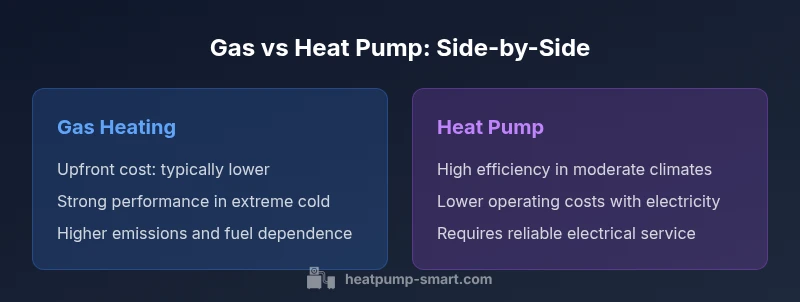
Gas vs heat pump: In many homes, heat pumps deliver lower operating costs and emissions thanks to modern technology, especially in milder winters. Gas can outperform heat pumps in extreme cold and during peak demand, and may offer cheaper upfront installation. The best choice depends on climate, electricity prices, and incentives. According to Heatpump Smart, a balanced assessment weighs climate suitability against lifecycle costs.
Gas Heating Landscape and Where It Fits
Gas-fired heating has long been a backbone of many homes due to infrastructure and familiarity. In colder regions, natural gas furnaces can deliver warmth quickly, even when temperatures plummet. They also tend to have straightforward, well-understood service networks. However, the emissions associated with burning gas and the ongoing fuel costs are meaningful considerations. For homeowners evaluating gas versus heat pumps, it’s essential to account for local gas prices, utility contracts, and long-term energy pricing. Heatpump Smart's analysis underscores that while gas may be attractive in high-usage, cold-climate scenarios, shifts in energy markets and decarbonization goals are nudging many properties toward electrified options.
How Heat Pumps Work and What Makes Them Efficient
Air-source heat pumps extract heat from outdoor air and move it indoors using a refrigeration cycle. They can both heat and cool a home, depending on the season. The efficiency of a heat pump is described by the coefficient of performance (COP); higher COP means more heat per unit of electricity. In practice, modern heat pumps often deliver significant energy savings, particularly in homes with good insulation and tight envelopes. When comparing gas vs heat pump, consider system sizing, refrigerant type, and outdoor temperature ranges. Heat pump technology also reduces direct combustion emissions, which matters for air quality and long-term energy costs. A proper installation aligns with an adequate electrical service and, where applicable, a properly designed ducted or ductless layout.
Economic Considerations: Upfront Costs vs Operating Costs
Upfront costs for gas systems are typically lower than for heat pumps, especially for replacing existing equipment. However, operating costs hinge on fuel prices and efficiency. Gas furnaces offer predictable annual fuel usage with AFUE ratings, which indicate how much of the fuel becomes heat. Heat pumps’ operating costs depend on electricity prices and COP. In regions with high electricity bills or low gas prices, gas may appear cheaper in the short term, while heat pumps often win over the long term owing to lower energy use. When estimating total cost of ownership, include maintenance, potential refrigerant charges, and the cost of charging or refilling refrigerants in rare cases.
Climate and Efficiency: Which Climate Is Best Suited?
The climate defines performance gaps between gas and heat pumps. Heat pumps perform most efficiently when outdoor temperatures are moderate; performance can drop in very cold weather. Some regions with harsh winters require a supplemental heat source or an emergency backup. Gas furnaces typically deliver steady heat irrespective of outdoor temperatures, provided fuel supply is reliable. If you live in a climate with long cold spells, consider a dual-fuel strategy or a heat pump with an integrated boiler. Efficiency metrics such as COP and AFUE provide apples-to-apples comparisons, but real-world results depend on insulation, air leakage, and thermostat controls.
Installation Realities: Ductwork, Venting, and Space
Gas installations require venting, gas supply lines, and appropriate clearance, which can introduce complexities and costs. Heat pumps generally require electrical service upgrades and, depending on the home, may need new ductwork or a ductless approach. Noise can be a concern for some heat pumps, especially during operation at higher speeds; selecting units with advanced vibration isolation and decibel ratings can mitigate this. Maintenance needs differ: gas systems require annual combustion checks and vent inspections, while heat pumps demand refrigerant checks and coil cleaning as part of routine service.
Backing Your Decision With Data: Rebates, Incentives, and Savings
Public and utility programs often provide incentives for heat pumps, recognizing their potential to reduce emissions and peak demand. When evaluating gas vs heat pump, compare not only the sticker price but also the available rebates, tax credits, and promised energy savings. Heatpump Smart notes that incentives can sway total cost of ownership materially over the system’s life. Be sure to verify eligibility criteria, installation requirements, and local codes before committing to one technology.
Case Studies: Real-World Scenarios Across Climates
In a mixed-humid climate with well-insulated living spaces, a ducted air-source heat pump may outperform a gas furnace on annual energy costs, especially with a favorable electricity rate. In a very cold, mountainous climate, a gas furnace with a backup heat source might offer quicker, more reliable warmth during extreme events. In retrofit projects, heat pumps paired with improved insulation and air sealing often provide the fastest path to energy savings. These examples illustrate that there is no universal winner; the best choice depends on climate, home performance, and energy pricing.
Comparison
| Feature | Gas heating (gas furnace/boiler) | Air-source heat pump |
|---|---|---|
| Upfront cost | Lower upfront cost | Higher upfront cost |
| Operating costs | Fuel price dependent | Electricity price dependent; typically lower per unit of heat |
| Climate performance | Reliable in extreme cold with fuel supply | Most efficient in moderate to cool climates |
| Efficiency metric | AFUE (annual fuel utilization efficiency) | COP (coefficient of performance) |
| Resilience during outages | Gas independence from electricity, but fuel supply risk | Dependent on electricity supply unless paired with backup |
| Emissions | Higher direct emissions from combustion | Lower direct emissions; indirect emissions depend on electricity mix |
| Maintenance | Annual combustion checks and vent inspections | Refrigerant checks and coil cleaning |
| Rebates/incentives | Gas rebates vary by region | Heat pump rebates are common in many programs |
Advantages
- Heat pumps offer higher overall energy efficiency and lower operating emissions in many climates
- Gas systems deliver rapid heat output and strong performance during very cold snaps
- Heat pumps provide cooling capability in summer where applicable
- Gas infrastructure is widespread and familiar in many regions
Disadvantages
- Heat pumps rely on electricity and may be affected by outages or grid constraints
- Gas systems emit more CO2 and incur ongoing fuel costs
- Heat pumps may require electrical upgrades or space for outdoor units and refrigerant handling
Heat pumps are generally the better long-term choice in moderate climates; gas can be preferable in extreme cold or where outages are frequent.
For homes in temperate climates with reliable electricity and access to rebates, heat pumps usually offer lower lifecycle costs. In regions with harsh winters or unstable gas/electric prices, a gas system or dual-fuel approach may be optimal. The Heatpump Smart team recommends evaluating climate, grid reliability, and total cost of ownership before deciding.
Your Questions Answered
What is the key difference between gas heating and heat pumps?
Gas heating uses combustion to generate heat, while heat pumps move heat from outside to indoors using electricity. Heat pumps are typically more efficient but rely on electricity and climate conditions. The choice depends on climate, energy prices, and incentives.
Gas heats by burning fuel; heat pumps move existing heat with electricity. The decision hinges on climate and energy costs.
Can heat pumps work well in very cold climates?
Heat pumps can operate effectively in many cold climates, especially newer models with cold-weather refrigerants. In the coldest days, a backup heat source may be used. Always assess insulation and the local electricity price when planning.
Modern heat pumps work in cold weather, but a backup may be needed for extreme cold.
Are heat pumps cheaper to run than gas?
Running costs depend on electricity and gas prices, system efficiency, and climate. Heat pumps often run cheaper in moderate climates, while gas can be cheaper during extreme cold or if electricity is expensive. Compare local prices and COP/AFUE ratings.
It depends on local energy prices and climate; both upfront and operating costs vary.
Do rebates apply to heat pumps?
Yes, many programs offer rebates or tax credits for heat pumps due to their efficiency and emissions benefits. Check federal, state, and utility programs for eligibility and required installation standards.
Rebates for heat pumps are common; verify eligibility and installation requirements.
What maintenance is required for gas vs heat pumps?
Gas systems require combustion checks and vent inspections regularly. Heat pumps require refrigerant checks, coil cleaning, and filter changes. Regular maintenance helps maintain efficiency and prevent failures.
Gas needs combustion checks; heat pumps need refrigerant checks and cleaning.
Which is better for new home construction?
For new builds in temperate climates, a heat pump often offers better long-term energy performance and resilience. In very cold climates or where fuel supply is a concern, a gas system with proper backup can be viable.
Heat pumps often fit new homes, but climate and reliability matter.
Top Takeaways
- Evaluate climate and home performance before choosing
- Compare total cost of ownership, not just upfront price
- Check local rebates and incentives for heat pumps
- Plan for backup heating if you live in extreme cold
- Invest in insulation and air sealing to maximize efficiency