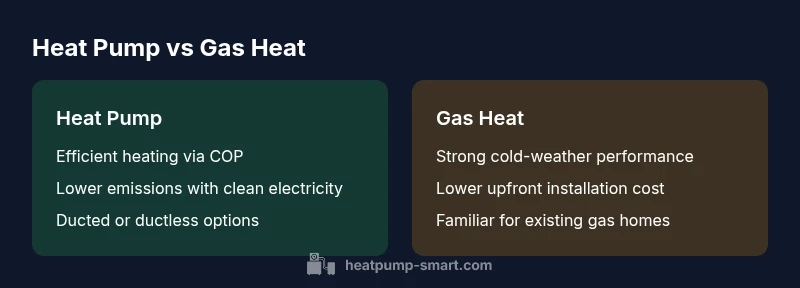
Heat Pump vs Gas Heat: A Practical Comparison
Compare heat pumps and gas heat for home comfort, cost, and emissions. This Heatpump Smart guide helps homeowners choose the best option for climate and energy goals.


Heat pump versus gas heat: The choice hinges on climate, electricity costs, and installation budgets. Heat pumps deliver high efficiency, low emissions, and strong performance in mild to moderate climates, typically lowering long-term operating costs. Gas heat can be cheaper upfront and provides dependable warmth during very cold periods.
What heat pump versus gas heat means for homeowners
For many homeowners evaluating home heating options, the comparison between a heat pump versus gas heat is more than a simple price check. It hinges on climate, energy prices, and long-term goals for comfort and emissions. According to Heatpump Smart, the most important decision factors are annual energy use, reliability during peak winter, and the total cost of ownership over the life of the system. In this context, heat pump versus gas heat describes two fundamentally different technologies: electric heat pumps that move heat rather than generate it, and gas furnaces that burn fuel to produce heat. Homeowners should look at equipment efficiency, required upgrades (electrical service, ventilation, and ductwork), and how the system will perform across seasonal temperature swings. The goal is to identify which system aligns with climate realities and financial expectations, while ensuring the solution fits existing or planned home improvements and local incentives. The Heatpump Smart team emphasizes that, for many properties, a carefully sized heat pump can deliver comfortable warmth at a lower operating cost when electricity prices and climate allow. Yet in very cold climates or situations with high gas reliability concerns, gas heat remains a pragmatic alternative. This article compares the core dimensions to help you decide confidently.
How heat pumps work and why they are considered efficient by design
Heat pumps are designed to move heat rather than burn fuel to create it. The core idea is to extract heat from an external source (air, ground, or water) and deliver it inside your home. This approach yields higher energy efficiency than electric resistance heating because the device can produce more heat energy than it consumes in electricity. Efficiency metrics, such as COP (coefficient of performance) and HSPF (heating seasonal performance factor), quantify performance across temperature ranges. A well-sized heat pump can maintain comfortable indoor temperatures with significantly lower energy input, especially when electricity rates are stable and the outdoor climate remains moderate. Regular maintenance and proper system commissioning are essential to preserve high COP over time, and smart thermostats can optimize operation by learning occupancy patterns and weather forecasts. However, performance can degrade in extreme cold without supplemental heating or advanced refrigerant configurations. Heatpump Smart’s guidance stresses the importance of accurate load calculations and professional installation to maximize efficiency gains and comfort.
Gas heat: reliability and performance in cold weather
Gas furnaces and boilers have long been relied upon for consistent warmth, particularly in regions with harsh winters. Gas heat converts fuel into heat via combustion, delivering rapid indoor warming and excellent peak-season performance. In very cold conditions, gas systems often outperform heat pumps because they do not depend on external temperatures to generate heat. Reliability is a key advantage, as modern gas furnaces can operate with predictable performance during severe weather, provided there is a steady natural gas supply and routine maintenance. However, costs can rise when gas prices spike, and emissions are higher compared with electric heating powered by clean electricity. When comparing gas heat to a heat pump, you should assess the availability of gas service, venting requirements, and the potential for hybrid configurations that blend a heat pump with a gas furnace to balance efficiency, comfort, and resilience.
Climate zones: where heat pumps shine and where gas heat remains practical
Climate plays a central role in choosing between heat pump versus gas heat. In milder climates, heat pumps often deliver substantial energy savings with excellent comfort and low emissions, making them an attractive long-term option. In regions with long, very cold winters, gas heat or a hybrid system may be more straightforward and cost-effective, especially where electricity prices are volatile or the grid experiences outages. For homeowners who prioritize environmental impact, heat pumps paired with renewable electricity sources can dramatically reduce household emissions over time. Conversely, those who require immediate, guaranteed warmth during extreme cold and want to minimize upfront investments may lean toward gas heat. The best decision emerges from a climate-aware assessment, a careful cost of ownership calculation, and consideration of potential incentives and rebates available in your area.
Upfront costs and incentives: evaluating capex and subsidies
Initial installation costs for heat pumps tend to be higher than for gas heat due to outdoor equipment, refrigerant systems, and potential electrical upgrades. Gas systems typically involve lower upfront costs and simpler retrofits in homes already wired for gas service. However, incentives, tax credits, or utility rebates available in many regions can offset the upfront premium for heat pumps. When analyzing upfront costs, consider the full scope of work required: electrical service upgrades, ductwork modifications, and potential weatherization steps that improve performance. Heatpump Smart recommends obtaining multiple quotes and verifying equipment efficiency ratings, so you can gauge how much incentives will effectively reduce the net upfront cost. Keep in mind that incentives vary by jurisdiction and can change year to year.
Operating costs and long-term savings: to ownership costs and energy price sensitivity
Operating costs for heat pumps are typically lower on a per-unit-of-heat basis than electric resistance heaters, particularly in climates where mild winters prevail. When electricity prices are favorable or when the grid draws a larger share of renewables, heat pumps can offer substantial savings over time. Gas heat, while often cheaper upfront, can incur higher operating costs if fuel prices rise or if maintenance needs increase. A robust analysis should compare annual energy use, efficiency ratings, and expected lifespans. Hybrid configurations, which blend heat pump efficiency with gas backup, can provide resilience and stable costs across seasonal fluctuations. Heatpump Smart emphasizes modeling scenarios across typical weather patterns to estimate long-term savings more accurately.
Maintenance, durability, and service considerations
Routine maintenance is essential for both technologies. Heat pumps require periodic outdoor unit checks, refrigerant integrity assessments, and ductwork inspections to prevent energy loss. Gas furnaces demand regular combustion chamber cleaning, vent inspection, and flame sensor checks. Annual or biannual servicing is common for both systems, with the primary difference being the type of components that require attention. A well-maintained heat pump can sustain high efficiency over many years, while a well-maintained gas furnace maintains reliability and safe operation. Homeowners should schedule professional service and ensure parts are readily available in their region to minimize downtime during peak seasons.
Environmental impact and emissions considerations
The environmental impact of heat pump versus gas heat hinges on electricity generation and fuel mix. A heat pump powered by a clean electricity grid typically offers lower operational emissions than gas heat, especially as renewable energy share increases. In regions relying heavily on fossil fuels for electricity, the environmental advantage of heat pumps may be lower, but still often present due to the high efficiency of heat pumps. Gas heat emits carbon dioxide and other pollutants during combustion, contributing to a higher carbon footprint unless mitigated by carbon capture or cleaner gas supplies. For eco-conscious homeowners, selecting heat pumps alongside energy-efficient home improvements can meaningfully reduce emissions over the system’s lifetime.
Installation readiness: electrical service, ductwork, and space
Installing a heat pump often involves upgrading electrical service and ensuring adequate space for outdoor equipment, indoor air handlers, and plumbing connections. Ductless mini-split configurations offer flexible installation in homes without extensive ductwork. Gas systems require proper venting, gas line considerations, and often more limited installation flexibility in retrofit projects. A thorough assessment of the home’s insulation levels, air leakage, and existing ductwork is crucial to avoid oversized or undersized equipment, which can erode efficiency and comfort. Heatpump Smart advises coordinating with licensed installers to confirm that electrical panels, wiring, and service capacity align with the selected system, thereby minimizing risk and ensuring a smooth handover at commissioning.
Decision framework: a practical step-by-step guide to choosing heat pump versus gas heat
To decide between heat pump versus gas heat, start with climate and electricity prices. Next, quantify the total cost of ownership by estimating annual energy use, maintenance needs, and expected lifespan. Consider any available rebates, and evaluate upgrade requirements such as ductwork or electrical service. If the climate is mild or moderate and the grid is clean, heat pump often yields better long-term value. If winters are severe or gas is readily accessible with lower upfront costs, a gas system or hybrid approach may be advantageous. Finally, verify that your home's insulation and air sealing are sufficient to maximize whichever system you select, and plan for professional sizing and installation to avoid common pitfalls.
Authoritative sources and further reading
For additional context, consult the following authoritative sources:
- U.S. Environmental Protection Agency (epa.gov) on heat pumps and energy efficiency
- U.S. Department of Energy (energy.gov) guidance on heat pump performance and cold climate operation
- National Renewable Energy Laboratory (nrel.gov) reports on heat pump efficiency and integration with renewables
Heatpump Smart Analysis, 2026 also informs this comparison with practical homeowner-focused insights.
Comparison
| Feature | Heat pump | Gas heat |
|---|---|---|
| Upfront cost & installation | Higher upfront installation cost due to outdoor unit and potential electrical upgrades | Lower upfront cost, simpler retrofit in existing gas-equipped homes |
| Operating costs | Typically lower operating costs over time with moderate electricity prices | Typically higher operating costs over time as fuel prices fluctuate |
| Emissions | Lower emissions when powered by clean electricity | Higher emissions due to combustion of natural gas |
| Climate performance | Excellent in mild to moderate climates; performance improves with supplemental heating in very cold periods | Strong in cold climates; reliable warmth during severe winters |
| Maintenance | Periodic outdoor unit checks and refrigerant integrity maintenance | Regular combustion service, venting inspection, and filter changes |
| Space and installation | Requires outdoor unit and indoor air handler; may need ductwork | Often more compact indoors; may require venting and gas line work |
| Reliability | High reliability with grid electricity; performance can drop during outages without backup | High reliability with consistent gas supply; independent of electricity for heat |
| Lifespan | Long lifespan with regular maintenance | Long lifespan with regular maintenance |
Advantages
- Lower long-term energy costs in many climates with heat pumps
- Lower emissions when powered by clean electricity
- Flexible installation options (ducted or ductless)
- Potential incentives and rebates for efficient heat pumps
- Improved home comfort and dehumidification control
Disadvantages
- Higher upfront installation cost
- Performance variability in extreme cold without supplemental heating
- Requires electrical upgrades in some homes
- Gas price volatility can affect operating costs
Heat pump generally offers better long-term value in moderate climates; gas heat remains practical in very cold regions or when upfront investment must be minimized
Choose heat pump if you prioritize energy efficiency and emissions reduction in moderate climates. Choose gas heat if you face severe winter conditions or need a lower initial cost; consider a hybrid for balanced performance.
Your Questions Answered
What climate is best for a heat pump?
Heat pumps perform best in mild to moderate climates with reliable electricity. In very cold regions, supplemental heating or a hybrid system may be advantageous. Local climate and electricity costs should guide the decision.
Heat pumps work best where winters aren’t extreme. In very cold areas, you might use supplemental heat or consider a hybrid system.
Can a heat pump replace a gas furnace in cold climates?
In extremely cold climates, a heat pump can replace a gas furnace if paired with supplemental heating or a hybrid system. For some homes, gas backup remains practical for peak winter demand.
Yes, with supplemental heat or a hybrid system, a heat pump can replace a gas furnace for cold climates.
Are there incentives for installing heat pumps?
Many regions offer rebates, tax credits, or utility incentives for high-efficiency heat pumps. Availability varies, so check local programs and consult a licensed installer for guidance.
There are often rebates or incentives available—check local programs with your installer.
What is a hybrid system and when should I consider it?
A hybrid system combines heat pump operation with a gas furnace for backup. It can optimize efficiency in variable climates, delivering heat when most economical and switching to gas when temperatures drop.
A hybrid uses a heat pump primarily, switching to gas backup when it’s very cold.
What maintenance does each system require?
Heat pumps require regular outdoor unit checks and refrigerant integrity checks. Gas furnaces need annual combustion inspections and venting checks. Both benefit from professional annual service.
Regular servicing keeps both systems running well—check the outdoor unit for heat pumps and inspect the furnace for gas systems.
How do I compare long-term costs effectively?
Create a simple ownership model: estimate annual energy use and costs, factor in maintenance, and project fuel or electricity price changes. Include potential rebates to determine true lifetime cost.
Build a small cost model to compare lifetime costs, including energy and maintenance plus rebates.
Top Takeaways
- Assess your climate before choosing heat pump versus gas heat
- Consider total cost of ownership, not just upfront price
- Factor grid electricity quality and potential incentives
- Plan for proper installation and system sizing
- Review environmental goals when selecting a heating strategy