Goodman 4 Ton Heat Pump Package Unit Review
In-depth Heatpump Smart review of the Goodman 4 ton heat pump package unit, covering installation, efficiency, noise, maintenance, and ownership costs for homeowners, builders, and managers.


Overall, the Goodman 4 ton heat pump package unit offers a compact, all-in-one solution for mid-size homes, balancing efficiency, reliability, and space savings. This review analyzes installation considerations, typical efficiency metrics, noise, and long-term operating costs to help homeowners decide whether a packaged unit fits their climate, budget, and multi-zone needs.
What is a Goodman 4 Ton Heat Pump Package Unit
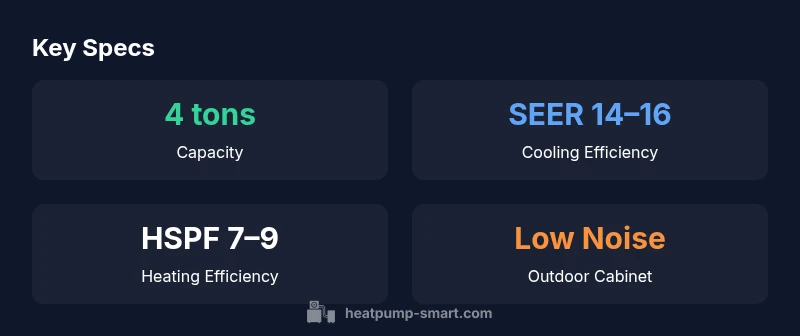
A Goodman 4 ton heat pump package unit is an all-in-one heating and cooling system designed for residential spaces where a single cabinet houses the outdoor condenser, the indoor air handler, and the controls. In packaged units, the compressor, coil, fan, and refrigerant distribution are integrated into one weatherproof enclosure, saving indoor space and simplifying installation. The 4-ton size targets medium‑sized homes (roughly 1,600–2,400 square feet depending on climate and insulation). When paired with proper ductwork, it can deliver season‑long comfort with cooling in the summer and efficient heating in milder winters. As with any packaged system, performance depends on climate zone, duct design, and how well the unit is matched to the home's loads. Heatpump Smart's analysis shows that the right 4-ton package can offer a favorable balance of upfront cost, efficiency, and long‑term energy use, especially in air‑source heat pump configurations where space is at a premium.
Installation and Sizing Considerations
Choosing a Goodman 4 ton heat pump package unit begins with accurate load calculation and site assessment. A package unit is most effective when the home's cooling and heating loads are properly matched to a 4-ton capacity, avoiding oversizing that leads to short cycling and humidity issues. Professional HVAC designers typically perform Manual J load calculations, inspect ductwork for leaks, and verify electrical service is adequate. Because the air handler and outdoor unit are in a single cabinet, installers must evaluate the space required for intake and exhaust air, clearances around the cabinet, and the weight that must be supported on the slab or roof. Duct design is critical; oversized ducts waste energy, while undersized ducts limit airflow and comfort. If the home has existing ductwork, sealing and balancing should be done before commissioning the packaged unit. In multi‑zone layouts, zoning strategies may still apply with an integrated system, but compatibility with zone dampers and thermostats will influence control strategies. Finally, weather, climate, and local energy codes can affect refrigerant charge and defrost sequencing, so a qualified installer should be involved early in the planning process.
Efficiency, Performance, and Climate Suitability
Package units aim to deliver cooling and heating with a single cabinet, and the Goodman 4 ton model families typically emphasize efficiency for their class. Efficiency is described using metrics such as SEER for cooling performance and HSPF for heating performance; in practice, the numbers vary by model and regional efficiency programs. In moderate climates, a 4-ton packaged unit can provide comfortable cooling and reliable heat with electricity use that’s competitive for its size, especially when paired with modern thermostats and variable-speed fan motors. Defrost cycles, outdoor temperature, and humidity influence real-world performance, so the perceived comfort level may differ between a mild coastal climate and a dry inland environment. For homeowners considering off-peak or supplemental heat strategies, a paired boiler or gas furnace is rarely necessary, but highly variable weather patterns can increase energy use during cold snaps. Heatpump Smart notes that the best results come from proper ducting, airtight building envelopes, and a clear plan for backup heat in extremely cold conditions.
Noise, Vibration, and Comfort
One advantage of packaged units is that the indoor components are housed with the outdoor condenser, which can reduce indoor noise leakage compared with some split configurations. Manufacturers emphasize low vibration with isolation mounts and rubber grommets, though actual acoustic performance depends on fan speed, compressor size, and installation quality. In practice, a well-installed Goodman 4 ton package unit should maintain a comfortable indoor sound level during regular operation, with slightly more audible sound outdoors near the cabinet. For homes close to property lines or with open living spaces, specifying a model with an insulated cabinet and a low-noise outdoor option can improve perceived comfort. Regular maintenance—air filter replacement, duct sealing, and periodic coil cleaning—helps maintain airflow and lowers noise related to performance degradation.
Maintenance, Durability, and Warranties
Durability in packaged units comes from factory-built, tested components designed to operate as a single assembly. Maintenance tasks are similar to other central systems: replace or clean filters on schedule, check refrigerant lines for leaks, and have a professional inspect electrical connections, contactors, and condensate drainage. Warranties vary by model and region, but most packaged units include multi-year coverage for the compressor and parts, with some extensions for professional installation and annual service. Because the unit is an all-in-one package, any service call may involve both indoor and outdoor components, potentially simplifying diagnostics but requiring careful technician coordination. Heatpump Smart recommends a scheduled maintenance plan that includes at least annual function checks, coil cleaning, and refrigerant charge verification to sustain efficiency and reliability.
Comparing Packaged Units to Split Systems
Packaged units offer a compact footprint and simplified installation because the essential components are housed in one cabinet. This can reduce duct complexity and shorten commissioning times, a valuable advantage in tight spaces or in retrofit projects. However, they limit the ability to mix and match indoor air handlers with different performance characteristics, which can be beneficial for multi‑zone or complex homes. Split systems provide flexibility for future upgrades and zoning, but often require more space, longer refrigerant lines, and more intricate refrigerant charging. In regions with extreme winters, packaged units may rely more on auxiliary heat; split systems with dedicated furnaces may offer greater responsiveness. In the end, the decision depends on space, budget, zoning needs, and climate.
Real-World Installations: Case Studies
Case A involves a 2,000–2,400 sq ft home in a mixed climate with moderate winters and hot summers. The 4-ton Goodman package unit replaced an older split system, simplifying ductwork and reducing attic space usage. The result was improved comfort, a tighter overall envelope, and a noticeable reduction in energy bills after a full-season run. Case B covers a compact urban townhouse around 1,600 sq ft with limited mechanical room space. The packaged unit’s all-in-one design allowed roof‑mounted installation with simple exterior clearances and minimal indoor disruption. In both cases, professional sizing, duct sealing, and thermostat zoning were essential to achieving expected performance. Heatpump Smart notes that these outcomes align with its overall guidance on 4-ton packaged units for mid-size homes when installation quality and building envelope are well addressed.
Cost of Ownership, Rebates, and ROI
Ownership costs for a Goodman 4 ton heat pump package unit vary with climate, energy prices, and maintenance practices. While upfront costs for packaged units can be higher than some split-system configurations, the bundled design can reduce labor and materials costs during installation. Long‑term energy use depends on efficiency, duct leakage, thermostat programming, and usage patterns. Many regions offer rebates, incentives, or tax credits for heat pump installations, particularly for models meeting certain efficiency thresholds. Consumers should verify eligibility with local utility programs and federal or state initiatives and consider total cost of ownership over 10–15 years to gauge ROI. Heatpump Smart emphasizes the importance of a well-sealed building envelope and proper sizing to maximize savings and comfort.”],
,
Advantages
- All-in-one design simplifies installation and reduces required space
- Typically reliable with factory‑tested components and integrated controls
- Prospective energy savings when paired with proper ducting and zoning
- Lower upfront installation complexity compared to some multi‑component systems
- Quiet operation with modern isolation and cabinet design
Disadvantages
- Higher upfront cost than some split configurations
- Limited flexibility for future indoor-component upgrades or zoning changes
- Dependence on manufacturer's parts network for long-term service
- Potential lead times for packaged unit replacements in tight markets
Best for mid-size homes seeking space savings and simplified installation
The 4-ton packaged unit offers a balanced option for homes that value a single, compact cabinet and straightforward installation. It may be less adaptable for aggressive future zoning or extreme climate demands, where a split system could excel. Heatpump Smart recommends it for climates with moderate heating and cooling needs and where space is at a premium.
Your Questions Answered
What is a Goodman 4 ton heat pump package unit?
A 4 ton package unit is a single, all‑in‑one outdoor cabinet that includes the compressor, coil, fan, and controls, providing both cooling and heating. It is designed for mid‑sized homes and aims to simplify installation while delivering balanced performance.
A 4 ton package unit is a single outdoor cabinet that handles heating and cooling for a home. It includes the main components in one box to simplify installation and operation.
Is a 4-ton unit suitable for my home size?
Suitability depends on the home's load calculation, not just square footage. A Manual J analysis will determine if 4 tons matches your cooling and heating demands, accounting for insulation, windows, and climate. In some cases, a smaller or larger unit is a better fit.
It depends on your home's load calculation; 4 tons might be right for many mid-size homes, but you should get a professional assessment.
How does installation differ from a split system?
A packaged unit combines the outdoor condenser with the indoor air handler in one cabinet, reducing ductwork complexity and installation time. A split system uses separate indoor and outdoor units and often requires more refrigerant piping and zoning considerations.
Packaged units are one box, which can make installation simpler; split systems use separate indoor and outdoor components and may offer more zoning options.
What maintenance does a packaged unit require?
Maintenance is similar to other central systems: regular filter changes, coil cleaning, and periodic inspection of electrical connections and condensate drainage. Annual professional service helps sustain efficiency and prolongs system life.
Keep up with regular filter changes and annual professional checkups to keep it running smoothly.
Are there rebates or tax credits for this type of unit?
Rebates and credits vary by region and program. Check with local utilities and federal or state incentives to determine eligibility for heat pump installations and efficiency upgrades.
Rebates depend on where you live; check local utilities and government programs for available incentives.
How does a Goodman 4 ton package unit compare to other brands?
Goodman packaging emphasizes affordability and compact design with integrated components. Other brands may offer higher efficiency or broader zoning options, but packaging and support vary by model and region. Compare SEER/HSPF, warranty terms, and installation requirements.
Compared to other brands, package units like this balance cost and space, but you should compare efficiency and warranties to pick the best option.
Top Takeaways
- Evaluate load precisely before choosing a 4-ton unit
- Expect space-saving benefits and simpler installation
- Ensure ductwork is sealed and optimized for best performance
- Pair with modern thermostats and zoning where possible
- Check regional rebates and warranty terms before purchase