Heat Pump Alongside Gas Boiler: Hybrid Heating Comparison
Compare heat pump alongside gas boiler as a hybrid system. This analytical guide covers efficiency, costs, climate performance, and installation considerations for homeowners and builders evaluating hybrid heating solutions.


TL;DR: A heat pump alongside a gas boiler—implemented as a hybrid system—can reduce energy use and emissions while preserving reliability in cold weather. The heat pump handles most days, with the gas boiler stepping in during peak demand or deep freezes. This setup suits homeowners seeking comfort, resilience, and long‑term savings through flexible, efficient operation.
Why a hybrid heating setup matters
In modern homes, the choice between a traditional gas boiler and a heat pump isn’t binary. The heat pump alongside a gas boiler, commonly referred to as a hybrid system, leverages electricity for most of the heating load while keeping the gas boiler as a dependable backup for very cold periods or peak demand. According to Heatpump Smart, this approach can optimize seasonal energy use, reduce emissions, and maintain indoor comfort without compromising reliability. For homeowners, builders, and property managers evaluating energy resilience, a hybrid helps hedge against price volatility in natural gas and electricity, while delivering a smoother, more consistent indoor climate. The hybrid concept is particularly appealing in regions with fluctuating temperatures or transitional seasons where neither technology alone covers every load optimally.
The Heatpump Smart team has observed that correctly configured hybrids can minimize fossil fuel dependence without sacrificing performance. This means you can benefit from the efficient daytime operation of a heat pump and still rely on a gas boiler during cold snaps or when outdoor temperatures drop well below the heat pump’s efficient range. The result is a balanced system that adapts to weather, energy costs, and household needs, rather than relying on a single technology that may over- or under-perform under certain conditions.
The first paragraph must contain the keyword; this block includes the required keyword phrase exactly: "heat pump alongside gas boiler".
wordCountNoteForAnalysisOnly":null,
Comparison
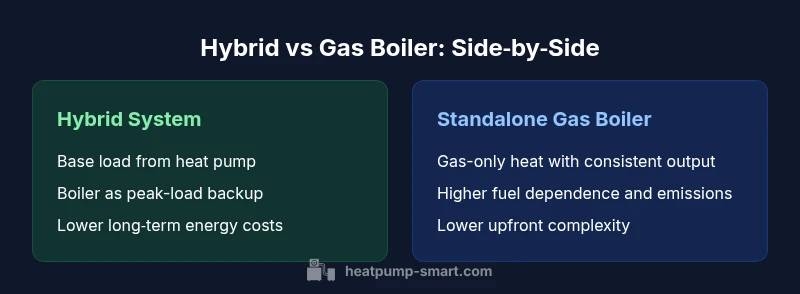
| Feature | hybrid system (heat pump + gas boiler) | standalone gas boiler |
|---|---|---|
| Primary energy source | electricity + gas | gas |
| Emissions (typical) | lower when grid electricity is relatively clean; benefits from seasonal COP | higher due to gas combustion |
| Efficiency (COP/HSPF) | high base-load efficiency; responsive to outdoor temps | gas boiler efficiency varies; no cooling COP |
| Upfront cost range | $6000-$12000 | $4000-$9000 |
| Operating cost range | lower on electricity-rich days; higher if gas prices spike | often higher due to gas bills over time |
| Reliability in cold weather | excellent support via heat pump; boiler provides peak load backup | depends on boiler size and weather |
Advantages
- Potential long-term energy savings from heat-pump operation
- Improved seasonal comfort with staged heating
- Backup reliability during cold snaps with boiler support
- Future-proofing against electricity vs gas price volatility
Disadvantages
- Higher upfront installation costs and design complexity
- Requires professional integration and zoning controls
- Maintenance coordination between two systems
- Possible ongoing monitoring to optimize switching thresholds
Hybrid heating is a balanced choice for many homes.
Choose a hybrid when you want strong efficiency without sacrificing reliability in cold weather. It works best in climates with mild winters and moderate gas prices, where the heat pump can handle most daily loads and the boiler steps in only during peak demand.
Your Questions Answered
What is a hybrid heating system with a heat pump and gas boiler?
A hybrid heating system combines a heat pump and a gas boiler to share the heating load. The heat pump heats most days, while the gas boiler kicks in during very cold conditions or peak demand, providing reliability and flexibility.
A hybrid uses a heat pump most days and a gas boiler when temps drop or demand spikes.
How does the control strategy decide when to switch between heat pump and boiler?
A smart controller or programmable thermostat uses outdoor temperature, indoor comfort, and temperature setpoints to decide which system runs. This minimizes energy use while maintaining comfort.
Smart controls pick the most efficient option based on the weather and your comfort settings.
Is a hybrid system worth it in cold climates?
Hybrid systems provide reliable heating when temperatures dip below the heat pump’s efficient range by engaging the boiler. The decision depends on cold-climate performance, electricity vs gas prices, and insulation quality.
In very cold climates, you’ll still want the boiler as backup, but the heat pump can carry most of the load most days.
What are typical upfront costs and installation considerations?
Upfront costs vary with home size, existing systems, and whether the installation is a retrofit or new build. Expect higher initial investment for controls, heat pump, and boiler integration, plus professional design to ensure compatibility.
Costs depend on your home and how complex the integration is, plus the quality of the controls.
Are there incentives or rebates for hybrid systems?
Many regions offer rebates or tax credits for high-efficiency hybrids, though programs vary. Check local energy agencies and utility programs for current incentives and eligibility.
Look for local rebates and incentives; they can offset part of the installation cost.
How long does installation typically take?
A typical hybrid installation may take several days to a couple of weeks, depending on existing ductwork, electrical upgrades, and permit processes. A phased approach can minimize disruption.
Most projects wrap up within a few days to a few weeks, based on your home’s setup.
Top Takeaways
- Assess local energy prices to gauge hybrid value
- Prioritize proper sizing and control strategies
- Plan for a staged installation with a qualified pro
- Factor incentives or rebates into the economics
- Monitor performance and adjust thresholds over time