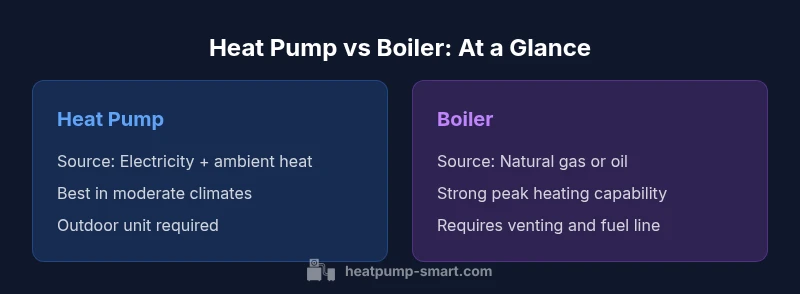
Heat Pump vs Boiler: Comprehensive Side-by-Side Guide
A data-driven guide comparing heat pumps and boilers on efficiency, costs, installation, and long-term savings to help homeowners, builders, and property managers decide confidently.


Heat pumps and boilers each have strengths and trade-offs. In short, heat pumps excel in efficiency and long-term savings in moderate climates, while boilers deliver rapid heating and strong performance in extreme cold when paired with appropriate controls. The heat pump vs boiler decision hinges on climate, electricity costs, and installation readiness.
Defining the core difference: heat pump vs boiler
The heating landscape today centers on how we generate warmth, store energy, and control comfort. At a high level, the phrase heat pump vs boiler describes two fundamentally different approaches: heat pumps move heat from the outside or from the ground into your home, while boilers burn fuel to create hot water or steam. Heat pumps rely on electricity to drive a refrigeration cycle that extracts ambient heat and pumps it indoors, often with the ability to work in reverse for cooling. Boilers, in contrast, burn natural gas, oil, or propane to heat water for radiators or radiant floors. These models vary in fuel source, emissions, and control sophistication, but both aim to deliver reliable warmth, dependable hot water, and a comfortable living environment. As you weigh options, consider climate, electricity costs, fuel availability, and the level of comfort you expect from your system. The Heatpump Smart team emphasizes that long-term value depends on efficiency, maintenance, and matching the design to your home’s heat load.
Climate impact on performance and efficiency
Choice between heat pump vs boiler hinges on climate and electricity prices. Heat pumps extract ambient heat and deliver it inside, so their efficiency (often expressed as COP or SPF) improves in milder seasons and when electricity is affordable. In very cold climates, performance can drop unless paired with auxiliary heat or a high-efficiency backup boiler. Boilers, in contrast, burn fuel to heat water and deliver consistent base heat, but their efficiency depends heavily on the model and fuel type. In climates with cold winters and high energy costs, a hybrid approach or a carefully sized boiler may be advantageous. The key takeaway is that the same model can behave very differently depending on outdoor temperatures and how well the system is tuned for the local load profile. According to Heatpump Smart, selecting the right configuration requires analyzing local weather data, electricity rates, and heating demands over the coldest months.
Understanding running costs and total cost of ownership
Running costs are often the most consequential factor in the heat pump vs boiler decision. Heat pumps typically offer lower operating costs when electricity rates are reasonable and the home is well insulated. Boilers can have low fuel bills when gas is cheap, but you may face higher overall energy use if the system isn’t well matched to the load. Total cost of ownership also includes equipment cost, installation complexity, maintenance, and potential incentives. Modern heat pumps can last many years with proper service, while boilers also offer long service life when maintained. Heatpump Smart analysis shows that carefully designed systems with good insulation and programmable controls frequently deliver the best long-term economics, especially in mid-range climates and utility tariffs that reward efficient heating. The goal is to balance upfront investment with anticipated annual costs and maintenance needs.
Installation space, ventilation, and permitting
A heat pump often requires outdoor components and a compact indoor air handler or radiant distribution, while a boiler demands a dedicated combustion area, venting, and sometimes a separate fuel source line. Clearances, electrical capacity, and refrigerant circuit considerations influence installation cost and complexity. In retrofit projects, existing ductwork or radiator layouts may constrain your options, while new construction can accommodate more flexible layouts. Permitting considerations vary by jurisdiction, and installing a heat pump may require electrical upgrades or new condensate management, whereas boiler installations typically require gas line work and venting adjustments. Planning ahead with a qualified installer minimizes disruption and ensures code compliance and performance. Heatpump Smart notes that early design discussions save time and reduce the likelihood of oversized equipment.
Comfort, control, and user experience
User experience matters as much as the hardware. Heat pumps often feature variable-speed compressors, smart thermostats, and zone control, enabling precise temperature management and reduced noise during off-peak operation. Boilers tend to deliver robust heat with quick response, especially when paired with modern radiators and good insulation, but may lack the nuanced zoning capabilities of a well-designed heat pump system. The perceived warmth and control quality depend on system balancing, buffer storage, and setpoint strategies. Regardless of the path, choose a control strategy that aligns with your routines, occupancy patterns, and energy goals. The Heatpump Smart team emphasizes that user-friendly interfaces and transparent energy reporting improve long-term satisfaction.
Environmental impact and future-proofing
Greenhouse gas emissions and energy-source mix influence how you view heat pump vs boiler. Electric heat pumps powered by clean electricity can dramatically reduce operational emissions, while boilers burn fossil fuels and emit direct combustion byproducts. For homeowners aiming to decarbonize, heat pumps installed with renewable energy sources or in regions with decarbonized grids often prove the best long-term strategy. In colder regions, hybrid systems that combine a heat pump with a high-efficiency boiler may provide a transition path while grid electricity evolves. Future-proofing involves considering incentives, reliability of supply chains, and the evolving performance of heat pump technology as refrigerants and components improve.
Sizing and design strategies
Accurate sizing is the foundation of performance for both heat pumps and boilers. Oversized equipment can short-cycle, wasting energy and reducing comfort, while undersized units struggle to meet demand during cold snaps. A professional load calculation should account for insulation, windows, shading, and occupant behavior. In many homes, a heat pump with a supplementary boiler or a dedicated boiler-only installation may be appropriate depending on climate and building envelope. The goal is to match the system’s capacity to the true heat load and to consider future changes in occupancy, insulation upgrades, or screen-ready smart controls. Heatpump Smart recommends commissioning with a full system test and seasonal performance checks.
Hybrid configurations: when to mix heat pump and boiler
In mixed climates or retrofit scenarios, a hybrid approach—combining a heat pump with a high-efficiency boiler—can offer the benefits of both technologies. The heat pump handles the majority of daily heating, while the boiler provides peak output during cold spells or when outdoor temperatures plummet. Control strategies can switch seamlessly between sources based on outdoor temperature, humidity, and indoor comfort events. Hybrid systems require thoughtful design, compatible equipment, and skilled commissioning to avoid heat leaks or mismatched controls. This approach is particularly attractive for homes with existing radiators or underperforming insulation.
Financing, incentives, and total cost of ownership
Financing options, rebates, and tax incentives influence the attractiveness of heat pump vs boiler projects. Many regions offer incentives for high-efficiency heat pumps, particularly when paired with smart controls and proper insulation upgrades. When assessing total cost of ownership, include installation, ongoing maintenance, energy costs, and potential incentives. The financial landscape shifts as electricity tariffs and fuel prices fluctuate, so a dynamic analysis helps homeowners avoid surprises. Heatpump Smart analysis suggests modeling multiple tariff scenarios to determine the most cost-effective path over a 10- to 15-year horizon.
A practical decision framework
To make a well-grounded choice, start with a climate assessment and load analysis, then compare energy costs and installability. Step 1: quantify your heating load with an HVAC professional. Step 2: estimate long-term energy costs under current tariffs for electricity and gas. Step 3: evaluate initial installed cost and potential incentives. Step 4: choose a system with robust controls, zoning, and an option for future grid decarbonization. This framework keeps the decision grounded in real-world constraints and future energy trends.
Case study illustrations
Case Study A: A 1,600-square-foot home in a temperate climate with good insulation switches from a mid-efficiency boiler to a ducted heat pump system with zone controls. Expect lower running costs and more consistent comfort, with a modest up-front investment and favorable incentives. Case Study B: A 2,800-square-foot home in a very cold climate relies on a hybrid setup where the heat pump handles base loads and the boiler delivers peak output during extreme cold. The result is reliable warmth with optimized energy use, but the system requires careful design and professional tuning.
Common pitfalls to avoid
Avoid oversizing or undersizing, neglecting electrical upgrades, and ignoring insulation work. Expect variation in performance across seasons and ensure the system supports future decarbonization goals. Do not rely on a single quote without a full load analysis and a clear commissioning plan. A well-designed heat pump or boiler system, installed by a trained professional, delivers the best long-term value.
Comparison
| Feature | Heat pump | Boiler |
|---|---|---|
| Energy source | Electricity + ambient heat | Natural gas or oil |
| Primary heating method | Refrigeration cycle moving heat indoors | Fuel combustion heats water |
| Efficiency and performance | COP/seasonal efficiency can be very high in moderate climates | AFUE-based efficiency varies by model and fuel |
| Installation considerations | Outdoor unit, air handler, distribution | Fuel line, venting, combustion air |
| Maintenance | Cleaner energy, regular refrigerant and filter checks | Annual boiler servicing and venting checks |
| Best use case | Mid-range climates with electricity access and decarbonization goals | Cold climates with backup or hybrid setups |
Advantages
- Lower operating costs in many climates when electricity is affordable
- Lower emissions with clean electricity
- Flexible zoning and smart controls
- Potential rebates and incentives
Disadvantages
- Higher upfront cost and longer payback in many cases
- Performance drops in extreme cold without backup heat
- Requires skilled sizing and professional installation
- Complexity of hybrid systems can add maintenance considerations
Heat pumps generally offer better long-term value for most homes; boilers may be preferred in extreme cold or with strong peak heating needs.
For temperate regions with available clean electricity, heat pumps deliver efficiency and decarbonization benefits. If you live in very cold climates or require fast peak heating, a boiler or hybrid system can be more suitable.
Your Questions Answered
Is a heat pump suitable for cold climates?
Heat pumps can perform well in cold climates, especially modern models with cold-weather refrigerants and auxiliary heat. In very harsh winters, a backup heat source or hybrid system may be prudent.
Heat pumps work in cold weather, but in extreme cold you may want a backup heat source.
Can a heat pump fully replace a boiler in most homes?
Many homes can switch to a heat pump with careful design and proper insulation, but some climates and scenarios still benefit from a boiler or hybrid setup. A professional load calculation will confirm this.
Often yes with the right design, but not always—get a professional load calc.
What is a hybrid heat pump system?
A hybrid system combines a heat pump with a high-efficiency boiler or furnace. It handles most heating with the heat pump and uses the boiler for peak demand or very cold days, improving reliability.
A heat pump plus a boiler for peak days.
How long do heat pumps last compared to boilers?
Heat pumps typically last many years with proper maintenance, similar to modern boilers. Routine servicing of the refrigerant circuit and the boiler is essential for longevity.
With good maintenance, both can last many years, but a heat pump needs refrigerant checks.
What maintenance do heat pumps require?
Heat pumps require regular filter changes, coil and fan cleanings, and periodic refrigerant checks. Annual service by a qualified technician helps maintain efficiency and prevent leaks.
Regular filters, coil cleaning, and annually checking refrigerant keeps it efficient.
How do I estimate total cost of ownership?
Estimate upfront equipment and installation costs, plus annual energy costs, maintenance, and incentives. Use a 10- to 15-year horizon to compare scenarios under current tariffs.
Add up purchase, install, energy, maintenance, and incentives for a long-term view.
Top Takeaways
- Assess climate and energy prices before deciding
- Prioritize proper sizing to avoid short cycling
- Consider hybrid options for mixed climates
- Factor in total cost of ownership, not just upfront price
- Check for local incentives and rebates
- Plan for future grid decarbonization and smart controls