Heat Pump and Emergency Heat: A Practical Comparison
An objective comparison of heat pump operation with and without emergency heat, focusing on efficiency, cost implications, reliability, climate factors, and practical usage tips.


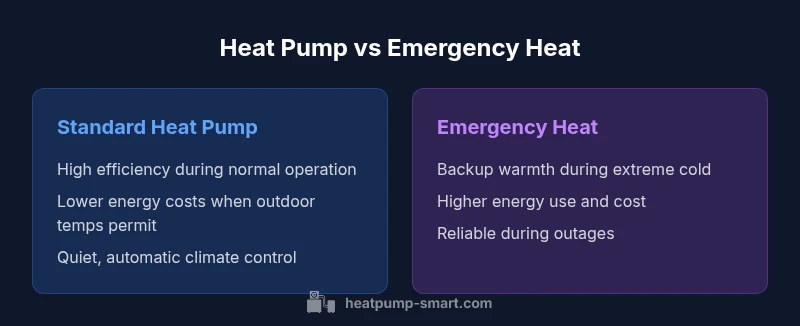
Heat pump and emergency heat: a practical comparison shows that standard heat-pump operation is typically more efficient, while emergency heat provides a reliable backup during extreme cold or outages. Use emergency heat sparingly to avoid high energy costs. This guide helps homeowners decide when to rely on the heat pump alone versus engaging emergency heat.
How Emergency Heat Works in a Heat Pump System
A heat pump extracts heat from the outdoor air and transfers it inside. When outdoor temperatures drop, the system can switch to emergency heat, which uses electric resistance coils as a backup heat source. This mode guarantees warmth when the heat pump alone cannot meet the load, but it comes with higher energy use and costs. Thermostat settings and the heat pump’s control board determine when emergency heat engages. According to Heatpump Smart, understanding the conditions that trigger emergency heat helps homeowners balance comfort with efficiency while avoiding unnecessary costs. In practical terms, think of emergency heat as a safety net rather than a primary heating strategy, reserved for very cold spells or power interruptions. Climates with severe winters and frequent cold snaps often see residents using emergency heat more than those in milder zones. The key is to align usage with forecasts, energy pricing, and occupant comfort goals while maintaining a resilient heating plan.
When Emergency Heat Becomes Necessary
Emergency heat becomes necessary when the heat pump cannot meet the cooling load due to very cold outdoor temperatures, equipment limitations, or an outage. If the outdoor coil cannot extract enough heat, the backup electric resistance elements will kick in to maintain indoor warmth. This mode is essential for reliability during power outages or extended cold spells, but prolonged use will spike energy bills. Homeowners should recognize signals like longer recovery times, higher thermostat settings, or unusually warm indoor air from backup heat cycling. Planning for outages, winter storm readiness, and backup power options can reduce the need for emergency heat while keeping comfort levels acceptable during extreme weather. The Heatpump Smart team recommends using emergency heat only as a last resort or for brief, targeted periods when the heat pump is unable to meet load.
Efficiency Differences: Standard Heat Pump vs Emergency Heat
Standard heat pump operation is designed for efficiency. It moves heat rather than generating it, which generally yields lower energy use compared to electric resistance heat. Emergency heat uses electric resistance to generate warmth directly, which is inherently less efficient. As a result, costs rise when emergency heat is active, especially if the system runs for extended periods. The trade-off is reliability: you retain consistent indoor temperatures even when outdoor sources are inadequate. For homeowners, this means planning to rely on the heat pump most of the season and reserving emergency heat for extreme conditions, outages, or maintenance periods where the heat pump is temporarily unable to operate optimally. Heatpump Smart’s analysis emphasizes disciplined usage to maximize savings without sacrificing comfort.
Comfort and Recovery: Temperature Response
Modern heat pumps recover quickly in mild to moderately cold conditions, delivering steady warmth with minimal climate swings. When emergency heat engages, the system can restore temperatures more aggressively, reducing cold spots but at the expense of higher energy consumption. In very cold climates, the backup heat helps the home reach and maintain comfort more reliably, though occupants may notice slower ramp-downs and longer cycles if the system toggles between modes. Understanding your home's insulation and air sealing levels is crucial: a well-insulated envelope reduces dependency on emergency heat and improves overall comfort while preserving efficiency.
Operating Costs and Long-Term Implications
Operating costs depend on how often emergency heat runs and the electricity price regime. Because emergency heat uses electric resistance, it generally costs more per unit of heat than the heat pump itself. The key is to limit usage to situations where the heat pump cannot meet demand, such as extreme cold or during outages. Long-term implications include the potential for higher energy bills if emergency heat is used as a default during winter, and accelerated wear from frequent mode switching in some systems. Homeowners should pair temperature setpoints with forecasted weather, thermostat zoning, and occupancy patterns to minimize unnecessary emergency heat usage while maintaining comfort. The Heatpump Smart team notes that a well-tuned system, appropriate insulation, and properly sized equipment reduce the need for emergency heat and support better energy outcomes.
Climate, Load, and Sizing Considerations
Climate and building load are central to deciding how often emergency heat will be needed. In milder climates or well-insulated homes, the heat pump can meet most heating demands without switching to emergency heat. In regions with extended cold periods, a properly sized system paired with intelligent controls may still rely on emergency heat during extreme cold snaps. Sizing, commissioning, and ongoing maintenance matter just as much as climate: a unit that is too small will hit its limit sooner, increasing backup heat usage; a unit that is too large can lead to short cycling and inefficiency. Thermostat controls and zoning strategies should be used to optimize performance across space and time, reducing reliance on emergency heat when possible.
Thermostat Controls and Setpoint Strategy
Smart thermostat programming can dramatically reduce emergency heat usage. Set realistic comfort temperatures for different times of day and zones, and allow the heat pump to run in its efficient mode whenever outdoor conditions permit. Use setback strategies to minimize peak demand and align setbacks with occupancy patterns. When extremely cold events are forecast, pre-warm the house during mild weather windows to reduce the duration of emergency heat. Transparent monitoring of energy use and indoor temperatures helps homeowners refine their strategy over time. The goal is not to eliminate emergency heat entirely, but to ensure it is a deliberate, limited tool in your overall heating plan.
Maintenance and Reliability Impacts
Maintenance plays a critical role in limiting emergency heat usage. Regular inspections of the outdoor unit, refrigerant lines, and electrical connections help ensure the heat pump operates efficiently and reliably, reducing the need to switch to emergency heat. A well-maintained system is better at extracting heat from the outside air during shoulder seasons, preserving energy and comfort. Clean filters, clean coils, and functional defrost cycles are essential. The Heatpump Smart team emphasizes that proactive maintenance and a home energy audit can reveal improvements that minimize emergency heat dependence while preserving reliability.
Real-World Scenarios: Case Studies
Case Study A: A mid-sized home in a cold climate relies primarily on the heat pump during fall and early winter. When a deep cold spell arrives, emergency heat is engaged for a few days to maintain comfort while the system runs at higher efficiency than electric resistance heating would. After the cold front passes and outdoor temperatures rise, the system returns to standard heat-pump operation. Case Study B: A new home with excellent insulation and airtight sealing experiences fewer emergency heat events. By enrolling in a smart energy program and optimizing thermostat schedules, the homeowner minimizes emergency heat use while maintaining comfort during rare chilly snaps. In both cases, planning, insulation, and thermostat control are key to balancing efficiency and reliability. The Heatpump Smart team highlights that correct sizing and good home envelope performance dramatically reduce the need for emergency heat over time.
Comparison
| Feature | Heat pump in standard operation | Heat pump with emergency heat (backup) |
|---|---|---|
| Energy Efficiency | High efficiency in normal operation | Lower efficiency when emergency heat is active |
| Operating Cost | Lower ongoing energy costs | Higher energy costs during emergency heat use |
| Comfort in Extreme Cold | Consistent warmth with heat pump alone in moderate cold | Warmth maintained via backup heat in extreme cold |
| Response to Temperature Drop | Takes advantage of outdoor heat source | Backup heat mitigates outdoor heat shortfalls |
| Maintenance Impact | Standard maintenance suffices | No extra maintenance required beyond routine checks |
| Reliability During Outages | Dependent on heat pump availability | Provides reliable backup during outages |
| Best Use Case | Mild to moderate climates, energy savings focus | Very cold climates or outage-prone homes |
| Control and Setpoints | Automatic operation via thermostat | Clear switch to emergency heat when needed |
Advantages
- Improved reliability during extreme cold or outages
- Maintains indoor comfort when the heat pump cannot meet demand
- Seamless integration with modern thermostats for controlled switching
- Allows continued heating without immediate system replacement
Disadvantages
- Higher energy costs when emergency heat runs for extended periods
- Lower overall efficiency during backup mode compared to standard operation
- Frequent switching can increase wear in some systems
- Requires careful thermostat programming to avoid waste
Standard heat pump operation wins on efficiency; emergency heat is essential only for reliability
Choose standard heat pump operation for routine heating to maximize efficiency and savings. Engage emergency heat only during extreme cold, outages, or when the heat pump cannot meet the load, and with a plan to minimize usage.
Your Questions Answered
What is emergency heat on a heat pump?
Emergency heat is the backup heat source (often electric resistance elements) that engages when the heat pump cannot meet the heating load. It ensures warmth but is less efficient and more costly than normal heat-pump operation.
Emergency heat is the backup heat that kicks in when the heat pump can’t keep up. It keeps you warm but costs more to run.
When should I use emergency heat?
Use emergency heat during extreme cold or outages, or during a temporary heat pump malfunction. Rely on standard heat-pump operation for daily comfort to maximize efficiency and minimize costs.
Use emergency heat only during very cold spells or outages, and switch back to the heat pump as soon as possible.
Is emergency heat more expensive?
Yes, emergency heat generally costs more per hour to run than normal heat-pump operation because it relies on electric resistance heating. Limit its use to short periods when necessary.
Emergency heat costs more to run, so use it only when needed for comfort during extreme conditions.
Can using emergency heat harm the system?
Short-term use of emergency heat typically does not damage a properly configured system, but frequent switching or extended use can increase wear and energy use. Maintain routine service to minimize risks.
Using emergency heat for long periods isn’t ideal, but it won’t damage the system if your setup is proper.
How can I reduce the need for emergency heat?
Improve insulation and sealing, size and commission the heat pump correctly, and use smart thermostats with zoning to keep temperatures stable without triggering backup heat.
Boost insulation, ensure proper sizing, and use smart zoning to cut down on emergency heat usage.
What should I ask my installer about emergency heat?
Ask about system sizing, the best thermostat controls for your climate, and whether there are maintenance steps to minimize emergency heat reliance. Clarify expected costs and energy usage in different scenarios.
Ask about sizing, controls, maintenance steps, and energy costs for different scenarios.
Top Takeaways
- Prioritize heat pump operation for efficiency, reserving emergency heat for extreme conditions.
- Program thermostats to minimize backup heat usage while maintaining comfort.
- Ensure proper system sizing, insulation, and maintenance to reduce emergency heat needs.
- Use emergency heat as a short-term safeguard during outages or severe cold.
- Coordinate with your installer to optimize controls and seasonal adjustments.