Heat Pump Efficiency vs Temperature: An Analytical Guide
Explore how outdoor temperature affects heat pump efficiency, COP, and running costs. This analytical comparison helps homeowners, builders, and property managers choose climate-appropriate systems and optimize performance across seasons. Heatpump Smart provides practical guidance for real-world energy savings in 2026.


According to Heatpump Smart, outdoor temperature is a primary driver of heat pump efficiency. The Heatpump Smart team found that COP generally declines as outdoor temperatures fall, and very hot days can also affect efficiency due to humidity and cooling cycles. Knowing this helps homeowners choose the right system and set realistic expectations for seasonal performance.
Understanding the core relationship between heat pump efficiency and outdoor temperature
At its core, the interaction between heat pump efficiency and outdoor temperature determines how much energy your system needs to keep your home comfortable. The phrase heat pump efficiency vs temperature captures this relationship, which is central to planning a retrofit or new installation. According to Heatpump Smart, outdoor temperature is a primary driver of performance, influencing both COP and running costs. In mild weather, a modern heat pump can approach its rated efficiency; as outdoor temperatures fall, the system must work harder to extract heat, reducing efficiency and increasing energy use. This block explains how temperatures shape cycling, defrosts, and warm-up periods, and why a well-matched system matters for long-term comfort and bills.
How COP responds to temperature changes
Coefficient of Performance (COP) is a simple way to describe a heat pump's efficiency, but it is temperature dependent. In higher outdoor temperatures, heat pumps can move more heat per unit of electricity, improving COP. As temperatures drop, the refrigerant cycle must run longer or at a higher pressure differential to meet the same indoor target, reducing COP. The exact impact varies by system design, refrigerant type, and defrost strategy, but the general pattern is consistent: cold outdoor temperatures challenge efficiency while milder conditions support it. The takeaway for homeowners is to look for equipment that maintains decent COP under expected winter conditions and to plan for seasonal adjustments in energy use.
Temperature effects by heat pump type: air-source vs ground-source
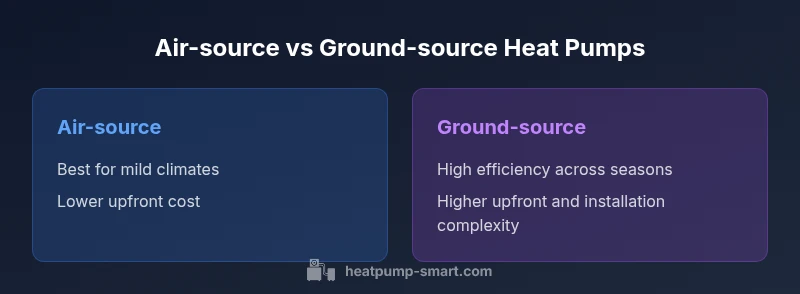
Air-source heat pumps draw heat from outdoor air and tend to experience larger COP reductions in very cold weather. Ground-source (geothermal) systems pull heat from the earth, which stays warmer than the air, helping sustain efficiency across seasons. Heatpump Smart's comparison of these two options highlights that ground-source units often keep a steadier COP when winter temperatures fall, at the cost of higher installation complexity and longer payback. In milder climates, air-source units with cold-climate ratings can deliver excellent efficiency and practical performance with lower upfront costs. When evaluating options, consider local climate, available space, and long-term energy goals.
Temperature swings and performance in real homes
In real households, outdoor temperature rarely stays constant. Day-to-night swings and wind chill complicate the energy picture. A heat pump's efficiency can vary with diurnal cycles as the system responds to changing loads. The relationship between heat pump efficiency vs temperature is real, but it is moderated by indoor setpoints, insulation quality, and the efficiency of other components such as compressors and fans. Heatpump Smart notes that the best outcomes come from systems that adapt to changing conditions with variable-speed compressors, smart controls, and correctly sized equipment. Expect noticeable differences between design specs and late-winter or late-summer performance, especially in older homes with drafty envelopes.
Practical tips to maximize efficiency across temperatures
- Choose a unit with good cold-weather performance and a high-quality refrigerant circuit. - Install proper insulation and sealing to reduce heat losses, so the heat pump can work less hard at the coldest times. - Use a smart thermostat that learns occupancy patterns and adjusts setback temperatures to minimize wasted cycling. - Schedule regular maintenance to keep coils clean and fans operating smoothly, which supports efficiency across temperature ranges. - Consider supplemental heat only for peak loads instead of running auxiliary heat continuously. By preparing for temperature-driven performance you can keep energy use predictable and costs lower, even as outside temps fluctuate.
Sizing and installation considerations to mitigate temperature impact
Sizing a heat pump correctly is critical to performance across a range of temperatures. An oversized unit can short-cycle in warm weather and struggle in cold weather, while an undersized unit may run continuously to meet demand. Heatpump Smart recommends commissioning with a detailed load calculation that accounts for climate, insulation, shade, and occupancy. Installation quality matters just as much as equipment choice: refrigerant charge, airflow, and proper defrost strategy influence efficiency, especially in winter. Ground-source systems require boreholes or trenching and thus have higher upfront costs but can deliver long-term stability in COP. Air-source systems offer lower upfront costs and faster payback but require careful siting and refrigerant selection for cold climates.
Energy savings and operating costs in different climates
Climatic context is essential when estimating energy savings from a heat pump. In temperate climates, well-designed air-source or ground-source systems can deliver meaningful savings compared to legacy heating equipment. In cold climates, the advantage of a ground-source system may become more pronounced due to more stable COP across temperatures. In warm climates with year-round cooling needs, defrost cycles and humidity management can influence energy use. Heatpump Smart emphasizes that real-world savings depend on factors such as insulation, thermostat strategy, and the efficiency of auxiliary equipment. Use climate-aware performance data and credible testing to set realistic expectations.
Thermostat strategies to optimize performance
Smart thermostat programming is a powerful lever for efficiency at varying temperatures. Schedule heat pump operation to align with occupancy and draft-free periods, minimize overnight setback in extreme cold, and permit longer runtimes during mild days when COP is favorable. Use adaptive cooling settings to minimize humidity-related energy use in hot weather. Real-world gains come from combining equipment rated for your climate with a thermostat strategy that reduces unnecessary cycling. Heatpump Smart recommends monitoring energy use over a season to calibrate settings and achieve consistent comfort with predictable bills.
Maintenance practices that sustain efficiency across seasons
Regular maintenance is essential to preserve heat pump efficiency as outdoor temperatures swing. Clean or replace filters, inspect and clear coils, verify airflow in all zones, and check the defrost control in cold weather. A clean outdoor coil reduces the energy needed to extract heat, especially when temperatures are near the extremes. Heatpump Smart notes that neglecting seasonal maintenance can erode efficiency more quickly than climate changes themselves, leading to higher energy bills and less reliable comfort.
Common myths about heat pump efficiency and temperature
Myth: Heat pumps stop working in cold climates. Reality: Modern heat pumps are designed for low-temperature operation, with performance improving when paired with supplemental heat and proper sizing. Myth: All heat pumps behave the same in heat and cold. Reality: Engineering and refrigerant strategies differ; look for units with cold-weather performance data and inverter-driven compressors. Myth: Temperature alone determines efficiency. Reality: Home envelope, thermostat strategy, and duct or ductless distribution all shape overall energy use.
Emerging technologies that improve low-temperature performance
Industry developments include refrigerant blends optimized for cold climates, variable-speed compressors, and advanced defrost algorithms that minimize energy penalties. Heatpump Smart highlights models with improved low-temperature COP and better part-load performance that adapt to seasonal demand. Geothermal or ground-source configurations remain an option for climate resilience, and hybrid systems with supplemental electric resistance can be used strategically for peak loads without sacrificing efficiency overall.
How to evaluate a system's performance claims
When evaluating claims about heat pump efficiency vs temperature, start with independent testing from credible sources and look for real-world field data rather than laboratory ratings alone. Compare COP values at temperatures representative of your climate and consider the impact of defrost cycles, humidity, and building envelope. Ask for a performance estimate based on your home's insulation, occupancy, and typical thermostat settings. Heatpump Smart recommends verifying warranty terms, maintenance requirements, and expected lifetime energy savings before signing a contract.
Comparison
| Feature | Air-source heat pump | Ground-source heat pump |
|---|---|---|
| Best climate suitability | Moderate climates with mild winters | Cold climates with long winters |
| Efficiency trend with temperature | Declines at lower outdoor temperatures | Maintains stronger efficiency across a wider temperature range |
| Installation cost/complexity | Lower upfront, simpler install | Higher upfront, drilling or trenching needed |
| Space requirements | Smaller footprint | Requires outdoor space or bore holes |
| Maintenance needs | Lower ongoing maintenance | Underground loops require specific maintenance concepts |
Advantages
- Lower upfront costs with air-source in many cases
- Flexible installation options
- Strong performance in moderate climates
- Quiet operation when properly installed
Disadvantages
- Higher long-term costs in extreme climates
- Ground-source requires space and boreholes
- Defrost cycles can affect winter efficiency
Ground-source heat pumps offer higher efficiency in stable climates, but air-source models are more versatile and cost-effective to install
If land and budget allow, ground-source typically yields better long-term efficiency. If not, a robust air-source unit with cold-weather ratings remains a strong, cost-effective option.
Your Questions Answered
How does outdoor temperature affect heat pump efficiency?
Outdoor temperature directly influences the COP of heat pumps. As it gets colder, the COP typically drops, reducing efficiency and increasing operating costs. In warmer conditions, humidity management can affect performance.
Outdoor temperature affects heat pump efficiency; COP falls in cold weather and humidity management can influence summer performance.
Do heat pumps work reliably in cold climates?
Yes, modern units are designed for cold climates, especially if they have cold-weather ratings and a properly sized system. They may require supplemental heat for very cold days.
Yes, with cold-weather rated models and proper sizing, heat pumps can operate reliably in cold climates.
Can heat pumps be used for cooling in summer?
Many heat pumps provide both heating and cooling. Performance in cooling depends on humidity and indoor temperature targets, but efficient units handle summer loads with appropriate controls.
Most heat pumps cool effectively in summer with proper controls.
What features maximize winter performance?
Look for cold-weather ratings, inverter-driven compressors, and defrost optimization. Proper sizing and a tight building envelope also help maximize winter efficiency.
Cold-weather ratings and efficient defrosting help winter performance.
Should I oversize to handle temperature extremes?
Oversizing can reduce efficiency and cause short cycling. A precise load calculation with climate considerations leads to better overall performance.
Avoid oversizing; precise sizing yields better efficiency.
How can I verify performance claims?
Request independent testing data and simulate your home climate. Look for field performance numbers, not only laboratory ratings, and compare to your actual usage.
Ask for independent tests and climate-specific performance data.
Top Takeaways
- Assess climate before choosing a system
- Ground-source offers strong efficiency gains in stable climates
- Air-source is practical and versatile for many homes
- Pair with smart thermostats to maximize savings