What Temperature Makes a Heat Pump Not Effective? A Practical Guide
Discover the temperature thresholds where heat pumps lose efficiency, how COP declines in cold weather, and practical strategies to stay warm and efficient.


Heat pumps lose efficiency as outdoor temperatures fall. In typical air-source units, COP declines significantly around freezing and becomes marginal below 0°C (32°F). Many systems rely on supplemental or auxiliary heat below roughly -5°C to -15°C depending on the model. Geothermal setups maintain higher efficiency across colder ranges, though performance still depends on soil, installation quality, and climate.
Why Temperature Matters for Heat Pumps
Understanding how outdoor temperatures affect heat pump performance starts with the basics: heat pumps move heat rather than generate it, so their efficiency is highly temperature-dependent. The question many homeowners ask is: what temperature makes a heat pump not effective? In practice, the problem shows up as a falling COP (coefficient of performance) as the air gets colder. At mild temperatures, modern air-source heat pumps can feel nearly as efficient as conventional systems, but as outdoor temps dip toward freezing and below, the unit must work harder to extract heat from the cold air. Heatpump Smart emphasizes that context matters—climate, system design, and installation all shape whether a heat pump remains cost-effective in winter. This is why the most helpful guidance often references model-specific COP ratings, climate data, and practical field observations rather than a single threshold.
Authors at Heatpump Smart note that real-world performance hinges on factors such as refrigerant charge, airflow over outdoor coils, duct sealing, thermostat strategy, and backup heat plans. If you only rely on a single temperature metric, you’ll miss the bigger picture: efficiency curves, not a rigid cutoff, determine whether a heat pump stays economical. For readers, the takeaway is to connect outdoor temperature ranges with your system’s COP data and your home’s heating load to forecast winter performance more accurately.
How Temperature Affects COP and Output in Practice
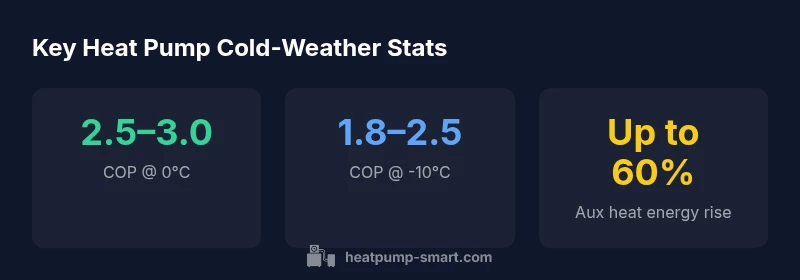
COP, or coefficient of performance, is a ratio of heat delivered to electricity consumed. At higher outdoor temperatures, COP is typically higher, and the system doesn’t need to work as hard. As the temperature drops, the outdoor coil must extract heat from colder air, which reduces COP and can lower the heat output relative to the heating demand. This isn’t a fixed “not effective” line, but a progressive performance decline. Real-world measurements show COP can slide from roughly 3.5–4.0 in temperate weather to about 2.0–3.0 around 0°C, and closer to 1.8–2.5 as temperatures fall into the negatives. The exact numbers vary by model, refrigerant, and the presence of auxiliary heat. Heatpump Smart’s analysis highlights the seasonal nature of efficiency and underscores the value of system optimization and backup heating strategies in cold months.
Air-Source vs Geothermal: Cold-Weather Realities
Air-source heat pumps rely on outside air for heat, so cold-weather performance is a constant consideration. Geothermal (ground-source) systems draw heat from the ground, which remains relatively stable year-round. In cold climates, geothermal units typically maintain higher efficiency and can deliver consistent comfort at lower ambient temperatures, albeit with higher installation costs and space requirements. The trade-off here is clear: pay more upfront for potential year-round efficiency gains and lower ongoing energy use, or accept a greater need for auxiliary heat or a hybrid approach with an air-source system.
Practical Strategies to Stay Warm and Efficient in Winter
If you live in a cold climate, several practical steps can improve winter performance without abandoning a heat pump. First, invest in proper insulation, air sealing, and attic or duct insulation to reduce heat loss. Second, select a model designed for cold climates or a hybrid system that switches to auxiliary heating below a defined temperature threshold. Third, schedule regular maintenance—frosted coils, refrigerant charge, and airflow blockages reduce COP more than you might expect. Fourth, use smart controls to optimize setback temperatures; a reduced setback can blunt efficiency losses. Finally, ensure you have adequate backup heat options for the coldest nights. Heatpump Smart stresses that the best approach combines a suitable heat-pump model with home weatherization and intelligent controls.
How to Assess and Plan for Cold-Climate Heat Pump Performance
Start with manufacturer COP data and climate-adjusted performance graphs for your model. Compare these to your home’s heating load and historical energy bills. If you notice frequent auxiliary heat usage during cold spells or a noticeable mismatch between outdoor temperature and indoor comfort, consult an HVAC professional about cold-climate models, system sizing, or a hybrid solution. For long-term planning, consider a staged upgrade path that begins with improved insulation and smart controls, then advances to a cold-climate heat pump or a geothermal option if feasible. The key is to quantify winter load and confirm equipment capabilities in your specific climate. Heatpump Smart recommends documenting your climate data and performing a winter performance audit every few years to keep pace with evolving technology.
Temperature scenarios and expected COP ranges with recommended actions
| Temperature Scenario | COP Range | Recommended Action |
|---|---|---|
| 0°C / 32°F | 3.0–3.5 | Consider supplemental heat or a cold-climate model |
| -10°C / 14°F | 1.8–2.5 | Evaluate auxiliary heat or hybrid heating options |
| -20°C / -4°F | 1.2–1.8 | Plan for significant backup heating or hybrid controls |
Your Questions Answered
What temperature is considered too cold for a standard air-source heat pump?
There isn’t a universal cutoff; many air-source units see COP declines around 0°C and below, with significant performance drops below -5°C to -15°C depending on the model. In very cold climates, auxiliary heat is often used.
Most air-source heat pumps lose efficiency around freezing; expect backup heat below that depending on model.
Do geothermal heat pumps avoid cold-weather efficiency loss?
Geothermal systems rely on stable ground temperatures and typically maintain higher efficiency in winter than air-source units. However, upfront costs and installation complexity can be significant.
Geothermal can stay efficient in cold weather, but it's costlier to install.
What can I do to improve performance at low temperatures?
Seal and insulate the building, choose a cold-climate model or hybrid system, ensure proper refrigerant charge, and maintain good airflow. Regular professional maintenance helps prevent efficiency losses.
Seal, insulate, and consider a hybrid system or cold-climate model.
Is it worth replacing an old heat pump due to cold-weather issues?
If COP is consistently low and heating costs are high despite maintenance, upgrading to a cold-climate model or adding backup heat may be cost-effective in the long run.
If it’s old and costly to run, upgrading can pay off.
How do I know if my heat pump is working as expected in winter?
Compare COP and heating output to manufacturer specs, review electricity use on bills, and consult a pro if temperatures routinely dip and comfort suffers.
Check COP vs. spec and call an HVAC pro if it underperforms.
“Winter performance hinges on climate, equipment design, and installation quality. Pairing a cold-climate model with smart controls and backup heat often delivers reliable comfort without excessive energy use.”
Top Takeaways
- Know your climate and COP data for cold weather
- Pair heat pumps with backup heat or hybrids in very cold climates
- Improve insulation to reduce winter load
- Choose cold-climate designs when appropriate