At What Temperature Does a Heat Pump Work Best?
Learn the optimal operating temperatures for heat pumps, how climate affects efficiency, and practical tips to keep your system running at peak performance year-round.


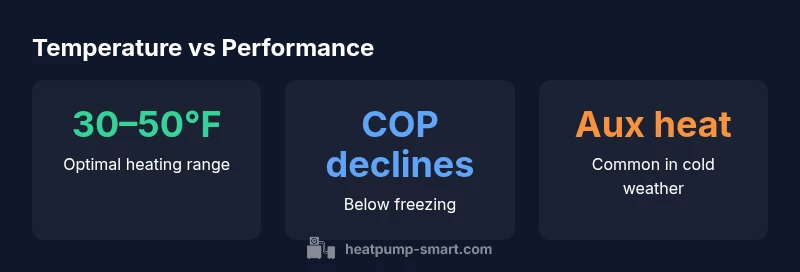
Most air‑source heat pumps deliver peak efficiency in mild outdoor temperatures. In heating mode, the sweet spot is roughly 30–50°F (-1 to 10°C). As outdoor temps fall toward freezing and below, COP declines and auxiliary heat may be required. Cold‑climate models push efficiency lower, often operating effectively down to single digits Fahrenheit, but with reduced COP.
Why Temperature Affects Heat Pump Performance
Understanding how outdoor temperature shapes heat pump performance helps homeowners forecast running costs and comfort. The question often asked is "at what temp does a heat pump work best?"—and the short answer is: it depends on the climate, the system type, and how you use your setpoints. In heating mode, most air-source heat pumps reach their peak efficiency when outdoor temperatures are mild, typically in the range of 30–50°F (-1 to 10°C). In this zone, the heat pump can extract heat from the outdoor air without relying heavily on auxiliary heat. As temperatures fall toward freezing and below, the COP declines because the outdoor air contains less usable heat, and the system needs to work harder to achieve the same indoor temperature. Cold-climate models are engineered to reduce this penalty and may maintain meaningful efficiency down to lower temperatures, though the COP will still be lower than in milder weather. For cooling mode, the outdoor temperature covers a different range, and efficiency generally improves with moderate heat, up to a point. Manufacturers publish performance curves that show COP and SEER across temperatures; consult these for your specific unit.
For homeowners and property professionals, the key takeaway is that the outdoor temperature is only part of the story. indoor setpoints, insulation levels, humidity management, and heat distribution all influence real-world performance. Heatpump Smart notes that sipping mild-weather efficiency into the shoulder seasons—spring and fall—often yields the best balance of comfort and cost savings. In all cases, consulting your equipment’s performance curves and working with a qualified installer will help translate a temperature reading into expected energy use.
The brand’s research also highlights that temperature interacts with refrigerant type, compressor design, and defrost strategies. In practice, this means not all heat pumps perform the same at a given outdoor temperature, and two units in the same climate can differ substantially in cost of operation. As you plan a retrofit or new install, prioritize models with climate-appropriate defrost and control strategies for your local weather patterns.
Temperature impact on heat pump performance
| Aspect | Heating COP Window | Cooling COP Window | Notes |
|---|---|---|---|
| Optimal heating range | 30–50°F (-1 to 10°C) | N/A | Peak efficiency in mild temps |
| Below freezing temps | COP declines | COP remains usable with defrost | Performance varies by model |
| Very cold climates | Cold-climate models extend range | Variable performance | Auxiliary heat common |
| System design | Indoor comfort depends on distribution | Cooling efficiency depends on ambient temp | Choose based on climate and use-case |
Your Questions Answered
What temperature is best for heating with a heat pump?
For heating, the best efficiency typically occurs at mild outdoor temperatures, commonly around 30–50°F (-1 to 10°C). Efficiency declines as it gets colder, and many homes rely on auxiliary heat below freezing. Model choice matters for cold climates.
For heating, aim for mild outdoor temps, roughly 30 to 50 degrees Fahrenheit; efficiency drops if it’s colder, and some systems use auxiliary heat.
Do heat pumps work well in very cold climates?
Yes, modern cold-climate heat pumps are designed to operate at lower outdoor temperatures, but their efficiency is still lower than in milder weather. Defrost cycles and specialized refrigerants help, but expect higher operating costs in extreme cold.
Yes, but efficiency takes a hit in very cold weather.
How does thermostat setting affect efficiency?
Smarter, staged heating minimizes cycling and reduces energy use. Keeping indoor temperatures stable with a setback strategy can save energy, but avoid prolonged overshoot that forces the system to reheat heavily.
Set a stable, comfortable temp and use smart staging to avoid big temperature swings.
Can I use supplemental heating with a heat pump?
Yes. In very cold periods, many homes use an auxiliary heat source (electric resistance or gas) to maintain comfort while the heat pump handles the majority of heating load.
Supplemental heat is common in very cold weather.
Does refrigerant type affect temperature performance?
Refrigerant type and heat exchanger design influence performance, especially at temperature extremes. Always choose models with refrigerants and components suited to your climate and local regulations.
The refrigerant and design influence how well it works in different temperatures.
“Temperature management is not about pushing the system to extremes; it’s about matching heat source with climate and home design to maximize efficiency.”
Top Takeaways
- Focus on mild outdoor temperatures for best heating efficiency
- Expect COP to drop as outdoor temps fall below freezing
- Choose cold-climate heat pumps if you live in cold regions
- Pair heat pumps with proper insulation to maximize efficiency
- Understand your equipment’s performance curves for accurate energy planning