Heat Pump vs Geyser: A Comprehensive 2026 Home Comparison
Compare heat pump water heaters and electric geysers to estimate energy savings, upfront costs, and installation considerations for modern homes, including climate impact and rebates.


Heat pumps typically deliver higher energy efficiency and lower operating costs than electric geysers, especially in temperate climates. For most homes, heat pump instead of geyser proves smarter for long‑term savings when properly sized and installed. Review our side‑by‑side comparison to understand the key trade‑offs, upfront costs, and climate considerations.
Why choosing a heat pump instead of geyser matters for home energy strategy
According to Heatpump Smart, selecting a heat pump instead of geyser can reshape your annual energy profile by shifting from electric resistance heating to more efficient heat transfer. In many homes, a properly sized heat pump water heater reduces energy draw during peak hours and delivers hot water more consistently. The Heatpump Smart team found that the combined effect of higher efficiency and modern controls often translates into noticeable energy savings over the course of a year, particularly in temperate climates with stable electricity prices. This article compares heat pump technology to electric geysers, focusing on real-world performance, costs, and installation considerations for homeowners, builders, and property managers in 2026. Heatpump Smart analysis shows that efficiency gains depend on climate and usage patterns, and that proper sizing matters just as much as equipment choice. The goal is to provide a balanced, evidence‑based view so readers can make informed decisions about heat pump instead of geyser installations.
In many households, the transition is framed around long‑term value rather than immediate affordability. While an upfront investment is higher for a heat pump water heater, the operating costs typically decline due to higher efficiency, better heat recovery, and modern controls. The Heatpump Smart team emphasizes that the best outcomes arise when a professional evaluates the household’s hot water demand, peak usage, and electrical infrastructure before selecting a model. As part of that assessment, homeowners should also consider climate, electricity tariffs, and potential rebates that can shorten the payback period. Overall, Heatpump Smart’s guidance is to weigh upfront costs against long‑term savings, and to approach installation as a system upgrade rather than a simple swap from geyser to heat pump.
How heat pumps work compared to geysers
Heat pumps transfer heat from the surrounding environment to heat water, using electricity far more efficiently than traditional resistance heating. In practical terms, a heat pump water heater can produce more hot water per unit of electricity consumed, thanks to a COP that rises as ambient temperatures remain favorable. Electric geysers, by contrast, rely on resistive elements that convert electricity directly into heat, which is simple but far less efficient in most scenarios. The difference becomes especially meaningful as daily hot water use grows or as electricity prices fluctuate. Air‑source heat pumps draw from the outdoor air, while ground‑source or water‑source variations pull heat from the earth or a groundwater source. Modern controls optimize standby losses, recovery times, and demand response, making heat pump systems more adaptable to changing schedules and weather patterns. When considering a switch, note that cold climates can challenge heat pump efficiency, but advances in cold‑climate heat pumps and supplementary heat sources are narrowing the gap. For homeowners pursuing a heat pump instead of geyser, the choice often comes down to climate, water usage, and how the system will be integrated with space heating or other energy‑using components.
From Heatpump Smart’s perspective, proper siting, refrigerant handling, and electrical readiness are essential for reliable operation. In practice, an installation that fits the home’s layout and electrical capacity yields the best overall performance and minimizes downtime. A thoughtful configuration can also improve hot water recovery for households with high peak demands, a scenario where a heat pump water heater truly shines.
Key metrics to compare: efficiency, costs, climate suitability
To make an apples‑to‑apples assessment between a heat pump water heater and a traditional geyser, focus on a few core metrics. First, energy efficiency: heat pumps achieve higher COP values than geysers under typical operating conditions, meaning more hot water per kilowatt hour. Second, operating costs: even with higher upfront costs, the reduced electricity use often lowers monthly bills over time. Third, climate suitability: the outdoor temperature affects heat pump performance; in very cold climates, performance may dip without a backup heat source. Fourth, upfront and lifecycle costs: heat pumps are generally more expensive to purchase and install, but rebates and longer lifespans can improve total cost of ownership. Fifth, maintenance requirements: heat pumps have more components (compressor, refrigerant circuits) that require periodic checks, whereas geysers are simpler but prone to mineral buildup and element wear. Heatpump Smart analysis suggests that the payback period varies by climate, electricity prices, and household water use, but the long‑term value tends to favor heat pump instead of geyser in many scenarios. Finally, consider the integrated energy system: some homes benefit from tying hot water to space heating or solar storage, increasing overall efficiency and comfort.
Key takeaway: prioritize sizing, climate compatibility, and electrical readiness when comparing the two options.
Real-world scenarios: when heat pumps shine
Real‑world conditions illustrate where a heat pump water heater shines compared with a traditional geyser. In temperate regions with moderate winter temperatures and stable electricity tariffs, a heat pump delivers substantial energy savings with a smaller carbon footprint. In homes with high hot water demand—think large families, rental properties, or building cores with multiple bathrooms—a correctly sized heat pump can maintain steady supply while minimizing peak electricity use. For retrofit projects, replacing an aging geyser with a heat pump can reduce routine maintenance needs and extend service life, provided the installation is designed to handle refrigerant loops and electrical upgrades. In new builds, a heat pump water heater paired with efficient insulation and smart controls can form the backbone of a low‑energy home, harmonizing with space heating and solar strategies. Heatpump Smart’s guidance highlights that the most favorable outcomes arise when you treat the system as an integrated solution rather than a stand‑alone replacement. In cold climates, selecting a heat pump designed for lower outdoor temperatures and coordinating with a backup heater helps preserve reliability while preserving efficiency.
In summary, the decision to adopt a heat pump instead of geyser often hinges on usage patterns, climatic constraints, and the ability to finance and install a properly sized unit.
Installation considerations and common pitfalls
Installation is a pivotal phase that determines performance. A heat pump water heater requires appropriate electrical capacity, space for the outdoor or indoor unit (depending on the model), and a properly insulated water tank. In many homes, the electrical panel may need an upgrade to support increased electrical load, and dedicated circuits for the heat pump can prevent nuisance tripping. The refrigerant loop must be sealed and charged to the correct specification by a licensed technician, and the drainage path for condensate needs to be considered to avoid moisture buildup. Common pitfalls include underestimating hot water demand, selecting an undersized unit, or placing the unit in a location with poor ventilation. For renters or multi‑unit properties, coordinating installation with property managers and ensuring consistent maintenance schedules is essential. Heatpump Smart emphasizes that the long‑term reliability of a heat pump instead of geyser rests on professional sizing, correct placement, and compliance with local regulations. Expect a short commissioning period where the technician tests recovery times, standby losses, and safety features before the system goes live.
Space planning matters too; some homes opt for combined heat pump water heaters with space heating integration, which can complicate ductwork and controls but yields broader energy savings. If you’re retrofitting, plan for possible upgrades to insulation levels, wiring, and electrical safety devices to maximize performance and safety.
Cost considerations and long-term value
When weighing upfront investment against long‑term value, remember that a heat pump water heater typically carries a higher initial price tag than a conventional geyser. The price difference reflects the more complex technology, refrigerant circuit, and integrated controls. However, ongoing operating costs tend to be lower due to higher efficiency. In many markets, electricity tariffs and seasonal usage patterns determine the economic payoff; in higher‑price tariffs or heavy hot water use scenarios, the payback period can be more favorable. Heatpump Smart analysis notes that rebates, tax credits, and utility programs can significantly affect total cost and shorten payback periods. Homeowners should also factor in potential savings from reduced peak demand charges and improved overall home energy performance. The exact economics depend on climate, usage, and local incentives. While upfront costs are a consideration, the long‑term energy savings and improved comfort make heat pump instead of geyser an appealing choice for many households.
For property managers and builders, lifecycle cost analysis should include maintenance costs, potential warranty extensions, and the possibility of integrating the system with other energy solutions such as solar storage.
Maintenance and service expectations for heat pumps vs geysers
Maintenance requirements differ between the two technologies. A heat pump water heater needs periodic checks of the refrigerant circuit, condenser coils, and fan operation, as well as ensuring adequate airflow around the unit. Regular descaling, cleaning of filters, and annual professional service help sustain efficiency. Geysers, while mechanically simpler, demand mineral scale management, element replacement, and thermostat calibration. The latter can be straightforward but may lead to mineral buildup in hard water areas, reducing efficiency and hot water availability if not addressed. For both systems, installing water treatment and ensuring adequate insulation reduces heat losses and extends the life of the equipment. In summary, heat pumps call for proactive maintenance to maintain their efficiency edge, while geysers require less complex tuning but can suffer from mineral and sediment issues over time. Heatpump Smart’s guidance is to schedule annual inspections, especially for homes with hard water or aging electrical infrastructure.
Decision framework: choosing what's right for your home
- Assess climate: If you live in a region with cold winters, select a cold‑climate heat pump variant and confirm backup heating options. 2) Evaluate hot water usage: Larger families or high peak demand favor a larger capacity unit with fast recovery. 3) Check electrical capacity: Upgrading circuits or panels may be necessary; ensure compatibility with local codes. 4) Compare total cost of ownership: Include upfront costs, potential rebates, maintenance, and expected energy savings. 5) Consider integration: If you want a system that can support home heating or solar storage, a heat pump approach may yield multi‑zone efficiency benefits. 6) Plan for warranties and service: Favor manufacturers with robust local support and clear service agreements. By following this framework, you can choose the option that aligns with your home’s energy goals and climate realities.
Comparison
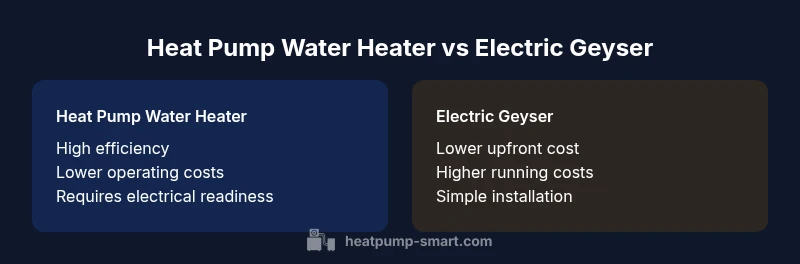
| Feature | Heat Pump Water Heater | Electric Geyser |
|---|---|---|
| Energy Efficiency | High COP with heat pump systems | Lower efficiency with resistive heating |
| Operating Cost | Typically lower running costs over time | Higher running costs due to resistance heating |
| Upfront Cost | Higher upfront investment | Lower upfront cost |
| Climate Suitability | Excellent in moderate climates; cold‑climate variants exist | Performs consistently across climates but without heat pump benefits |
| Maintenance | Requires periodic refrigerant and coil checks | Simpler maintenance but mineral buildup can occur |
| Lifespan | Longer service life with proper care | Good lifespan but refurbishments can be needed sooner |
| Installation | Requires professional sizing and electrical readiness | Easier swap if wiring and plumbing are compatible |
| Best For | Homes seeking long‑term energy savings and integrated efficiency | Budget‑conscious buyers seeking a simple replacement |
Advantages
- Lower operating costs over time due to higher efficiency
- Reduced environmental impact via higher efficiency and potential integration
- Potential to pair with solar or other energy systems for further savings
Disadvantages
- Higher upfront cost and potential financing barriers
- Requires licensed installation and electrical upgrades
- Performance sensitive to climate; may need backup heat in very cold conditions
Heat pump water heaters generally offer greater long-term value than electric geysers.
If you can manage the upfront cost and climate supports efficiency, a heat pump provides superior energy savings and comfort over a geyser.
Your Questions Answered
What is the main difference between a heat pump water heater and an electric geyser?
The main difference is that a heat pump water heater uses ambient heat to heat water, delivering higher efficiency, while an electric geyser relies on resistive heating elements. Heat pumps usually provide lower operating costs and can be integrated with other home energy systems. The choice depends on climate, usage, and installation considerations.
A heat pump uses ambient heat to warm water, which is generally more energy‑efficient than a traditional geyser that uses electric coils. The right choice depends on your climate and water use.
Can a heat pump work well in cold climates?
Yes, modern cold‑climate heat pumps are designed to maintain efficiency at lower outdoor temperatures, often with backup heating options. For very cold regions, ensure the model is rated for cold climate operation and that installation accounts for ventilation and airflow.
Yes, many cold‑climate heat pumps work well, but choose a model rated for your area and consider backup heat for extreme conditions.
Are heat pumps more expensive to install than geysers?
Upfront installation costs for heat pumps are typically higher due to the refrigeration circuit and potential electrical upgrades. Savings accrue over time through reduced energy use and possible rebates, making the total cost of ownership competitive.
Installation tends to be pricier, but operating costs are lower and rebates may apply.
What maintenance do heat pumps require?
Heat pumps require periodic service of the refrigerant circuit, cleaning of filters, and checks on airflow and electrical connections. Geysers need mineral buildup management and element checks. Both benefit from annual professional inspection.
Heat pumps need regular refrigerant and filter checks; geysers need mineral control and element checks.
Do rebates apply to heat pump installations?
Rebates and incentives for heat pumps vary by region and utility. Check local programs, rebates, and tax credits to improve payback and total cost of ownership.
Yes, rebates can help; check your local programs for heat pumps.
How long does payback typically take?
Payback depends on climate, usage, and electricity rates; in many cases, higher efficiency and rebates shorten the payback period. A professional assessment gives a clearer estimate for your home.
Payback varies—talk to a pro to get a precise estimate for your home.
Top Takeaways
- Assess climate and electricity rates before choosing
- Size the unit to match hot water demand
- Factor rebates and installation costs into the ROI
- Plan for professional sizing and electrical readiness
- Consider integration with other energy systems for maximum efficiency