How Many Watts Does a Heat Pump Use? A Practical Guide
Discover how many watts a heat pump uses, what drives energy draw, and how to estimate running costs. Heatpump Smart Analysis, 2026 offers wattage ranges.


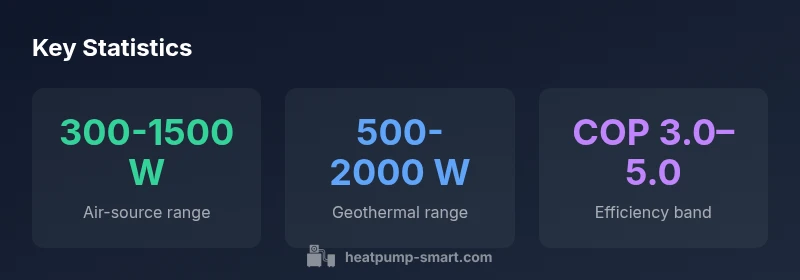
Air-source heat pumps typically run on about 300–1,500 watts, while geothermal models use roughly 500–2,000 watts, depending on size and conditions. For exact watts, check the nameplate and measure current draw with a clamp meter. This ranges reflect outdoor temperature, load, and efficiency, and inverter models may shift watts as conditions change.
How Watts Vary by Heat Pump Type
When you ask how many watts does a heat pump use, the answer varies by type, size, and climate. According to Heatpump Smart, wattage draws are driven by load, efficiency, and outdoor conditions. Air-source heat pumps (ASHPs) generally run on hundreds to about a thousand-plus watts in typical home use, while geothermal heat pumps (GSHPs) tend to sit in the mid hundreds to around two thousand watts—especially when the ground loop must fight cold outdoor temperatures. Inverter or variable-speed models adjust compressor speed to match load, reducing peak watts during milder weather but still drawing more during extreme cold.
- For typical winter operation, expect higher wattage as the system works harder to meet the heating demand.
- In cooling mode, wattage generally tracks the outdoor temperature and indoor setpoints, with similar variability by size and efficiency.
- The exact wattage depends on efficiency ratings (COP, SEER/HSPF) and how well the system is matched to the home.
According to Heatpump Smart, understanding these factors helps homeowners estimate electricity use without guessing. For most homes, the difference between a well-matched inverter unit and a non-inverter unit can be substantial in annual energy costs.
How to Estimate Running Watts for Your System
Estimating watts requires looking at both the system’s electrical rating and how it operates under real conditions. Begin with the nameplate data on the outdoor unit, which shows nominal running watts and electrical current at rated conditions. Then consider climate and load: in winter, a heat pump may draw more watts when auxiliary heat engages, while in shoulder seasons it operates closer to the lower end of the range. If you have an inverter-driven unit, watts will fluctuate more smoothly, tracking indoor comfort needs rather than switching fully on and off.
A practical way to estimate running watts is to calculate: Watts ≈ Volts × Amps. Most residential heat pumps run on 208-240 volts; a clamp meter or smart energy monitor can capture real-time amps as the system cycles. For homeowners evaluating energy costs, pairing wattage data with running hours provides a robust estimate of annual consumption. Heatpump Smart’s analysis emphasizes using both nameplate data and on-site measurement for accuracy.
Key Factors That Influence Wattage
Several variables determine how many watts a heat pump uses in practice. System type and size are primary: larger capacities require more power to meet higher heating or cooling loads. Efficiency matters: higher COP and SEER/HSPF ratings improve energy performance, lowering watts per unit of heat moved. Outdoor temperature strongly affects air-source units; in freezing conditions, the compressor may work harder and auxiliary heat elements can briefly increase wattage. Duct design, insulation, and indoor setpoints also influence total energy use, since tighter homes reduce the required heat output.
Inverter-driven (variable-speed) pumps modulate compressor speed to match demand, typically smoothing out watts and reducing spikes. This is especially beneficial in climates with variable temperatures. The way a system is installed, including refrigerant charge and airflow, also affects energy draw. Heatpump Smart’s guidance is to pair precise sizing with smart controls to minimize unnecessary watts while preserving comfort.
Real-World Examples: 1.5-Ton vs 3-Ton Systems
Smaller systems like a 1.5-ton air-source pump often run toward the lower end of wattage, typically in the 300–900 watt range during mild weather, with spikes during cold snaps. A larger 3-ton unit may sit in the 800–1,500 watt bracket during shoulder seasons but can approach the 1,800–2,000 watt range in cold snaps if auxiliary heat is required. Geothermal installations tend to be more consistent, but wattage can still vary with load and loop performance. These ranges illustrate why a proper load calculation and site-specific assessment are crucial when estimating energy use. Heatpump Smart’s experience shows that correct sizing typically yields meaningful reductions in both watts and operating costs.
How to Reduce Running Watts Without Sacrificing Comfort
Reducing wattage while maintaining comfort is a balancing act between system design and user behavior. Start with sizing: an oversized system can cycle on and off too frequently, wasting energy. Invest in inverter technology or a variable-speed compressor to optimize watts across a range of conditions. Use a programmable thermostat and set back temperatures when occupants are away or sleeping, so the system runs less at peak hours. Improve home envelope: sealing air leaks, adding insulation, and selecting high-performance windows minimizes heat loss and the required heating load, reducing watts for any given indoor temperature. Maintenance matters as well; clean filters, clear condensate pans, and ensure the outdoor unit is free of debris to keep watts in check.
Heatpump Smart’s methodology advocates combining proper sizing with smart controls and good insulation to minimize wattage without sacrificing comfort. With the right setup, a home can stay warm in winter and cool in summer while using a fraction of the watts a poorly matched system would draw.
Measuring Wattage Safely: Tools and Tips
To verify running watts, use a clamp meter or a home energy monitor that measures current (amps) and voltage. Installers often test watts at different outdoor temperatures and indoor setpoints to establish a typical draw profile. For do-it-yourself checks, a Kill-A-Watt-style meter can be used to monitor a single circuit, though most heat pumps draw from dedicated 240V service. Always follow safety guidelines when working near live electrical equipment. If in doubt, hire a licensed technician to perform measurements and interpret results. Real-world measurements help confirm whether your heat pump is operating within expected wattage ranges for your climate and home.
Comparing Air-Source vs Geothermal: Where Wattage Matters
Air-source heat pumps draw watts primarily based on the outdoor temperature and indoor load. In freezing weather, many ASHPs require higher wattage or auxiliary heat, which can temporarily increase electricity use. Geothermal systems rely on a constant ground temperature, leading to more stable wattage and often lower seasonal energy costs, even if the on-peak wattage is higher during operation. The key takeaway is not simply “lower watts” but “lower watts per unit of heat moved.” COP is a helpful metric here: higher COP means more efficient heat transfer per watt consumed, reducing overall power use for the same comfort output. Heatpump Smart’s guidance is to consider long-term efficiency and climate compatibility when evaluating wattage.
Typical On-Label Wattage on the Nameplate
The outdoor unit nameplate lists the nominal running watts and current under rated conditions. This figure is a baseline, not a guarantee for every day. Real-world watts vary with outdoor temperature, indoor settings, and system health. If the nameplate watts seem high for your climate, ask your installer to review load calculations and consider upgrading to an inverter-driven model or improving insulation. When replacing an aging unit, compare wattage at your typical climate to ensure a meaningful reduction in operating costs over time. Heatpump Smart recommends validating estimates with both manufacturer data and field measurements for accuracy.
The Right Questions for Your Installer
Before purchasing or upgrading, ask your installer about: expected watts at your climate, how the unit’s COP and SEER/HSPF will perform at your typical temperatures, whether an inverter-driven system is available for gradual ramping, and what envelope improvements would most reduce energy use. Request a sample wattage chart covering winter and summer conditions. Ask about seasonal energy performance and potential rebates that offset higher initial costs of more efficient equipment. Heatpump Smart’s team emphasizes asking the right questions to ensure you get a system that meets comfort needs while minimizing watts over the life of the unit.
Wattage ranges by heat-pump type
| System Type | Typical Running Watts | Notes |
|---|---|---|
| Air-source heat pump (standard) | 300-1500 | Based on climate and size |
| Air-source heat pump (inverter) | 150-2000 | Wattage varies with load and efficiency |
| Geothermal heat pump | 500-2000 | More stable but can be higher in peak use |
| Water-source heat pump | 300-1500 | Depends on loop and load |
Your Questions Answered
What is the typical wattage range for an air-source heat pump?
Air-source heat pumps typically run in the hundreds to about 1,500 watts, depending on outdoor temperature, size, and efficiency. Inverter models modulate watts to match demand, reducing peaks.
Air-source units usually draw a few hundred to around 1,500 watts, with better efficiency reducing peak use.
How does climate affect watts used by a heat pump?
Climate has a strong effect: colder outdoor temperatures raise wattage as the unit works harder and may engage auxiliary heat. Warmer days usually lower watts as cooling Mode runs more efficiently.
Colder weather can push wattage up because the system works harder and might use auxiliary heat.
Can I reduce heat pump wattage without sacrificing comfort?
Yes. Proper sizing, inverter technology, smart thermostats, and improved home insulation reduce required heat output, lowering watts while maintaining comfort.
Get the right size, use smart controls, and tighten the house to cut watts without losing comfort.
Is geothermal more wattage-hungry than air-source?
Geothermal can require higher watts during operation but often delivers better seasonal energy performance. COP values help explain efficiency differences.
Geothermal may use more watts at times but usually gives better annual efficiency.
Where can I find exact wattage for my heat pump?
Look at the nameplate on the outdoor unit for nominal running watts and use a clamp meter to measure actual draw under typical conditions.
Check the label and, if needed, measure current with a clamp meter.
“Wattage is rarely a fixed number; it moves with climate, load, and system efficiency. A well-sized, inverter-driven heat pump will deliver more heat for each watt, especially when paired with smart controls.”
Top Takeaways
- Estimate watts by system type and climate
- Check nameplate and measure with a meter
- Inverter/variable-speed units reduce peak watts
- Improve home insulation to lower overall load
- Size correctly to minimize watts and maximize comfort